
Before Memmo my notes were scattered across PDFs. Now a workspace pulls everything into one place — I see exactly what's still left to study.
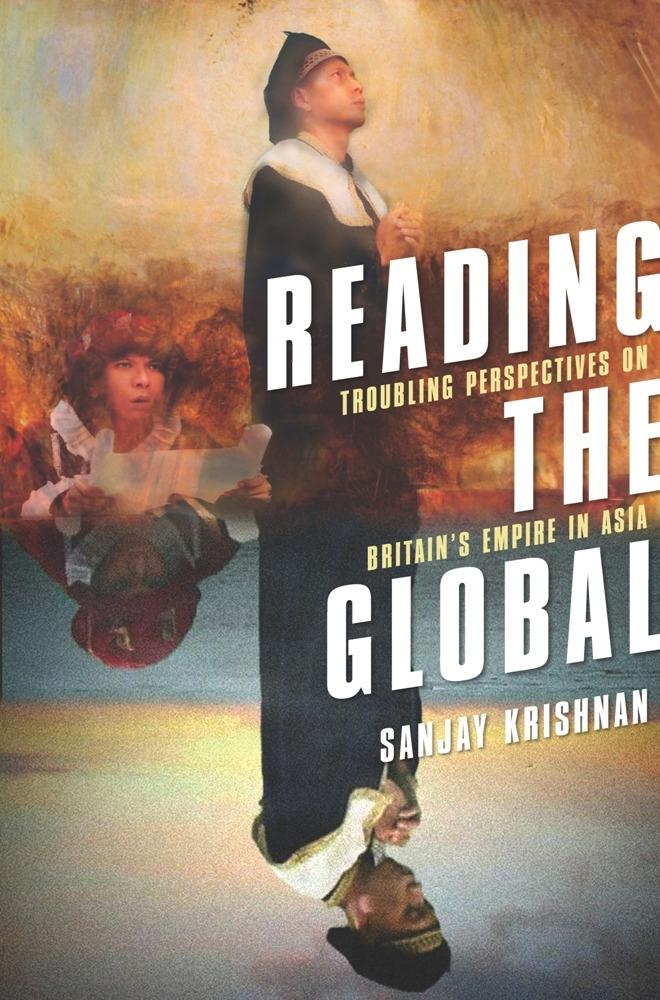
The global is an instituted perspective, not just an empirical process. Adopted initially by the British in order to make sense of their polyglot territorial empire, the global perspective served to make heterogeneous spaces and nonwhite subjects "legible," and in effect produced the regions it sought merely to describe. The global was the dominant perspective from which the world was produced for representation and control. It also set the terms within which subjectivity and history came to be imagined by colonizers and modern anticolonial nationalists.
In this book, Sanjay Krishnan demonstrates how ideas of the global took root in eighteenth- and nineteenth-century descriptions of Southeast Asia. Krishnan turns to the works of Adam Smith, Thomas De Quincey, Abdullah bin Abdul Kadir, and Joseph Conrad, four authors who discuss the Malay Archipelago during the rise and consolidation of the British Empire. These works offer some of the most explicit and sophisticated discussions of the world as a single, interconnected entity, inducting their readers into comprehensive and objective descriptions of the world.
The perspective organizing these authors' conception of the global-the frame or code through which the world came into view-is indebted to the material and discursive possibilities set in motion by European conquest. The global, therefore, is not just a peculiar mode of thematization; it is aligned to a conception of historical development unique to European colonial capitalism. Krishnan troubles this dominant perspective. Drawing on the poststructuralist and postcolonial approaches of Jacques Derrida, Michel Foucault, and Gayatri Chakravorty Spivak, and challenging the recent historiography of empire and economic histories of globalization, he elaborates a bold new approach to the humanities in the age of globalization.
Before Memmo my notes were scattered across PDFs. Now a workspace pulls everything into one place — I see exactly what's still left to study.
Memmo's summaries are gold before exams. I don't have to re-read 800 pages two weeks before — just the important parts.
The AI chat has saved me the night before an exam more than once. I just keep asking until I get it — no waiting on a study group to reply.
The quizzes hit exactly what I need to know. Memmo tracks what I get stuck on — so I only practice what's worth it.
Flashcards with spaced repetition are magic. Memmo knows when I'm about to forget something and brings it back.
The AI podcasts are my favorite. I listen on my way to school and get a recap without sitting at a computer.

Handbok i kvalitativa metoder
281 kr

Hållbar utveckling: en introduktion för ingenjörer och andra problemlösare
334 kr

Brymans Samhällsvetenskapliga metoder
390 kr

Projektledning
491 kr

Den orättvisa hälsan: om socioekonomiska skillnader i hälsa och livslängd
326 kr

Organizational Leadership
429 kr

Vetenskapsteori för nybörjare
196 kr

På väg mot läraryrket
172 kr

Det sociala livet i skolan: Socialpsykologiska perspektiv
253 kr

Betygsättningens didaktik
151 kr

Personality
402 kr

Studying Leadership
404 kr

Managing Innovation
477 kr

Introduktion till samhällsvetenskaplig metod
347 kr

The Psychology of Sex and Gender
698 kr

Evidens och kunskap för socialt arbete
207 kr

Introduction to Leadership
605 kr