
Before Memmo my notes were scattered across PDFs. Now a workspace pulls everything into one place — I see exactly what's still left to study.
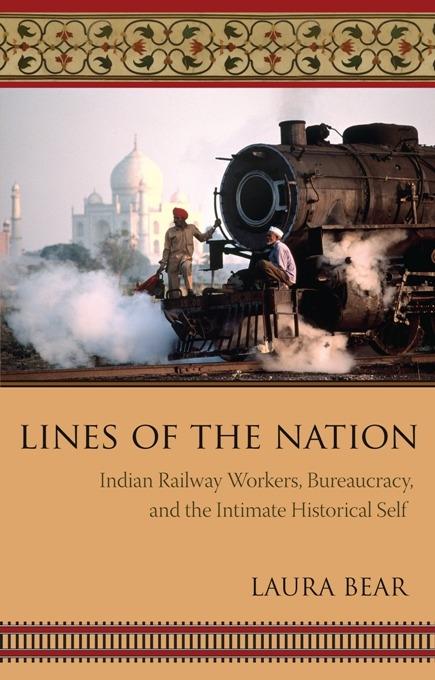
Lines of the Nation radically recasts the history of the Indian railways, which have long been regarded as vectors of modernity and economic prosperity. From the design of carriages to the architecture of stations, employment hierarchies, and the construction of employee housing, Laura Bear explores the new public spaces and social relationships created by the railway bureaucracy. She then traces their influence on the formation of contemporary Indian nationalism, personal sentiments, and popular memory. Her probing study challenges entrenched beliefs concerning the institutions of modernity and capitalism by showing that these rework older idioms of social distinction and are legitimized by forms of intimate, affective politics.
Drawing on historical and ethnographic research in the company town at Kharagpur and at the Eastern Railway headquarters in Kolkata (Calcutta), Bear focuses on how political and domestic practices among workers became entangled with the moralities and archival technologies of the railway bureaucracy and illuminates the impact of this history today. The bureaucracy has played a pivotal role in the creation of idioms of family history, kinship, and ethics, and its special categorization of Anglo-Indian workers still resonates. Anglo-Indians were formed as a separate railway caste by Raj-era racial employment and housing policies, and other railway workers continue to see them as remnants of the colonial past and as a polluting influence.
The experiences of Anglo-Indians, who are at the core of the ethnography, reveal the consequences of attempts to make political communities legitimate in family lines and sentiments. Their situation also compels us to rethink the importance of documentary practices and nationalism to all family histories and senses of relatedness. This interdisciplinary anthropological history throws new light not only on the imperial and national past of South Asia but also on the moral life of present technologies and economic institutions.
Before Memmo my notes were scattered across PDFs. Now a workspace pulls everything into one place — I see exactly what's still left to study.
Memmo's summaries are gold before exams. I don't have to re-read 800 pages two weeks before — just the important parts.
The AI chat has saved me the night before an exam more than once. I just keep asking until I get it — no waiting on a study group to reply.
The quizzes hit exactly what I need to know. Memmo tracks what I get stuck on — so I only practice what's worth it.
Flashcards with spaced repetition are magic. Memmo knows when I'm about to forget something and brings it back.
The AI podcasts are my favorite. I listen on my way to school and get a recap without sitting at a computer.

Handbok i kvalitativa metoder
281 kr

Hållbar utveckling: en introduktion för ingenjörer och andra problemlösare
334 kr

Brymans Samhällsvetenskapliga metoder
390 kr

Projektledning
491 kr

Den orättvisa hälsan: om socioekonomiska skillnader i hälsa och livslängd
326 kr

Vetenskapsteori för nybörjare
196 kr

Organizational Leadership
429 kr

På väg mot läraryrket
172 kr

Det sociala livet i skolan: Socialpsykologiska perspektiv
253 kr

Betygsättningens didaktik
151 kr

Personality
402 kr

Studying Leadership
404 kr

Managing Innovation
477 kr

Introduktion till samhällsvetenskaplig metod
347 kr

The Psychology of Sex and Gender
698 kr

Evidens och kunskap för socialt arbete
207 kr

Introduction to Leadership
605 kr