
Before Memmo my notes were scattered across PDFs. Now a workspace pulls everything into one place — I see exactly what's still left to study.
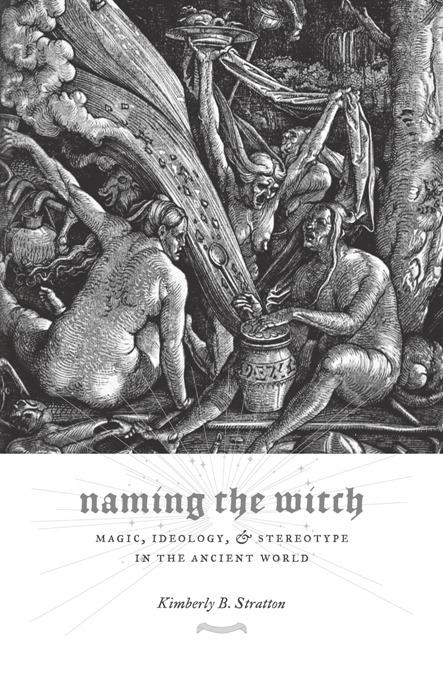
Kimberly B. Stratton investigates the cultural and ideological motivations behind early imaginings of the magician, the sorceress, and the witch in the ancient world. Accusations of magic could carry the death penalty or, at the very least, marginalize the person or group they targeted. But Stratton moves beyond the popular view of these accusations as mere slander. In her view, representations and accusations of sorcery mirror the complex struggle of ancient societies to define authority, legitimacy, and Otherness.
Stratton argues that the concept "magic" first emerged as a discourse in ancient Athens where it operated part and parcel of the struggle to define Greek identity in opposition to the uncivilized "barbarian" following the Persian Wars. The idea of magic then spread throughout the Hellenized world and Rome, reflecting and adapting to political forces, values, and social concerns in each society. Stratton considers the portrayal of witches and magicians in the literature of four related periods and cultures: classical Athens, early imperial Rome, pre-Constantine Christianity, and rabbinic Judaism. She compares patterns in their representations of magic and analyzes the relationship between these stereotypes and the social factors that shaped them.
Stratton's comparative approach illuminates the degree to which magic was (and still is) a cultural construct that depended upon and reflected particular social contexts. Unlike most previous studies of magic, which treated the classical world separately from antique Judaism, Naming the Witch highlights the degree to which these ancient cultures shared ideas about power and legitimate authority, even while constructing and deploying those ideas in different ways. The book also interrogates the common association of women with magic, denaturalizing the gendered stereotype in the process. Drawing on Michel Foucault's notion of discourse as well as the work of other contemporary theorists, such as Homi K. Bhabha and Bruce Lincoln, Stratton's bewitching study presents a more nuanced, ideologically sensitive approach to understanding the witch in Western history.
Before Memmo my notes were scattered across PDFs. Now a workspace pulls everything into one place — I see exactly what's still left to study.
Memmo's summaries are gold before exams. I don't have to re-read 800 pages two weeks before — just the important parts.
The AI chat has saved me the night before an exam more than once. I just keep asking until I get it — no waiting on a study group to reply.
The quizzes hit exactly what I need to know. Memmo tracks what I get stuck on — so I only practice what's worth it.
Flashcards with spaced repetition are magic. Memmo knows when I'm about to forget something and brings it back.
The AI podcasts are my favorite. I listen on my way to school and get a recap without sitting at a computer.

Handbok i kvalitativa metoder
281 kr

Hållbar utveckling: en introduktion för ingenjörer och andra problemlösare
334 kr

Brymans Samhällsvetenskapliga metoder
390 kr

Projektledning
491 kr

Den orättvisa hälsan: om socioekonomiska skillnader i hälsa och livslängd
326 kr

Organizational Leadership
429 kr

Vetenskapsteori för nybörjare
196 kr

På väg mot läraryrket
172 kr

Det sociala livet i skolan: Socialpsykologiska perspektiv
253 kr

Betygsättningens didaktik
151 kr

Personality
402 kr

Studying Leadership
404 kr

Managing Innovation
477 kr

Introduktion till samhällsvetenskaplig metod
347 kr

The Psychology of Sex and Gender
698 kr

Evidens och kunskap för socialt arbete
207 kr

Introduction to Leadership
605 kr