
Before Memmo my notes were scattered across PDFs. Now a workspace pulls everything into one place — I see exactly what's still left to study.
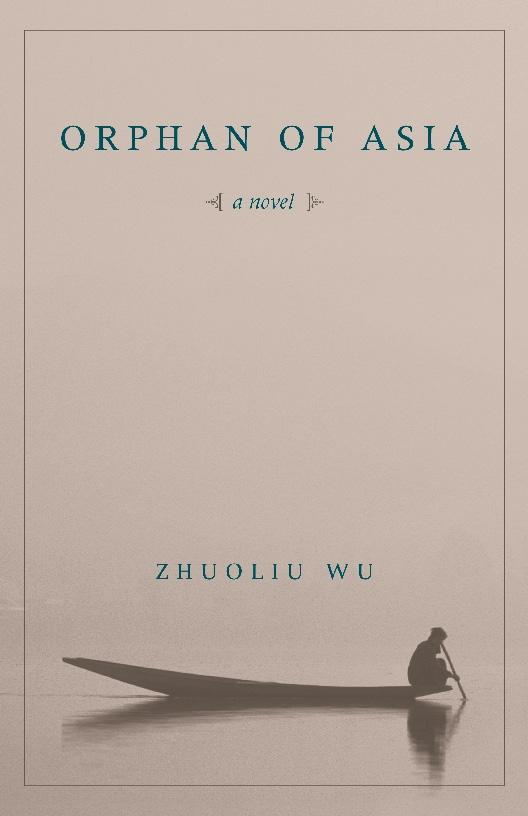
Born in Japanese-occupied Taiwan, raised in the scholarly traditions of ancient China by his grandfather but forced into the Japanese educational system, Hu Taiming, the protagonist of Orphan of Asia, ultimately finds himself estranged from all three cultures. Wu's autobiographical novel, completed in 1945, is widely regarded as a classic of modern Asian literature and a groundbreaking expression of the postwar Taiwanese national consciousness. Originally written in Japanese and now translated into English for the first time, Orphan of Asia offers a powerful depiction of the political, cultural, and psychological impact of colonialism.
Orphan of Asia begins during Taiming's childhood in Taiwan, which has been annexed to Japan only recently. Taiming eventually makes his mark in the colonial Japanese educational system and graduates from a prestigious college. However, he finds that his Japanese education and his adoption of modern ways have alienated him from his family and native village. He becomes a teacher in the Japanese colonial system but soon realizes that there is something seriously wrong with the status quo. He quits his post but finds that, having repudiated his roots, he doesn't seem to belong anywhere.
Thus begins Taiming's long journey for his rightful place. But neither in Japan, where he goes to study physics in the belief that technology represents the future, nor in mainland China, where he marries and has a daughter, does he ever come to feel at home or find his calling. Although he assiduously avoids politics, Taiming can't help being caught up in the conflicts that shaped modern East Asian history. He is accused of spying for both China and Japan after hostilities breakout between the two countries, and he witnesses the effects of Japanese imperial expansion, the horrors of war, and the sense of anger and powerlessness felt by those living under colonial rule.
Before Memmo my notes were scattered across PDFs. Now a workspace pulls everything into one place — I see exactly what's still left to study.
Memmo's summaries are gold before exams. I don't have to re-read 800 pages two weeks before — just the important parts.
The AI chat has saved me the night before an exam more than once. I just keep asking until I get it — no waiting on a study group to reply.
The quizzes hit exactly what I need to know. Memmo tracks what I get stuck on — so I only practice what's worth it.
Flashcards with spaced repetition are magic. Memmo knows when I'm about to forget something and brings it back.
The AI podcasts are my favorite. I listen on my way to school and get a recap without sitting at a computer.

Handbok i kvalitativa metoder
281 kr

Hållbar utveckling: en introduktion för ingenjörer och andra problemlösare
334 kr

Brymans Samhällsvetenskapliga metoder
390 kr

Projektledning
491 kr

Den orättvisa hälsan: om socioekonomiska skillnader i hälsa och livslängd
326 kr

Vetenskapsteori för nybörjare
196 kr

Organizational Leadership
429 kr

På väg mot läraryrket
172 kr

Det sociala livet i skolan: Socialpsykologiska perspektiv
253 kr

Betygsättningens didaktik
151 kr

Personality
402 kr

Studying Leadership
404 kr

Managing Innovation
477 kr

Introduktion till samhällsvetenskaplig metod
347 kr

The Psychology of Sex and Gender
698 kr

Evidens och kunskap för socialt arbete
207 kr

Introduction to Leadership
605 kr