
Before Memmo my notes were scattered across PDFs. Now a workspace pulls everything into one place — I see exactly what's still left to study.
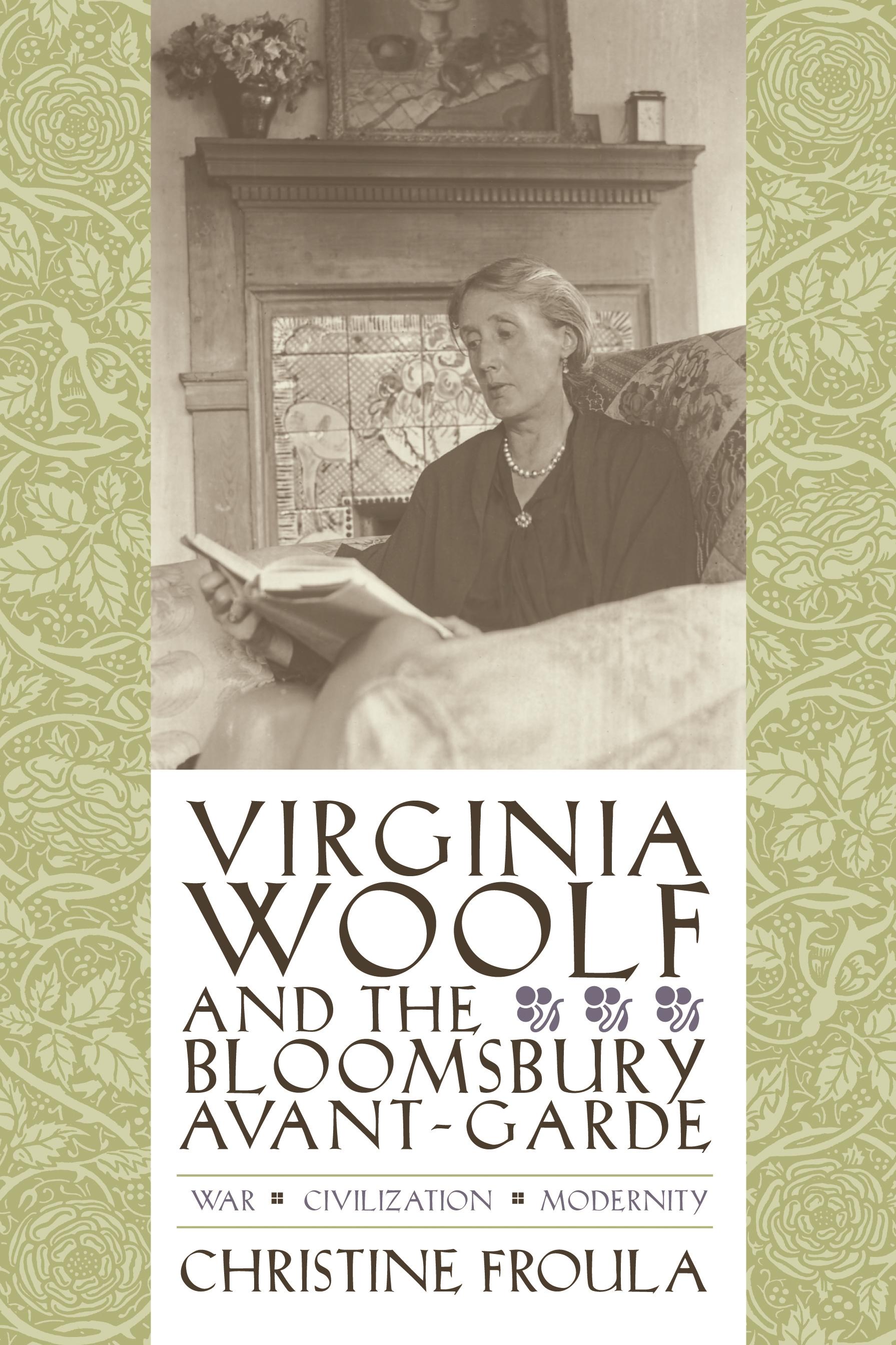
Virginia Woolf and the Bloomsbury Avant-Garde traces the dynamic emergence of Woolf's art and thought against Bloomsbury's public thinking about Europe's future in a period marked by two world wars and rising threats of totalitarianism. Educated informally in her father's library and in Bloomsbury's London extension of Cambridge, Virginia Woolf came of age in the prewar decades, when progressive political and social movements gave hope that Europe "might really be on the brink of becoming civilized," as Leonard Woolf put it. For pacifist Bloomsbury, heir to Europe's unfinished Enlightenment project of human rights, democratic self-governance, and world peace—and, in E. M. Forster's words, "the only genuine movement in English civilization"— the 1914 "civil war" exposed barbarities within Europe: belligerent nationalisms, rapacious racialized economic imperialism, oppressive class and sex/gender systems, a tragic and unnecessary war that mobilized sixty-five million and left thirty-seven million casualties. An avant-garde in the twentieth-century struggle against the violence within European civilization, Bloomsbury and Woolf contributed richly to interwar debates on Europe's future at a moment when democracy's triumph over fascism and communism was by no means assured.
Woolf honed her public voice in dialogue with contemporaries in and beyond Bloomsbury— John Maynard Keynes and Roger Fry to Sigmund Freud (published by the Woolfs'Hogarth Press), Bertrand Russell, T. S. Eliot, E. M. Forster, Katherine Mansfield, and many others—and her works embody and illuminate the convergence of aesthetics and politics in post-Enlightenment thought. An ambitious history of her writings in relation to important currents in British intellectual life in the first half of the twentieth century, this book explores Virginia Woolf's narrative journey from her first novel, The Voyage Out, through her last, Between the Acts.
Before Memmo my notes were scattered across PDFs. Now a workspace pulls everything into one place — I see exactly what's still left to study.
Memmo's summaries are gold before exams. I don't have to re-read 800 pages two weeks before — just the important parts.
The AI chat has saved me the night before an exam more than once. I just keep asking until I get it — no waiting on a study group to reply.
The quizzes hit exactly what I need to know. Memmo tracks what I get stuck on — so I only practice what's worth it.
Flashcards with spaced repetition are magic. Memmo knows when I'm about to forget something and brings it back.
The AI podcasts are my favorite. I listen on my way to school and get a recap without sitting at a computer.

Handbok i kvalitativa metoder
281 kr

Hållbar utveckling: en introduktion för ingenjörer och andra problemlösare
334 kr

Brymans Samhällsvetenskapliga metoder
390 kr

Projektledning
491 kr

Den orättvisa hälsan: om socioekonomiska skillnader i hälsa och livslängd
326 kr

Vetenskapsteori för nybörjare
196 kr

Organizational Leadership
429 kr

På väg mot läraryrket
172 kr

Det sociala livet i skolan: Socialpsykologiska perspektiv
253 kr

Betygsättningens didaktik
151 kr

Personality
402 kr

Studying Leadership
404 kr

Managing Innovation
477 kr

Introduktion till samhällsvetenskaplig metod
347 kr

The Psychology of Sex and Gender
698 kr

Evidens och kunskap för socialt arbete
207 kr

Introduction to Leadership
605 kr