
Before Memmo my notes were scattered across PDFs. Now a workspace pulls everything into one place — I see exactly what's still left to study.
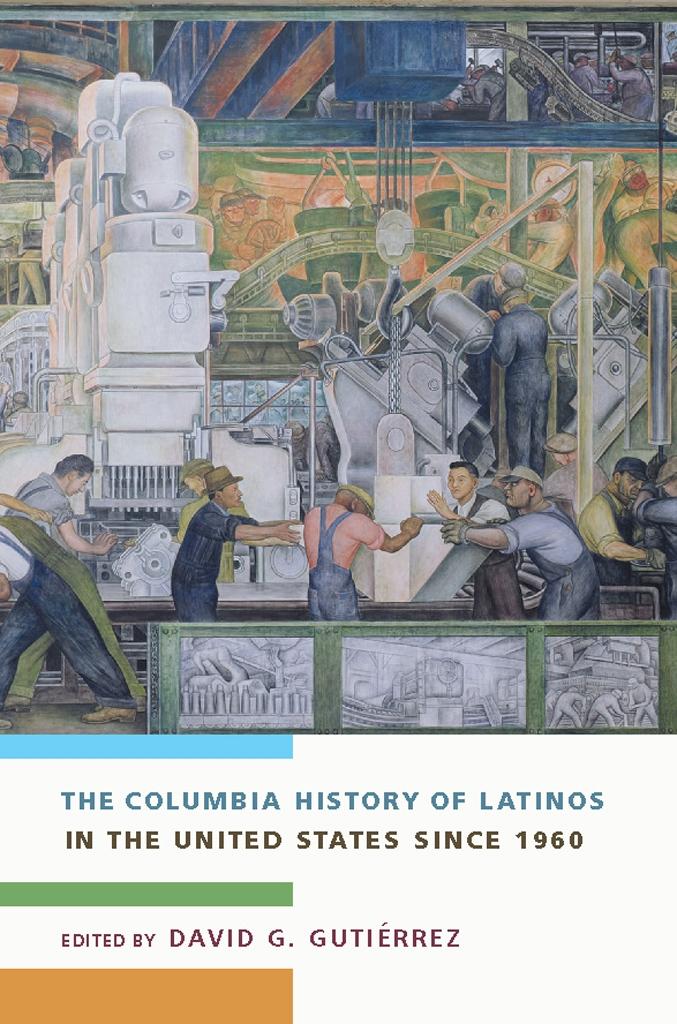
Latinos are now the largest so-called minority group in the United States—the result of a growth trend that began in the mid-twentieth century—and the influence of Latin cultures on American life is reflected in everything from politics to education to mass cultural forms such as music and television. Yet very few volumes have attempted to analyze or provide a context for this dramatic historical development. The Columbia History of Latinos in the United States Since 1960 is among the few comprehensive histories of Latinos in America. This collaborative, interdisciplinary volume provides not only cutting-edge interpretations of recent Latino history, including essays on the six major immigrant groups (Mexicans, Cubans, Puerto Ricans, Dominicans, Central Americans, and South Americans), but also insight into the major areas of contention and debate that characterize Latino scholarship in the early twenty-first century.
This much-needed book offers a broad overview of this era of explosive demographic and cultural change by exploring the recent histories of all the major national and regional Latino subpopulations and reflecting on what these historical trends might mean for the future of both the United States and the other increasingly connected nations of the Western Hemisphere. While at one point it may have been considered feasible to explore the histories of national populations in isolation from one another, all of the contributors to this volume highlight the deep transnational ties and interconnections that bind different peoples across national and regional lines. Thus, each chapter on Latino national subpopulations explores the ambiguous and shifting boundaries that so loosely define them both in the United States and in their countries of origin. A multinational perspective on important political and cultural themes—such as Latino gender systems, religion, politics, expressive and artistic cultures, and interactions with the law—helps shape a realistic interpretation of the Latino experience in the United States.
Before Memmo my notes were scattered across PDFs. Now a workspace pulls everything into one place — I see exactly what's still left to study.
Memmo's summaries are gold before exams. I don't have to re-read 800 pages two weeks before — just the important parts.
The AI chat has saved me the night before an exam more than once. I just keep asking until I get it — no waiting on a study group to reply.
The quizzes hit exactly what I need to know. Memmo tracks what I get stuck on — so I only practice what's worth it.
Flashcards with spaced repetition are magic. Memmo knows when I'm about to forget something and brings it back.
The AI podcasts are my favorite. I listen on my way to school and get a recap without sitting at a computer.

Handbok i kvalitativa metoder
281 kr

Hållbar utveckling: en introduktion för ingenjörer och andra problemlösare
334 kr

Brymans Samhällsvetenskapliga metoder
390 kr

Projektledning
491 kr

Den orättvisa hälsan: om socioekonomiska skillnader i hälsa och livslängd
326 kr

Vetenskapsteori för nybörjare
196 kr

Organizational Leadership
429 kr

På väg mot läraryrket
172 kr

Det sociala livet i skolan: Socialpsykologiska perspektiv
253 kr

Betygsättningens didaktik
151 kr

Personality
402 kr

Studying Leadership
404 kr

Managing Innovation
477 kr

Introduktion till samhällsvetenskaplig metod
347 kr

The Psychology of Sex and Gender
698 kr

Evidens och kunskap för socialt arbete
207 kr

Introduction to Leadership
605 kr