
Before Memmo my notes were scattered across PDFs. Now a workspace pulls everything into one place — I see exactly what's still left to study.
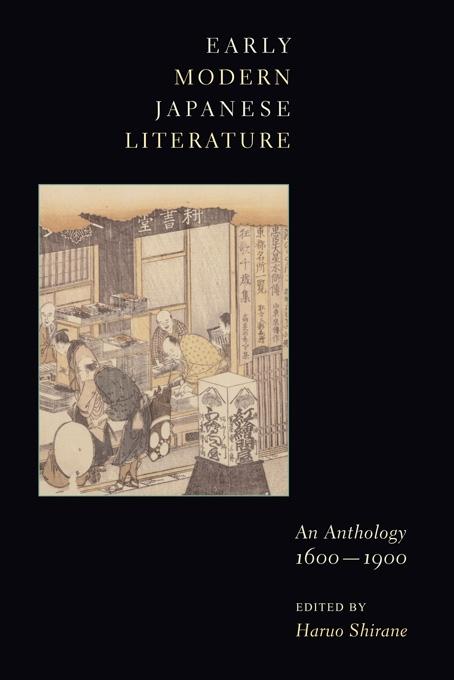
This is the first anthology ever devoted to early modern Japanese literature, spanning the period from 1600 to 1900, known variously as the Edo or the Tokugawa, one of the most creative epochs of Japanese culture. This anthology, which will be of vital interest to anyone involved in this era, includes not only fiction, poetry, and drama, but also essays, treatises, literary criticism, comic poetry, adaptations from Chinese, folk stories and other non-canonical works. Many of these texts have never been translated into English before, and several classics have been newly translated for this collection.
Early Modern Japanese Literature introduces English readers to an unprecedented range of prose fiction genres, including dangibon (satiric sermons), kibyôshi (satiric and didactic picture books), sharebon (books of wit and fashion), yomihon (reading books), kokkeibon (books of humor), gôkan (bound books), and ninjôbon (books of romance and sentiment). The anthology also offers a rich array of poetry—waka, haiku, senryû, kyôka, kyôshi—and eleven plays, which range from contemporary domestic drama to historical plays and from early puppet theater to nineteenth century kabuki. Since much of early modern Japanese literature is highly allusive and often elliptical, this anthology features introductions and commentary that provide the critical context for appreciating this diverse and fascinating body of texts.
One of the major characteristics of early modern Japanese literature is that almost all of the popular fiction was amply illustrated by wood-block prints, creating an extensive text-image phenomenon. In some genres such as kibyôshi and gôkan the text in fact appeared inside the woodblock image. Woodblock prints of actors were also an important aspect of the culture of kabuki drama. A major feature of this anthology is the inclusion of over 200 woodblock prints that accompanied the original texts and drama.
Before Memmo my notes were scattered across PDFs. Now a workspace pulls everything into one place — I see exactly what's still left to study.
Memmo's summaries are gold before exams. I don't have to re-read 800 pages two weeks before — just the important parts.
The AI chat has saved me the night before an exam more than once. I just keep asking until I get it — no waiting on a study group to reply.
The quizzes hit exactly what I need to know. Memmo tracks what I get stuck on — so I only practice what's worth it.
Flashcards with spaced repetition are magic. Memmo knows when I'm about to forget something and brings it back.
The AI podcasts are my favorite. I listen on my way to school and get a recap without sitting at a computer.

Handbok i kvalitativa metoder
281 kr

Hållbar utveckling: en introduktion för ingenjörer och andra problemlösare
334 kr

Brymans Samhällsvetenskapliga metoder
390 kr

Projektledning
491 kr

Den orättvisa hälsan: om socioekonomiska skillnader i hälsa och livslängd
326 kr

Vetenskapsteori för nybörjare
196 kr

Organizational Leadership
429 kr

På väg mot läraryrket
172 kr

Det sociala livet i skolan: Socialpsykologiska perspektiv
253 kr

Betygsättningens didaktik
151 kr

Personality
402 kr

Studying Leadership
404 kr

Managing Innovation
477 kr

Introduktion till samhällsvetenskaplig metod
347 kr

The Psychology of Sex and Gender
698 kr

Evidens och kunskap för socialt arbete
207 kr

Introduction to Leadership
605 kr