
Before Memmo my notes were scattered across PDFs. Now a workspace pulls everything into one place — I see exactly what's still left to study.
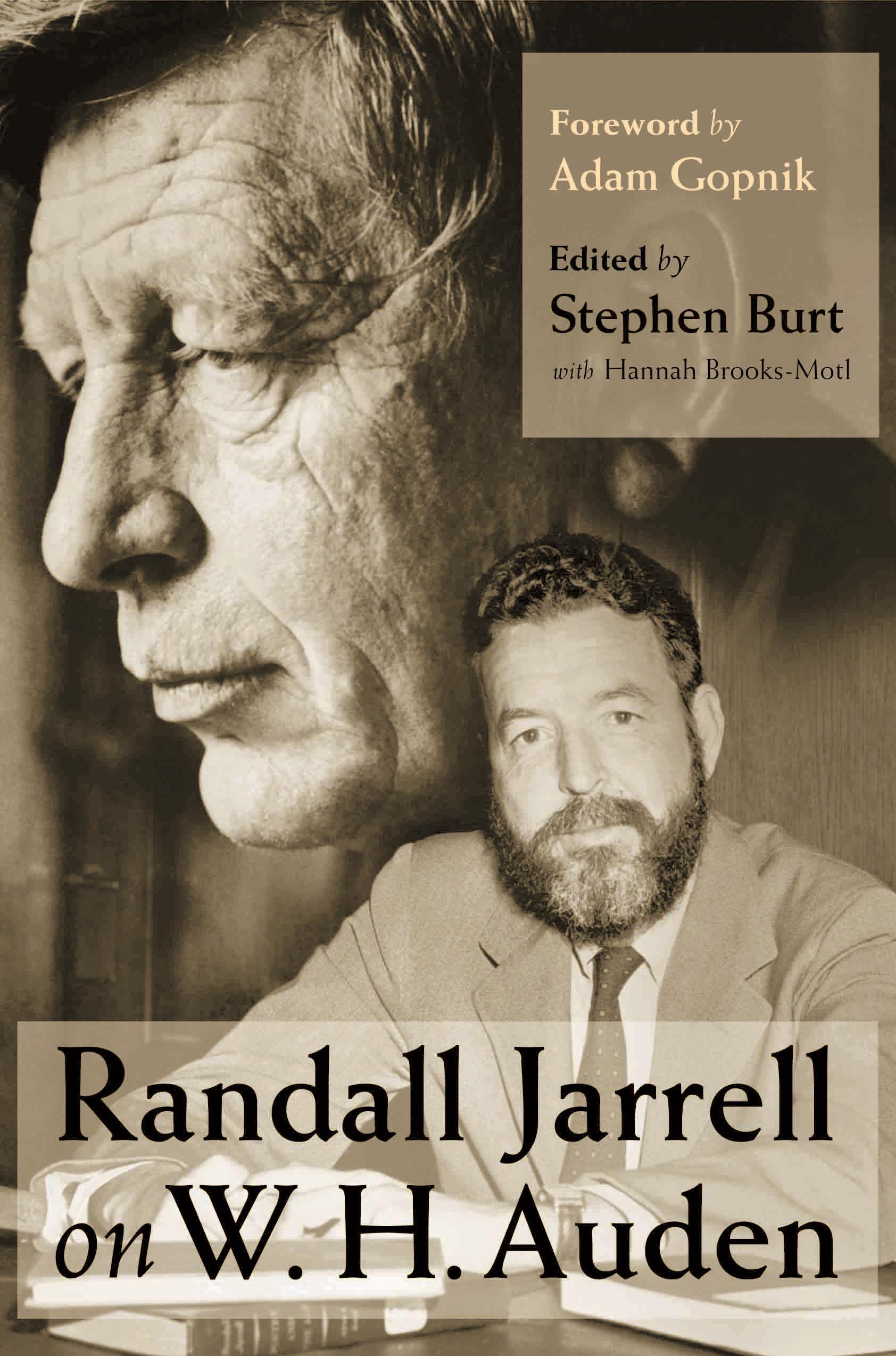
''To read Randall Jarrell on W. H. Auden is to read the best-equipped of American critics of poetry of the past century on the best-equipped of its Anglo-American poets, and we rush to read, perhaps, less out of an academic interest in fair judgment than out of a spectator's love of virtuosity in flight.'' From Adam Gopnik's foreword
Randall Jarrell was one of the most important poet-critics of the past century, and the poet who most fascinated and infuriated him was W. H. Auden. In Auden, Jarrell found a crucial poetic influence that needed to be both embraced and resisted. During the 1940s, Jarrell wrestled with Auden's work, writing a series of notorious articles on Auden that remain admired and controversial examples of devoted and contentious criticism. While Jarrell never completed his proposed book on Auden, these previously unpublished lectures revise and reprise his earlier articles and present new insights into Auden's work. Delivered at Princeton University in 1951 and 1952, Jarrell's lectures reflect a passionate appreciation of Auden's work, a witty attack from an informed opponent, and an important document of a major poet's reception.
Jarrell's lectures offer readings of many of Auden's works, including all of his long poems, and illuminate his singular use of a variety of stylistic registers and poetic genres. In the lecture based on the article ''Freud to Paul,'' Jarrell traces the ideas and ideologies that animated and, at times, overwhelmed Auden's poetry. More precisely, he considers the influence of left-liberal politics, psychoanalytic and evolutionary theory, and the idiosyncratic Christian theology that characterized Auden's poems of the 1940s.
While an admiring and sympathetic reader, Jarrell does not avoid identifying Auden's poetic failures and political excesses. He offers occasionally blistering assessments of individual poems and laments Auden's turn from a cryptic, feeling, impassioned poet to a rhetorical, self-conscious one. Stephen Burt's introduction provides a backdrop to the lectures and their reception and importance for the history of modern poetry.
Before Memmo my notes were scattered across PDFs. Now a workspace pulls everything into one place — I see exactly what's still left to study.
Memmo's summaries are gold before exams. I don't have to re-read 800 pages two weeks before — just the important parts.
The AI chat has saved me the night before an exam more than once. I just keep asking until I get it — no waiting on a study group to reply.
The quizzes hit exactly what I need to know. Memmo tracks what I get stuck on — so I only practice what's worth it.
Flashcards with spaced repetition are magic. Memmo knows when I'm about to forget something and brings it back.
The AI podcasts are my favorite. I listen on my way to school and get a recap without sitting at a computer.

Handbok i kvalitativa metoder
281 kr

Hållbar utveckling: en introduktion för ingenjörer och andra problemlösare
334 kr

Brymans Samhällsvetenskapliga metoder
390 kr

Projektledning
491 kr

Den orättvisa hälsan: om socioekonomiska skillnader i hälsa och livslängd
326 kr

Vetenskapsteori för nybörjare
196 kr

Organizational Leadership
429 kr

På väg mot läraryrket
172 kr

Det sociala livet i skolan: Socialpsykologiska perspektiv
253 kr

Betygsättningens didaktik
151 kr

Personality
402 kr

Studying Leadership
404 kr

Managing Innovation
477 kr

Introduktion till samhällsvetenskaplig metod
347 kr

The Psychology of Sex and Gender
698 kr

Evidens och kunskap för socialt arbete
207 kr

Introduction to Leadership
605 kr