
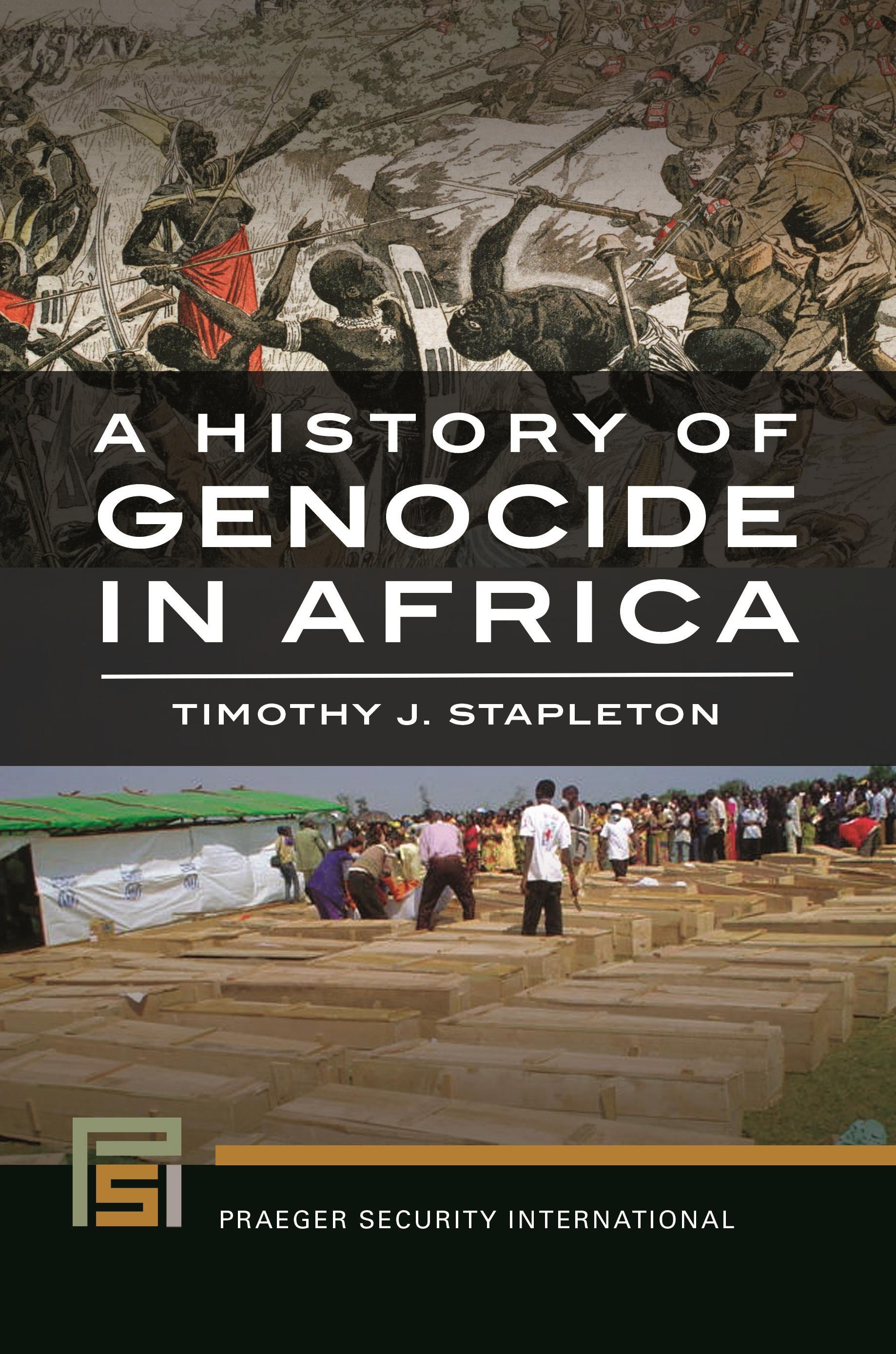
Based on a series of detailed case studies, this book presents the history of genocide in Africa within the specific context of African history, examining conflicts in countries such as Burundi, Democratic Republic of Congo, Namibia, Rwanda, and Sudan.
Why has Africa been the subject of so many accusations related to genocide? Indeed, the number of such allegations related to Africa has increased dramatically over the past 15 years. Popular racist mythology might suggest that Africans belong to "tribes" that are inherently antagonistic towards each other and therefore engage in "tribal warfare" which cannot be rationally explained. This concept is wrong, as Timothy J. Stapleton explains in A History of Genocide in Africa: the many conflicts that have plagued post-colonial Africa have had very logical explanations, and very few of these instances of African warring can be said to have resulted in genocide.
Authored by an expert historian of Africa, this book examines the history of six African countries—Namibia, Rwanda, Burundi, Democratic Republic of Congo, Sudan, and Nigeria—in which the language of genocide has been mobilized to describe episodes of tragic mass violence. It seeks to place genocide within the context of African history, acknowledging the few instances where the international legal term genocide has been applied appropriately to episodes of mass violence in African history and identifying the many other cases where it has not and instead the term has been used in a cynical manipulation to gain some political advantage.
Readers will come to understand how, to a large extent, genocide accusations related to post-colonial Africa have often served to prolong wars and cause greater loss of life. The book also clarifies how in areas of Africa where genocides have actually occurred, there appears to have been a common history of the imposition of racial ideologies and hierarchies during the colonial era—which when combined with other factors such as the local geography, demography, religion, and/or economics, resulted in tragic and appalling outcomes.
Why has Africa been the subject of so many accusations related to genocide? Indeed, the number of such allegations related to Africa has increased dramatically over the past 15 years. Popular racist mythology might suggest that Africans belong to "tribes" that are inherently antagonistic towards each other and therefore engage in "tribal warfare" which cannot be rationally explained. This concept is wrong, as Timothy J. Stapleton explains in A History of Genocide in Africa: the many conflicts that have plagued post-colonial Africa have had very logical explanations, and very few of these instances of African warring can be said to have resulted in genocide.
Authored by an expert historian of Africa, this book examines the history of six African countries—Namibia, Rwanda, Burundi, Democratic Republic of Congo, Sudan, and Nigeria—in which the language of genocide has been mobilized to describe episodes of tragic mass violence. It seeks to place genocide within the context of African history, acknowledging the few instances where the international legal term genocide has been applied appropriately to episodes of mass violence in African history and identifying the many other cases where it has not and instead the term has been used in a cynical manipulation to gain some political advantage.
Readers will come to understand how, to a large extent, genocide accusations related to post-colonial Africa have often served to prolong wars and cause greater loss of life. The book also clarifies how in areas of Africa where genocides have actually occurred, there appears to have been a common history of the imposition of racial ideologies and hierarchies during the colonial era—which when combined with other factors such as the local geography, demography, religion, and/or economics, resulted in tragic and appalling outcomes.
Zahle einfach mit Karte, Klarna, Apple Pay oder Google Pay. Nicht zufrieden? Du hast immer ein 14-tägiges Widerrufsrecht. Lies mehr in unseren AGB. Hast du Fragen, schreib uns eine E-Mail an hello@memmo.org.
Memmo macht das Lernen einfacher – wo auch immer du bist. Bei uns findest du deine Kursbücher und smarte Lerntools an einem Ort: Zusammenfassungen, Quizzes, Podcasts und Lernkarten. Und Ted, dein Lernbuddy, beantwortet alles, was du wissen möchtest. Über 50.000 Studierende lernen bereits hier – gemacht, damit du schneller lernst und weniger Stress hast.