
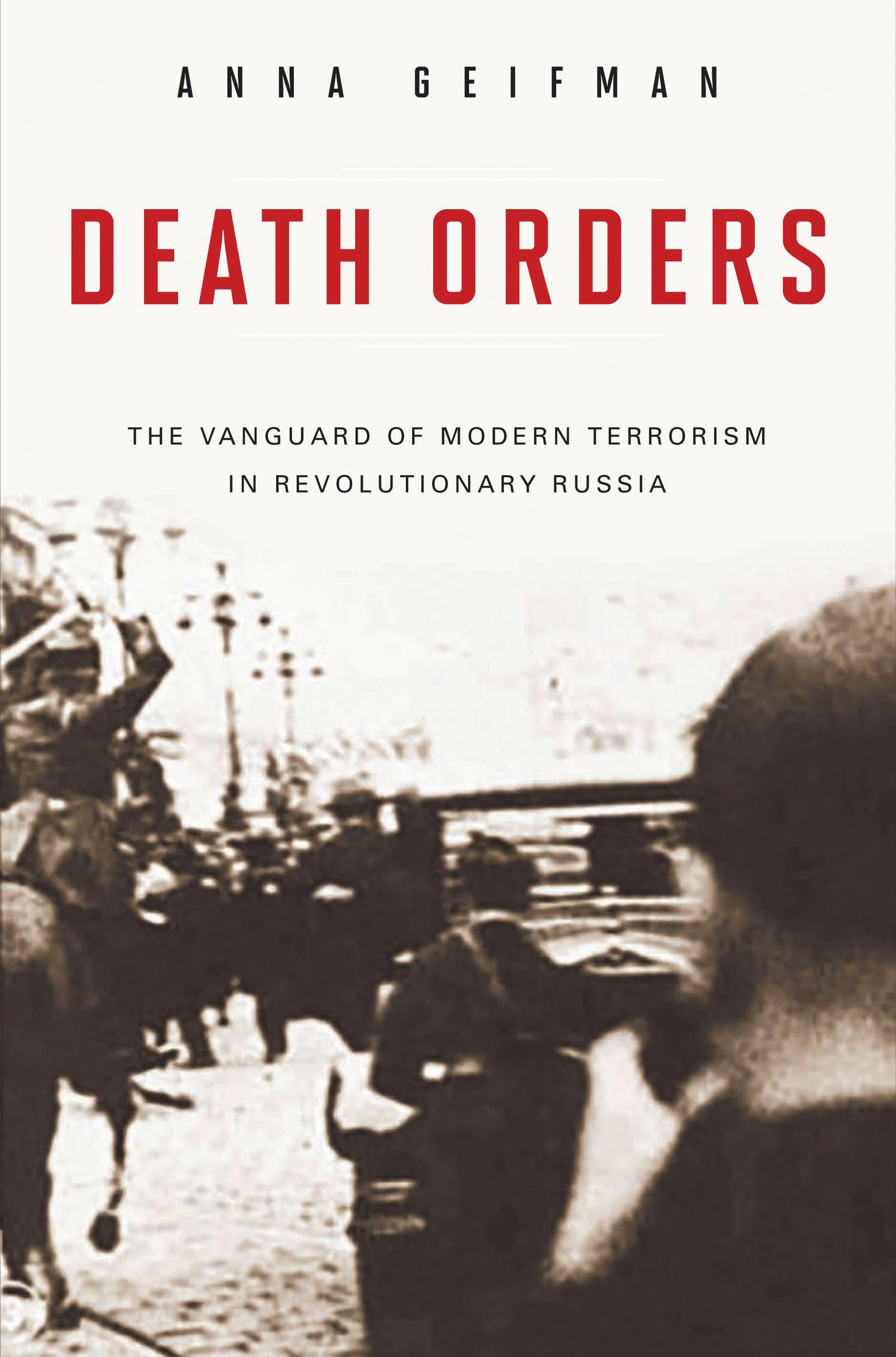
This fascinating study shows how terrorism as developed and practiced in Romanov Russia has, over the past century, manifested itself as the template for modern and postmodern terrorism as a universal sociocultural, psychological, and existential experience, irrespective of particular political causes, ethnic distinctions, and ideological boundaries.
Arguing that Russia is the birthplace of modern terrorism, Death Orders: The Vanguard of Modern Terrorism in Revolutionary Russia uses the nation as a case study of psycho-historical patterns of worldwide terrorist activity during the past century. Key features of early-20th century Russian political extremism serve as models for terrorist experiences in other periods and regions as author Anna Geifman builds a typology of a universal phenomenon.
The book shows how, in Russia and elsewhere, terrorists' objectives have degenerated from punishment of individual adversaries and attempts to intimidate political elites to indiscriminate acts of political violence. It shifts attention from ideology to practices that had been previously hidden, ignored, or rationalized, demonstrating that what terrorists say about their motives may not be what actually drives them to brutality. By looking closely at Russian precedents for the general experience of modern political violence, the book helps illuminate many obscure aspects of terrorism today.
Arguing that Russia is the birthplace of modern terrorism, Death Orders: The Vanguard of Modern Terrorism in Revolutionary Russia uses the nation as a case study of psycho-historical patterns of worldwide terrorist activity during the past century. Key features of early-20th century Russian political extremism serve as models for terrorist experiences in other periods and regions as author Anna Geifman builds a typology of a universal phenomenon.
The book shows how, in Russia and elsewhere, terrorists' objectives have degenerated from punishment of individual adversaries and attempts to intimidate political elites to indiscriminate acts of political violence. It shifts attention from ideology to practices that had been previously hidden, ignored, or rationalized, demonstrating that what terrorists say about their motives may not be what actually drives them to brutality. By looking closely at Russian precedents for the general experience of modern political violence, the book helps illuminate many obscure aspects of terrorism today.
Zahle einfach mit Karte, Klarna, Apple Pay oder Google Pay. Nicht zufrieden? Du hast immer ein 14-tägiges Widerrufsrecht. Lies mehr in unseren AGB. Hast du Fragen, schreib uns eine E-Mail an hello@memmo.org.
Memmo macht das Lernen einfacher – wo auch immer du bist. Bei uns findest du deine Kursbücher und smarte Lerntools an einem Ort: Zusammenfassungen, Quizzes, Podcasts und Lernkarten. Und Ted, dein Lernbuddy, beantwortet alles, was du wissen möchtest. Über 50.000 Studierende lernen bereits hier – gemacht, damit du schneller lernst und weniger Stress hast.