
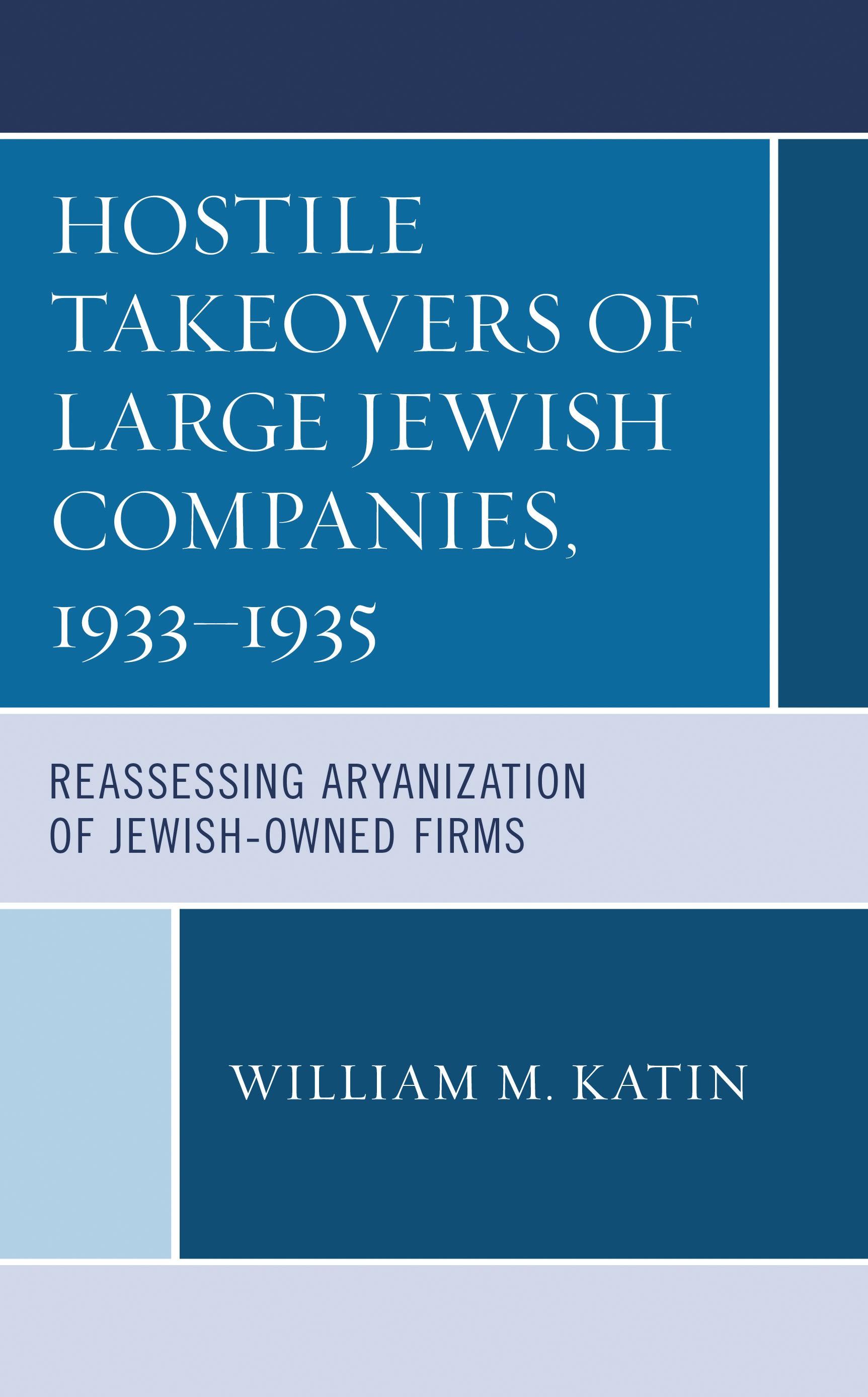
Opportunism combined with anti-Semitism led non-Nazi businessmen to acquire the largest German-Jewish companies in the period 1933–1935. These hostile takeovers were made possible by the Deutsche Bank and Dresdner Bank, which recalled loans previously extended to Jewish firms. Thereby Germany's largest banks obtained new loan fees, new supervisory board seats and became the house banks for the new Gentile-owned firms. The German judiciary did not defend Jewish property rights, because judges shared the same conservative mindset. Scholarship has previously not discovered this 1933–1935 paradigm because of a focus on Berlin government or Nazi Party actions, instead of the Jewish companies. In addition, a failure to distinguish between multi-million dollar enterprises and tiny shops caused scholars to emphasize the year 1938, when thousands of mom-and-pop shops became bankrupt.
Zahle einfach mit Karte, Klarna, Apple Pay oder Google Pay. Nicht zufrieden? Du hast immer ein 14-tägiges Widerrufsrecht. Lies mehr in unseren AGB. Hast du Fragen, schreib uns eine E-Mail an hello@memmo.org.
Memmo macht das Lernen einfacher – wo auch immer du bist. Bei uns findest du deine Kursbücher und smarte Lerntools an einem Ort: Zusammenfassungen, Quizzes, Podcasts und Lernkarten. Und Ted, dein Lernbuddy, beantwortet alles, was du wissen möchtest. Über 50.000 Studierende lernen bereits hier – gemacht, damit du schneller lernst und weniger Stress hast.