
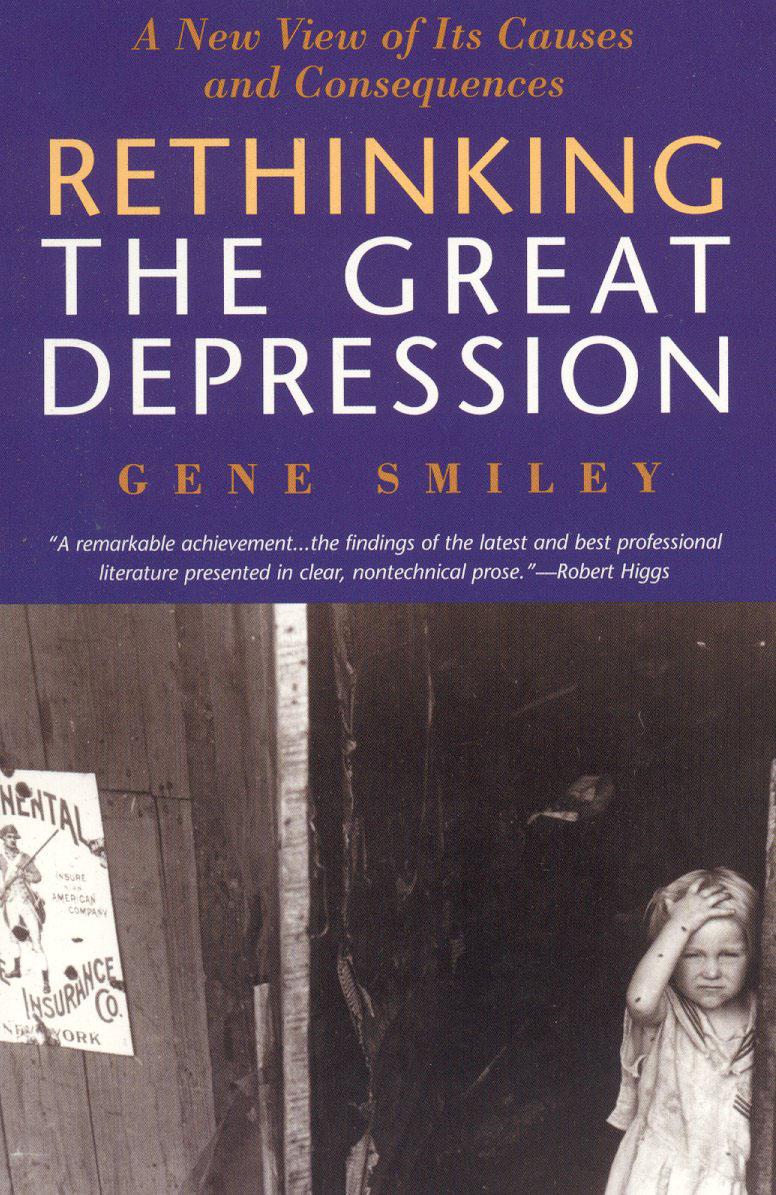
The worldwide Great Depression of the 1930s was the most traumatic event of the twentieth century. It ushered in substantial expansions in the role of governments around the world, focused attention on social insurance, and for a time bolstered socialist economic ideas as a form of cure. Skepticism about the effectiveness of government withered as the free market failed, and it seems safe to say that Keynesian economics would not have flourished if the depression had not occurred. While this severe contraction has been extensively examined, we are just now—thanks to increasingly sophisticated analytical techniques—beginning to comprehend its causes and the reasons for the extremely slow recovery that occurred in the United States. Much of this analysis, though, remains in specialized studies that are visited mainly by economists and economic historians. In Rethinking the Great Depression, Gene Smiley draws upon this recent scholarship to present a clear and nontechnical analysis for the general reader. He explains the roots of the depression in the 1920s, the efforts of the New Deal to combat the economic crisis, and the legacy of these efforts in World War II and the postwar years. He offers new insights and some surprising conclusions: that the causes of the Great Depression lay in the dislocations caused by World War I and the attempt to reconstitute an international gold standard in the 1920s; that the New Deal, regardless of its good intentions, adopted misguided fiscal and monetary policies that prolonged the depression in the United States beyond what it should have been; that World War II, rather than stimulating an end to the depression, actually postponed a full recovery until 1946.
Zahle einfach mit Karte, Klarna, Apple Pay oder Google Pay. Nicht zufrieden? Du hast immer ein 14-tägiges Widerrufsrecht. Lies mehr in unseren AGB. Hast du Fragen, schreib uns eine E-Mail an hello@memmo.org.
Memmo macht das Lernen einfacher – wo auch immer du bist. Bei uns findest du deine Kursbücher und smarte Lerntools an einem Ort: Zusammenfassungen, Quizzes, Podcasts und Lernkarten. Und Ted, dein Lernbuddy, beantwortet alles, was du wissen möchtest. Über 50.000 Studierende lernen bereits hier – gemacht, damit du schneller lernst und weniger Stress hast.