
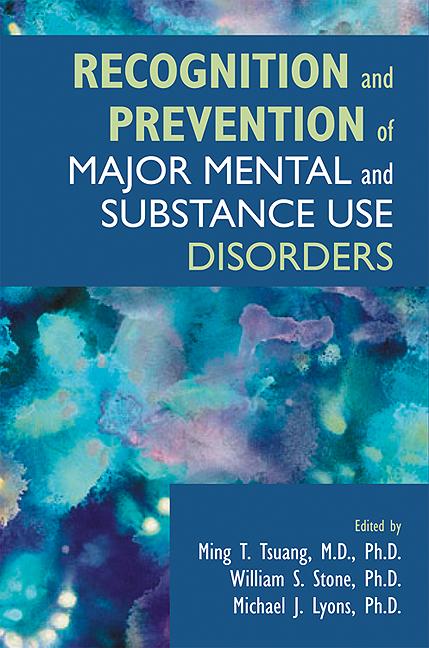
Recognizing that favorable clinical outcomes are associated with earlier initiation of treatment -- and even more ideally with prevention -- this volume addresses the current status of early intervention in, and prevention of, major mental and substance use disorders. A team of distinguished participants addresses this problem at many levels -- from the DNA molecule to public policy -- in order to show how prevention efforts should be informed by a better understanding of etiology and by a knowledge of indicators of vulnerability.
In considering the current standing of etiological knowledge, Recognition and Prevention of Major Mental and Substance Use Disorders addresses issues that are critical precursors to the prevention of mental disorders and offers an understanding of factors that contribute to the disorders' development. The contributors review genetic methodologies and current findings in mental disorders, with an emphasis on schizophrenia, and then show how biological and psychosocial environmental variables may affect vulnerability. Chapters devoted specifically to lessons in prevention drawn from recent research into schizophrenia discuss the implications of prodromal studies and relationships between stress, critical periods, and the development of the disorder. The book includes contributions from NIH representatives on how basic scientific understanding of mental disorders can be translated into public policy. It also features chapters that describe cutting-edge projects in prevention research for Alzheimer's disease, drug dependence, antisocial behavior, and posttraumatic stress disorder -- each providing compelling accounts of how existing knowledge can be adapted to promising prevention efforts. Among the volume's contributions: New data on the role of substance abuse -- particularly marijuana and psychostimulants -- in increasing vulnerability to schizophrenia Review of vulnerability factors for several relevant disorders, examining stress and its concomitant psychobiological responses and the contribution of cognitive factors to vulnerability to depression Intriguing approach for translating successful treatment methods for schizophrenia into efforts to prevent the transition from the prodrome of the disorder to the full-blown illness Program for prevention of antisocial behavior that can be implemented as early as the first grade Secondary prevention efforts for posttraumatic stress disorder, with a focus on pharmacological interventions
Each chapter reviews clinical implications of the research presented, contributing to a volume that will benefit clinicians and researchers who share the goal of preventing these debilitating conditions. This multidimensional, interdisciplinary work represents a major step toward cutting the social costs of these disorders -- and, more important, their untold cost in human suffering.
Zahle einfach mit Karte, Klarna, Apple Pay oder Google Pay. Nicht zufrieden? Du hast immer ein 14-tägiges Widerrufsrecht. Lies mehr in unseren AGB. Hast du Fragen, schreib uns eine E-Mail an hello@memmo.org.
Memmo macht das Lernen einfacher – wo auch immer du bist. Bei uns findest du deine Kursbücher und smarte Lerntools an einem Ort: Zusammenfassungen, Quizzes, Podcasts und Lernkarten. Und Ted, dein Lernbuddy, beantwortet alles, was du wissen möchtest. Über 50.000 Studierende lernen bereits hier – gemacht, damit du schneller lernst und weniger Stress hast.