
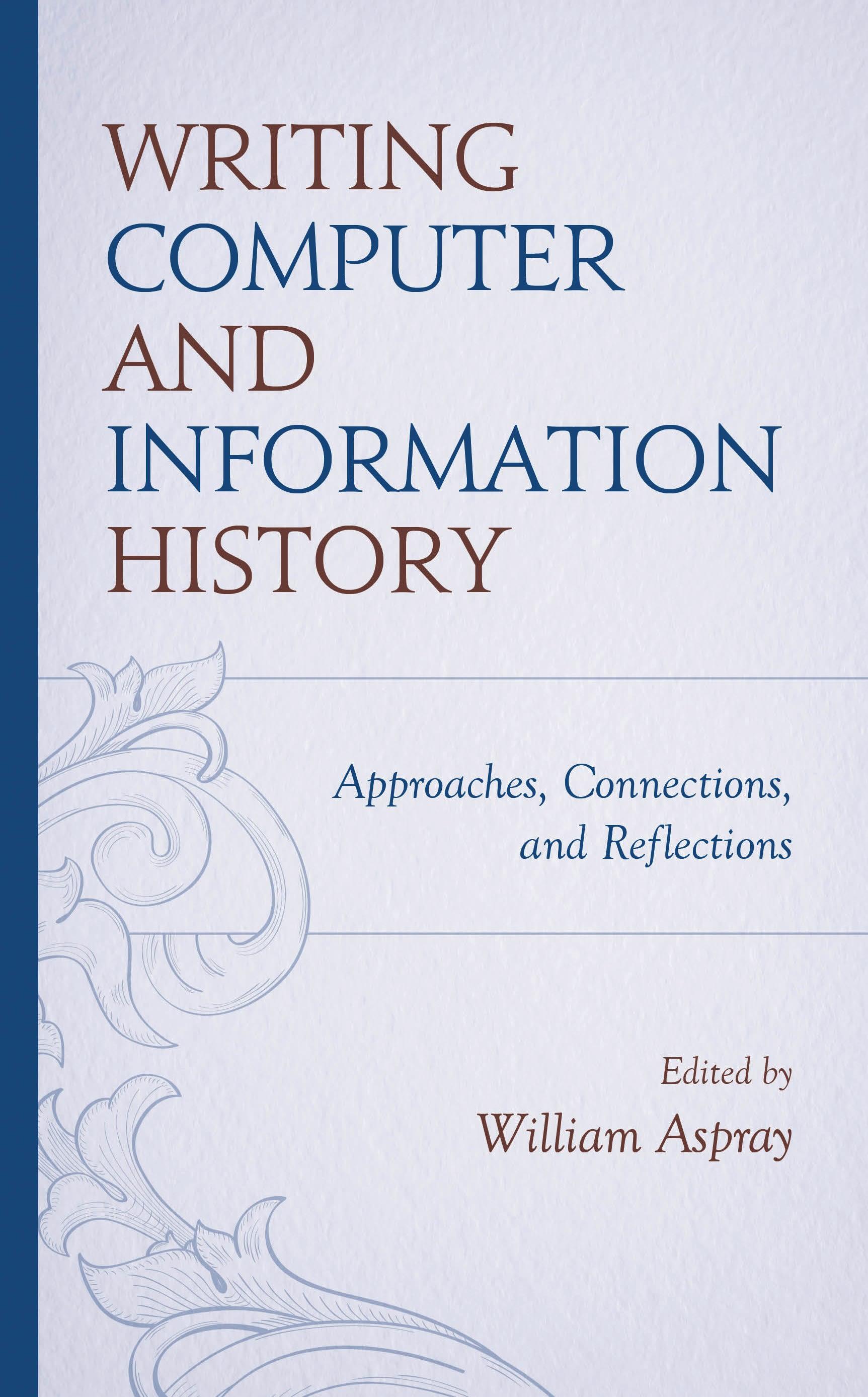
This is not a book about the history of computing or the history of information. Instead, it is a meta-historical book about the research and writing of these types of history.
The formal presentation of historical research in the form of a publication often hides the process by which the topic was selected, boundaries were drawn, evidence was selected, analytic approach was chosen and applied, results were presented, how this work fits into a larger body of scholarship, the implicit goals and biases of the author, and many other similar issues. This process of learning about the various ways to carry out computer history or information history can be enriched by this collection of reflective essays by experienced scholars, discussing the craft that they practice.
This is a book that concerns both computer history and information history. The first scholarship in computer history by professionally trained scholars began to appear in the 1970s, so we are approaching a half century of research and publication in this area. The field has generated numerous pieces of exemplary scholarship from various perspectives such as intellectual history of individual technologies, business histories of firms, economic histories of market sectors, externalist histories of funding and professionalization, and so on.
However, the field continues to evolve, especially as computing and communication technologies have drawn together in the form of the Internet and social media; and with them a new set of scholars is participating, drawn not only from the history of science and technology, but also from the communication and media studies fields. Powerful theories, approaches, and frameworks are being increasingly drawn more widely from both the humanities and the social sciences to inform the practice of computer history. The scholars in this volume look at what's happened, what's happening now, and where historical scholarship in these disciplines is headed.
The formal presentation of historical research in the form of a publication often hides the process by which the topic was selected, boundaries were drawn, evidence was selected, analytic approach was chosen and applied, results were presented, how this work fits into a larger body of scholarship, the implicit goals and biases of the author, and many other similar issues. This process of learning about the various ways to carry out computer history or information history can be enriched by this collection of reflective essays by experienced scholars, discussing the craft that they practice.
This is a book that concerns both computer history and information history. The first scholarship in computer history by professionally trained scholars began to appear in the 1970s, so we are approaching a half century of research and publication in this area. The field has generated numerous pieces of exemplary scholarship from various perspectives such as intellectual history of individual technologies, business histories of firms, economic histories of market sectors, externalist histories of funding and professionalization, and so on.
However, the field continues to evolve, especially as computing and communication technologies have drawn together in the form of the Internet and social media; and with them a new set of scholars is participating, drawn not only from the history of science and technology, but also from the communication and media studies fields. Powerful theories, approaches, and frameworks are being increasingly drawn more widely from both the humanities and the social sciences to inform the practice of computer history. The scholars in this volume look at what's happened, what's happening now, and where historical scholarship in these disciplines is headed.
Zahle einfach mit Karte, Klarna, Apple Pay oder Google Pay. Nicht zufrieden? Du hast immer ein 14-tägiges Widerrufsrecht. Lies mehr in unseren AGB. Hast du Fragen, schreib uns eine E-Mail an hello@memmo.org.
Memmo macht das Lernen einfacher – wo auch immer du bist. Bei uns findest du deine Kursbücher und smarte Lerntools an einem Ort: Zusammenfassungen, Quizzes, Podcasts und Lernkarten. Und Ted, dein Lernbuddy, beantwortet alles, was du wissen möchtest. Über 50.000 Studierende lernen bereits hier – gemacht, damit du schneller lernst und weniger Stress hast.