
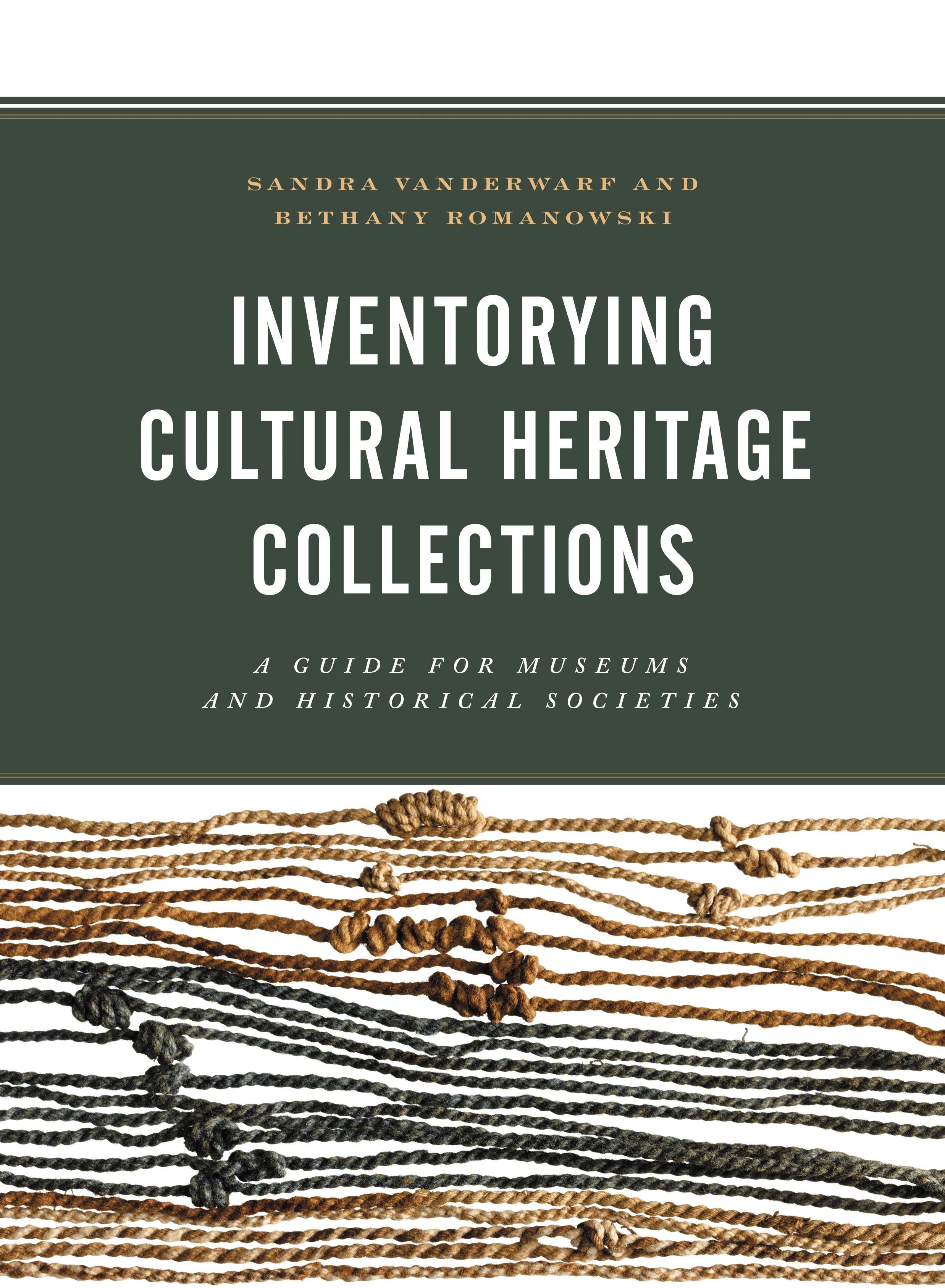
This two-part text opens with an argument few collections practitioners would contest: Regular inventories are central to meaningful, sustainable, and ethical collections preservation and access. But Vanderwarf and Romanowski argue that in practice—some 25 years working with diverse collections between them—inventories are uncommon: instead of functioning as a commonplace feature of collections care, they tend to be evoked as a last resort when a museum has lost control of its collection.
Part I offers a flexible project management framework that illustrates strategies for reining in control of collections now. From identifying objectives that best serve the collection in question to securing stakeholder support and planning time and resources, Part I eliminates some guesswork around what may be an unprecedented and intensive project. To maintain the benefits of a project-style inventory, the authors then encourage practitioners to embrace inventory as an ongoing, evolving collections care function that reflects changing professional values and expectations from the communities museums serve. By centering computerized databases, barcoding, and digital collections, the authors further acknowledge these technologies as permanent, evolving features of collections and inventory practice that merit increased resourcing.
Part II gives voice to practitioners around the world through case studies that affirm the vital role of inventories in regaining control of collections. Some of these inventories occurred during the course of everyday work, while others were responses to natural disasters and armed conflict. Still others may be seen as expressions of social justice. As much as the authors offer a guide to performing inventories, thereby filling a longstanding gap in the literature, they invite cultural heritage institutions to rethink how the stories held in collections can be better told and preserved through enhanced inventory practice.
The book will benefit seasoned museum collections practitioners as well as those who lack access to formal museology education and training. The book targets stewards of cultural heritage and material culture collections with varying resources
Part I offers a flexible project management framework that illustrates strategies for reining in control of collections now. From identifying objectives that best serve the collection in question to securing stakeholder support and planning time and resources, Part I eliminates some guesswork around what may be an unprecedented and intensive project. To maintain the benefits of a project-style inventory, the authors then encourage practitioners to embrace inventory as an ongoing, evolving collections care function that reflects changing professional values and expectations from the communities museums serve. By centering computerized databases, barcoding, and digital collections, the authors further acknowledge these technologies as permanent, evolving features of collections and inventory practice that merit increased resourcing.
Part II gives voice to practitioners around the world through case studies that affirm the vital role of inventories in regaining control of collections. Some of these inventories occurred during the course of everyday work, while others were responses to natural disasters and armed conflict. Still others may be seen as expressions of social justice. As much as the authors offer a guide to performing inventories, thereby filling a longstanding gap in the literature, they invite cultural heritage institutions to rethink how the stories held in collections can be better told and preserved through enhanced inventory practice.
The book will benefit seasoned museum collections practitioners as well as those who lack access to formal museology education and training. The book targets stewards of cultural heritage and material culture collections with varying resources
Zahle einfach mit Karte, Klarna, Apple Pay oder Google Pay. Nicht zufrieden? Du hast immer ein 14-tägiges Widerrufsrecht. Lies mehr in unseren AGB. Hast du Fragen, schreib uns eine E-Mail an hello@memmo.org.
Memmo macht das Lernen einfacher – wo auch immer du bist. Bei uns findest du deine Kursbücher und smarte Lerntools an einem Ort: Zusammenfassungen, Quizzes, Podcasts und Lernkarten. Und Ted, dein Lernbuddy, beantwortet alles, was du wissen möchtest. Über 50.000 Studierende lernen bereits hier – gemacht, damit du schneller lernst und weniger Stress hast.