
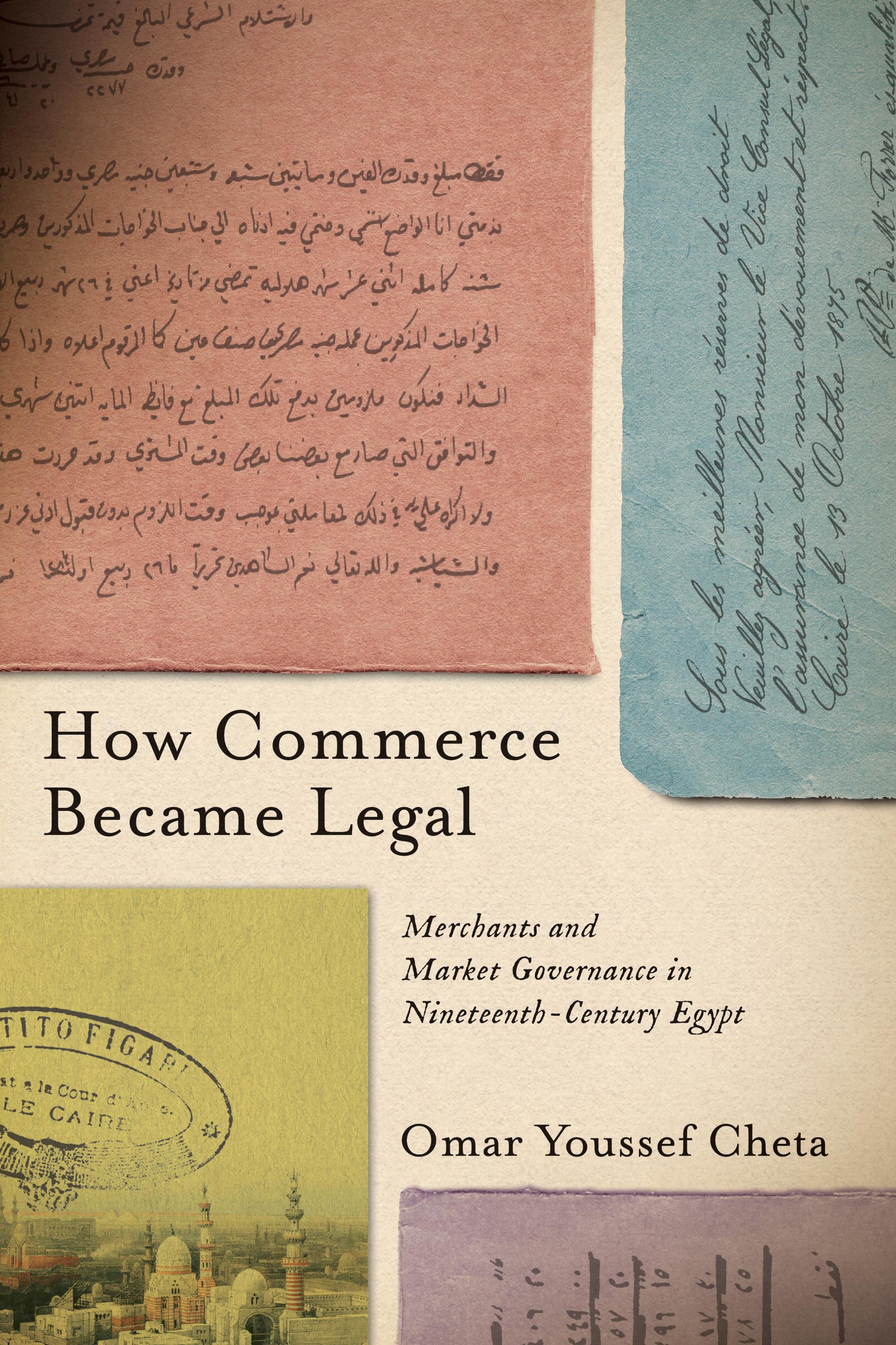
When Egypt's markets opened to private capital in the 1840s, a new infrastructure of commercial laws and institutions emerged. Egypt became the site of profound legal experimentation, and the resulting commercial sphere reflected the political contestations among the governors of Egypt, European consulates, Ottoman rulers, and a growing number of private entrepreneurs, both foreign and local. How Commerce Became Legal explores the legal and business practices that resulted from this fusion of Ottoman, French, and Islamic legal concepts and governed commerce in Egypt.
Focusing on the decades between the formalization of Cairo's practical autonomy within the Ottoman Empire in the 1840s and its incorporation into the British Empire in the 1880s, Omar Cheta considers how modern laws redefined the commercial sphere, shaping a mode of market governance that would persist for decades to come. He highlights the demarcation of a new law-defined commercial realm separate from the land regime and from civil or family-centered exchanges, and reconstructs these changes through both legal codes and state orders, as well as individual merchant voices preserved in court documents. As this book documents both individual experiences and structural explanations, it offers a rare perspective on the scope and reach of market governance over the mid nineteenth century, revealing changes simultaneously from within and without state institutions.
Zahle einfach mit Karte, Klarna, Apple Pay oder Google Pay. Nicht zufrieden? Du hast immer ein 14-tägiges Widerrufsrecht. Lies mehr in unseren AGB. Hast du Fragen, schreib uns eine E-Mail an hello@memmo.org.
Memmo macht das Lernen einfacher – wo auch immer du bist. Bei uns findest du deine Kursbücher und smarte Lerntools an einem Ort: Zusammenfassungen, Quizzes, Podcasts und Lernkarten. Und Ted, dein Lernbuddy, beantwortet alles, was du wissen möchtest. Über 50.000 Studierende lernen bereits hier – gemacht, damit du schneller lernst und weniger Stress hast.