
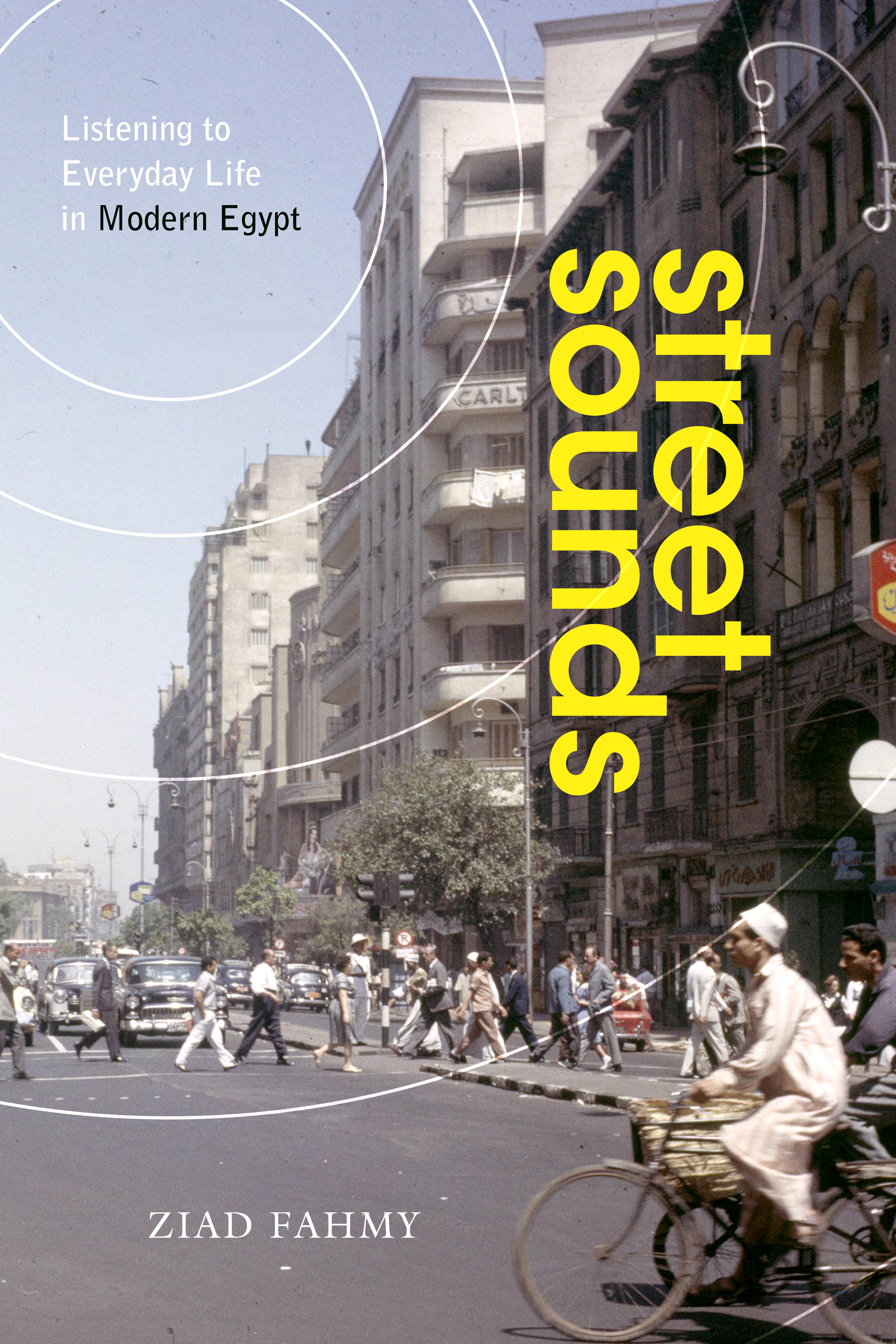
As the twentieth century roared on, transformative technologies—from trains, trams, and automobiles to radios and loudspeakers—fundamentally changed the sounds of the Egyptian streets. The cacophony of everyday life grew louder, and the Egyptian press featured editorials calling for the regulation of not only mechanized and amplified sounds, but also the voices of street vendors, the music of wedding processions, and even the traditional funerary wails. Ziad Fahmy offers the first historical examination of the changing soundscapes of urban Egypt, highlighting the mundane sounds of street life, while "listening" to the voices of ordinary people as they struggle with state authorities for ownership of the streets.
Interweaving infrastructural, cultural, and social history, Fahmy analyzes the sounds of modernity, using sounded sources as an analytical tool for examining the past. Street Sounds also reveals a political dimension of noise by demonstrating how the growing middle classes used sound to distinguish themselves from the Egyptian masses. This book contextualizes sound, layering historical analysis with a sensory dimension, bringing us closer to the Egyptian streets as lived and embodied by everyday people.
Zahle einfach mit Karte, Klarna, Apple Pay oder Google Pay. Nicht zufrieden? Du hast immer ein 14-tägiges Widerrufsrecht. Lies mehr in unseren AGB. Hast du Fragen, schreib uns eine E-Mail an hello@memmo.org.
Memmo macht das Lernen einfacher – wo auch immer du bist. Bei uns findest du deine Kursbücher und smarte Lerntools an einem Ort: Zusammenfassungen, Quizzes, Podcasts und Lernkarten. Und Ted, dein Lernbuddy, beantwortet alles, was du wissen möchtest. Über 50.000 Studierende lernen bereits hier – gemacht, damit du schneller lernst und weniger Stress hast.