
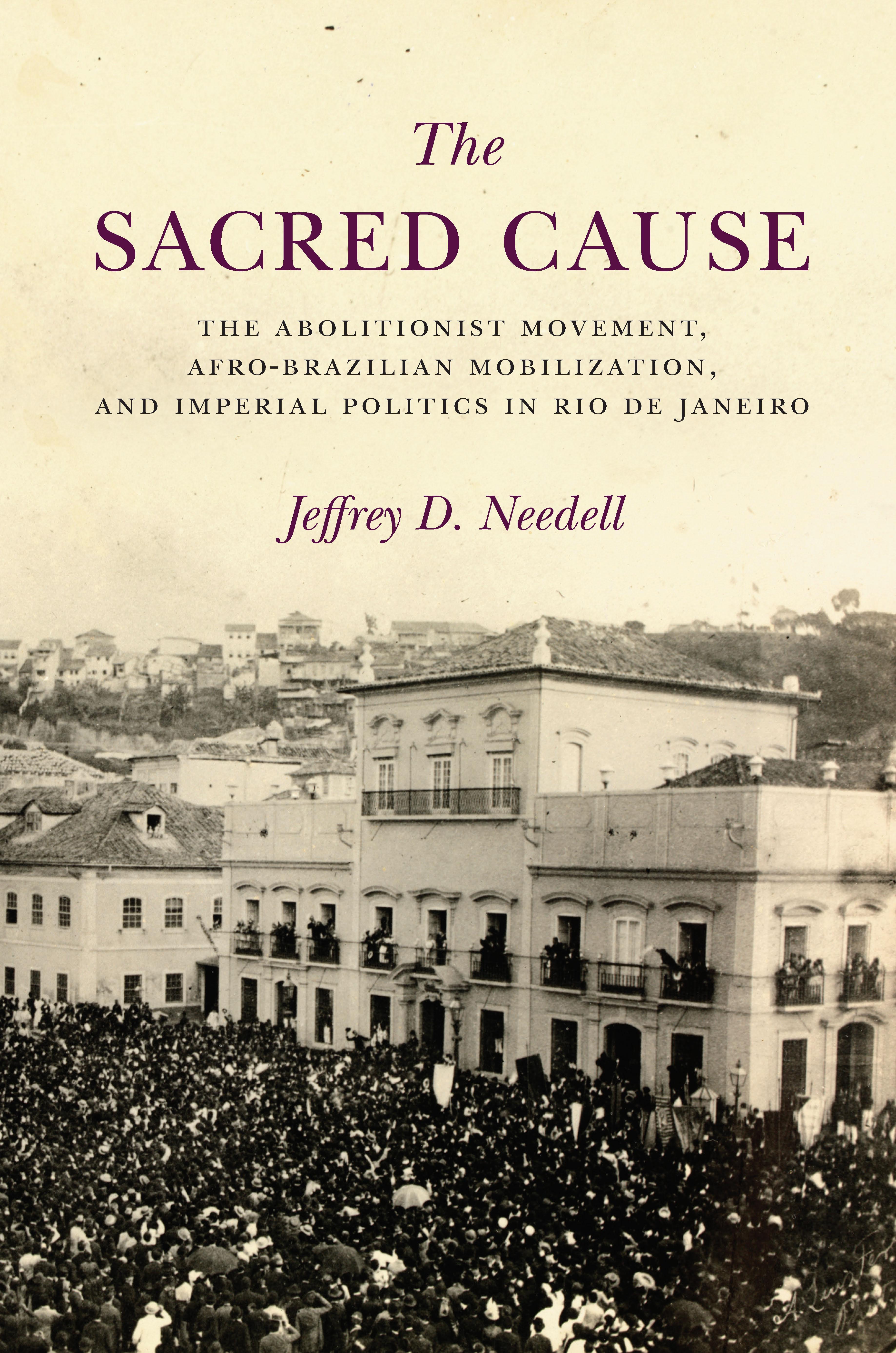
For centuries, slaveholding was a commonplace in Brazil among both whites and people of color. Abolition was only achieved in 1888, in an unprecedented, turbulent political process. How was the Abolitionist movement (1879-1888) able to bring an end to a form of labor that was traditionally perceived as both indispensable and entirely legitimate? How were the slaveholders who dominated Brazil's constitutional monarchy compelled to agree to it?
To answer these questions, we must understand the elite political world that abolitionism challenged and changed—and how the Abolitionist movement evolved in turn. The Sacred Cause analyzes the relations between the movement, its Afro-Brazilian following, and the evolving response of the parliamentary regime in Rio de Janeiro. Jeffrey Needell highlights the significance of racial identity and solidarity to the Abolitionist movement, showing how Afro-Brazilian leadership, organization, and popular mobilization were critical to the movement's identity, nature, and impact.
Zahle einfach mit Karte, Klarna, Apple Pay oder Google Pay. Nicht zufrieden? Du hast immer ein 14-tägiges Widerrufsrecht. Lies mehr in unseren AGB. Hast du Fragen, schreib uns eine E-Mail an hello@memmo.org.
Memmo macht das Lernen einfacher – wo auch immer du bist. Bei uns findest du deine Kursbücher und smarte Lerntools an einem Ort: Zusammenfassungen, Quizzes, Podcasts und Lernkarten. Und Ted, dein Lernbuddy, beantwortet alles, was du wissen möchtest. Über 50.000 Studierende lernen bereits hier – gemacht, damit du schneller lernst und weniger Stress hast.