
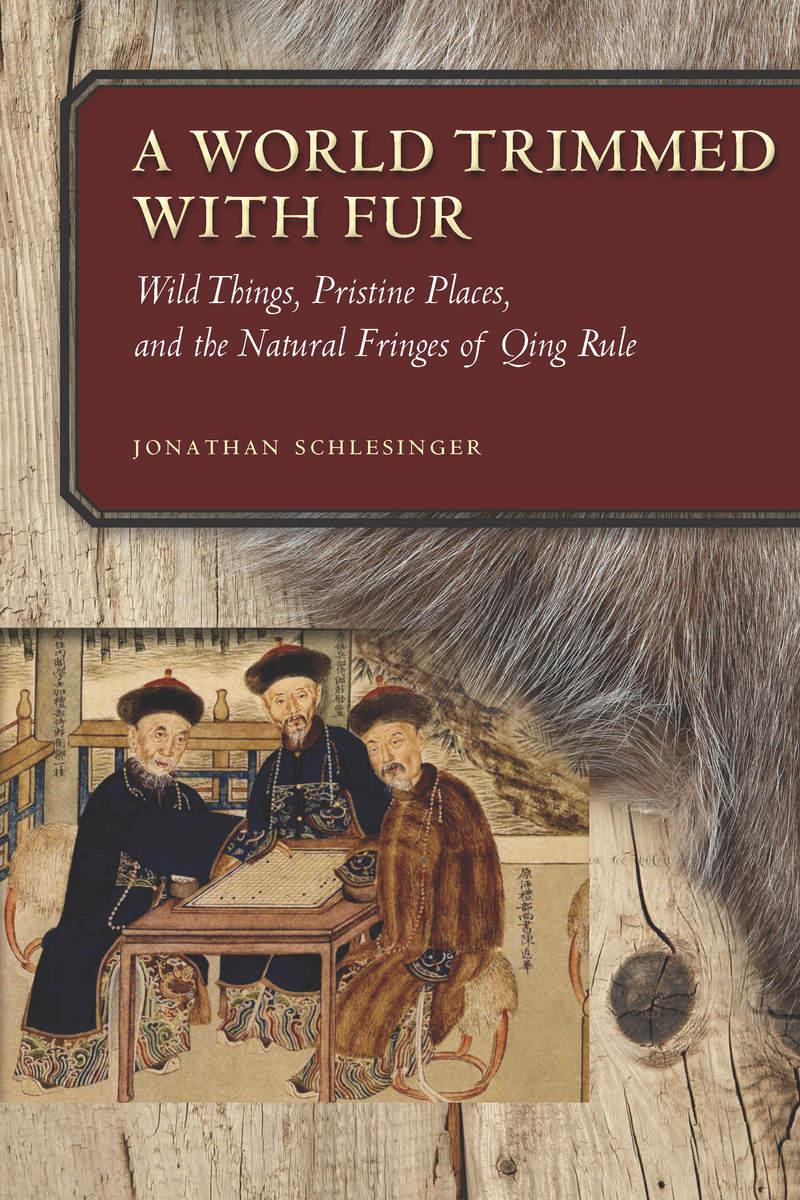
In the eighteenth and nineteenth centuries, booming demand for natural resources transformed China and its frontiers. Historians of China have described this process in stark terms: pristine borderlands became breadbaskets. Yet Manchu and Mongolian archives reveal a different story. Well before homesteaders arrived, wild objects from the far north became part of elite fashion, and unprecedented consumption had exhausted the region's most precious resources.
In A World Trimmed with Fur, Jonathan Schlesinger uses these diverse archives to reveal how Qing rule witnessed not the destruction of unspoiled environments, but their invention. Qing frontiers were never pristine in the nineteenth century—pearlers had stripped riverbeds of mussels, mushroom pickers had uprooted the steppe, and fur-bearing animals had disappeared from the forest. In response, the court turned to "purification;" it registered and arrested poachers, reformed territorial rule, and redefined the boundary between the pristine and the corrupted. Schlesinger's resulting analysis provides a framework for rethinking the global invention of nature.
Zahle einfach mit Karte, Klarna, Apple Pay oder Google Pay. Nicht zufrieden? Du hast immer ein 14-tägiges Widerrufsrecht. Lies mehr in unseren AGB. Hast du Fragen, schreib uns eine E-Mail an hello@memmo.org.
Memmo macht das Lernen einfacher – wo auch immer du bist. Bei uns findest du deine Kursbücher und smarte Lerntools an einem Ort: Zusammenfassungen, Quizzes, Podcasts und Lernkarten. Und Ted, dein Lernbuddy, beantwortet alles, was du wissen möchtest. Über 50.000 Studierende lernen bereits hier – gemacht, damit du schneller lernst und weniger Stress hast.