
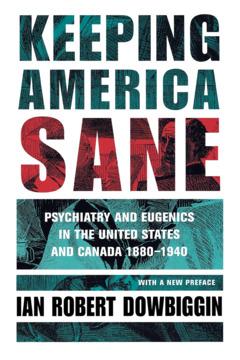
What would bring a physician to conclude that sterilization is appropriate treatment for the mentally ill and mentally handicapped? Using archival sources, Ian Robert Dowbiggin documents the involvement of both American and Canadian psychiatrists in the eugenics movement of the early twentieth century. He explains why professional men and women committed to helping those less fortunate than themselves arrived at such morally and intellectually dubious conclusions.
Psychiatrists at the end of the nineteenth century felt professionally vulnerable, Dowbiggin explains, because they were under intense pressure from state and provincial governments and from other physicians to reform their specialty. Eugenic ideas, which dominated public health policy making, seemed the best vehicle for catching up with the progress of science. Among the prominent psychiatrist-eugenicists Dowbiggin considers are G. Alder Blumer, Charles Kirk Clarke, Thomas Salmon, Clare Hincks, and William Partlow.
Tracing psychiatric support for eugenics throughout the interwar years, Dowbiggin pays special attention to the role of psychiatrists in the fierce debates about immigration policy. His examination of psychiatry's unfortunate flirtation with eugenics elucidates how professional groups come to think and act along common lines within specific historical contexts.
Zahle einfach mit Karte, Klarna, Apple Pay oder Google Pay. Nicht zufrieden? Du hast immer ein 14-tägiges Widerrufsrecht. Lies mehr in unseren AGB. Hast du Fragen, schreib uns eine E-Mail an hello@memmo.org.
Memmo macht das Lernen einfacher – wo auch immer du bist. Bei uns findest du deine Kursbücher und smarte Lerntools an einem Ort: Zusammenfassungen, Quizzes, Podcasts und Lernkarten. Und Ted, dein Lernbuddy, beantwortet alles, was du wissen möchtest. Über 50.000 Studierende lernen bereits hier – gemacht, damit du schneller lernst und weniger Stress hast.