
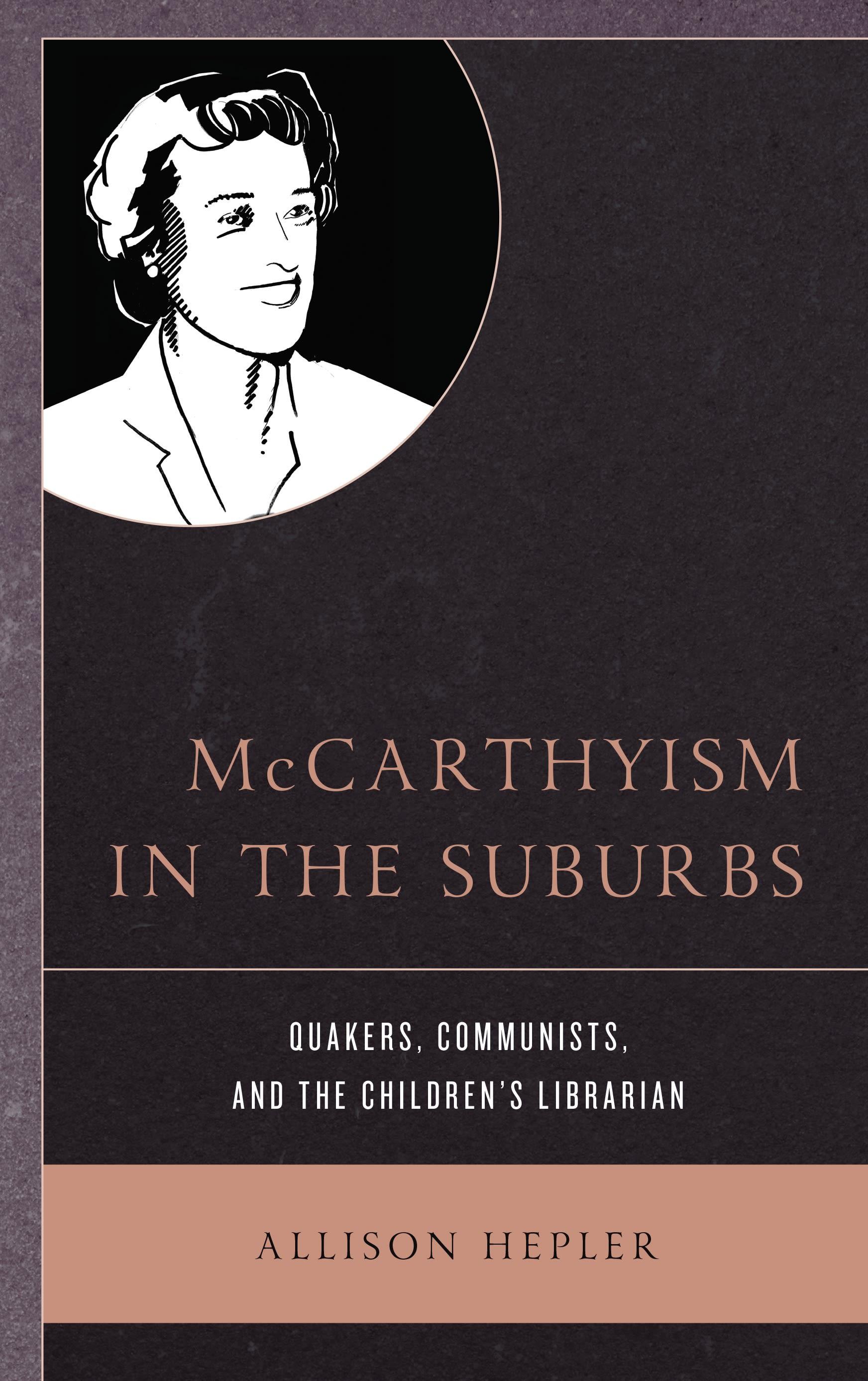
In 1953, Mary Knowles was fired as a branch librarian for the Morrill Memorial Library, a public library in Norwood, Massachusetts. She had been called before the Senate Internal Security Subcommittee and, when asked if she’d ever been a member of the Communist Party, she declined to answer, relying on her Fifth Amendment rights. She was fired less than three weeks later. Knowles thought she was unlikely to find a position as a librarian again and left the area. She found a job at a small library outside Philadelphia, where anticommunists who learned of her past tried to create public support for a Loyalty Oath, resulting in the loss of public funding for the library. The resulting controversy eventually brought national attention to the local Quakers who had hired Knowles, the FBI was asked to investigate, Knowles was convicted of contempt of Congress, and the Quakers were subpoenaed and testified before the House Un-American Activities Committee. Knowles, however, was never fired from this position, retiring from the library in 1979.
This book illustrates the impact of McCarthyism on small towns and “ordinary” people and local officials, some of whom abided by the standards of the era. There were others however, who challenged the status quo. Their actions provide readers with models of behavior often at odds with what has been thought of as the 1950s. People who spoke up risked families and jobs. At the same time, anticommunists also tapped into citizens’ fears of the cold war, not just of Communists but of a broad swath of people who promoted social justice and equality. The resulting interactions as described in this book offer important lessons on how fear and bravery operate local communities against the backdrop of (and involvement with) national events.
This book illustrates the impact of McCarthyism on small towns and “ordinary” people and local officials, some of whom abided by the standards of the era. There were others however, who challenged the status quo. Their actions provide readers with models of behavior often at odds with what has been thought of as the 1950s. People who spoke up risked families and jobs. At the same time, anticommunists also tapped into citizens’ fears of the cold war, not just of Communists but of a broad swath of people who promoted social justice and equality. The resulting interactions as described in this book offer important lessons on how fear and bravery operate local communities against the backdrop of (and involvement with) national events.
Zahle einfach mit Karte, Klarna, Apple Pay oder Google Pay. Nicht zufrieden? Du hast immer ein 14-tägiges Widerrufsrecht. Lies mehr in unseren AGB. Hast du Fragen, schreib uns eine E-Mail an hello@memmo.org.
Memmo macht das Lernen einfacher – wo auch immer du bist. Bei uns findest du deine Kursbücher und smarte Lerntools an einem Ort: Zusammenfassungen, Quizzes, Podcasts und Lernkarten. Und Ted, dein Lernbuddy, beantwortet alles, was du wissen möchtest. Über 50.000 Studierende lernen bereits hier – gemacht, damit du schneller lernst und weniger Stress hast.