
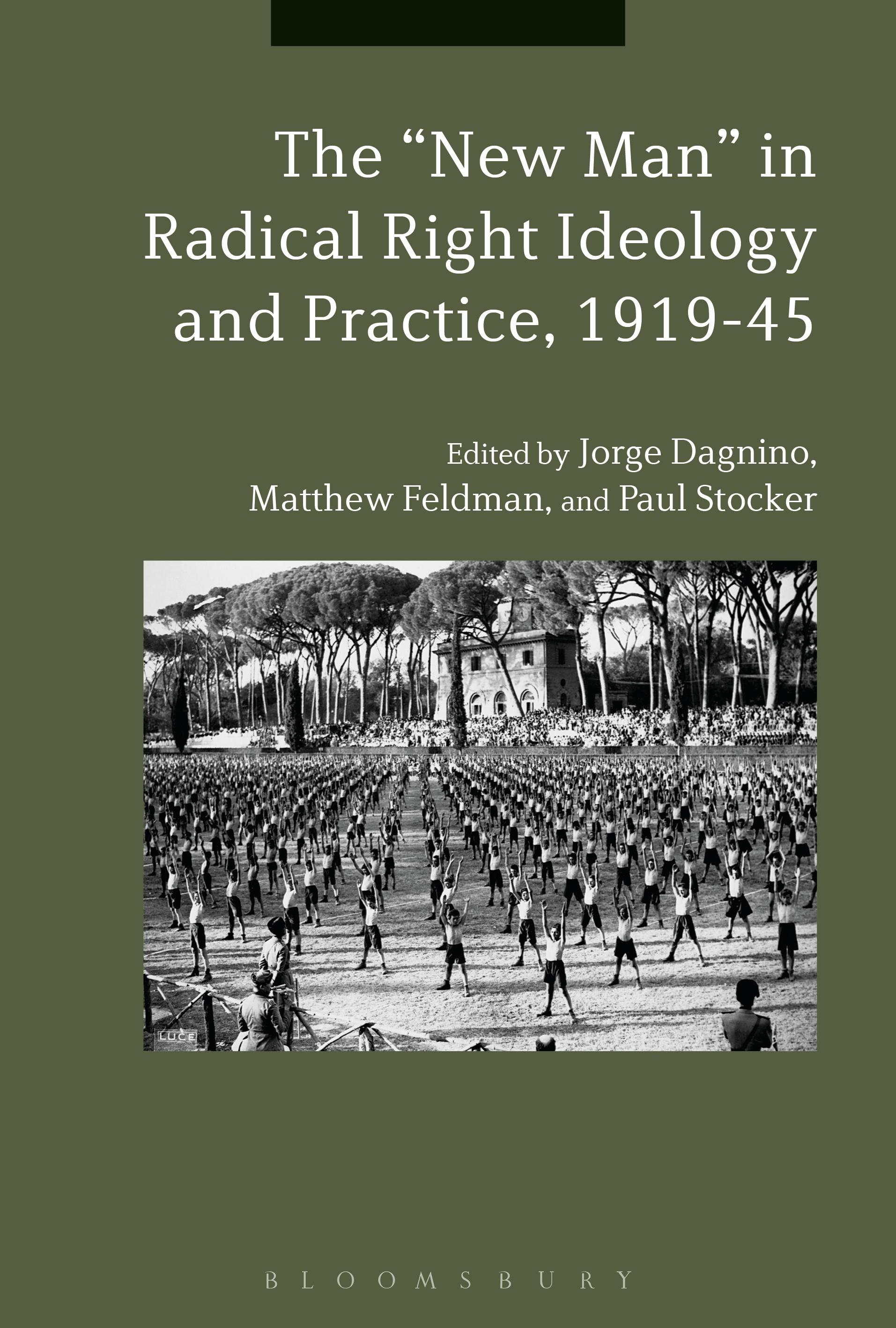
Bringing together an expert group of established and emerging scholars, this book analyses the pervasive myth of the 'new man' in various fascist movements and far-right regimes between 1919 and 1945. Through a series of ground-breaking case studies focusing on countries in Europe, but with additional chapters on Argentina, Brazil and Japan, The "New Man" in Radical Right Ideology and Practice, 1919-45 argues that what many national forms of far-right politics understood at the time as a so-called 'anthropological revolution' is essential to understanding this ideology's bio-political, often revolutionary dynamics. It explores how these movements promoted the creation of a new, ideal human, what this ideal looked like and what this things tell us about fascism's emergence in the 20th century.
The years after World War One saw the rise of regimes and movements professing totalitarian aims. In the case of revolutionary, radical-right movements, these totalising goals extended to changing the very nature of humanity through modern science, propaganda and conquest. At its most extreme, one of the key aims of fascism – the most extreme manifestation of radical right politics between the wars – was to create a 'new man'. Naturally, this manifested itself in different ways in varying national contexts and this volume explores these manifestations in order to better comprehend early 20th-century fascism both within national boundaries and in a broader, transnational context.
The years after World War One saw the rise of regimes and movements professing totalitarian aims. In the case of revolutionary, radical-right movements, these totalising goals extended to changing the very nature of humanity through modern science, propaganda and conquest. At its most extreme, one of the key aims of fascism – the most extreme manifestation of radical right politics between the wars – was to create a 'new man'. Naturally, this manifested itself in different ways in varying national contexts and this volume explores these manifestations in order to better comprehend early 20th-century fascism both within national boundaries and in a broader, transnational context.
Zahle einfach mit Karte, Klarna, Apple Pay oder Google Pay. Nicht zufrieden? Du hast immer ein 14-tägiges Widerrufsrecht. Lies mehr in unseren AGB. Hast du Fragen, schreib uns eine E-Mail an hello@memmo.org.
Memmo macht das Lernen einfacher – wo auch immer du bist. Bei uns findest du deine Kursbücher und smarte Lerntools an einem Ort: Zusammenfassungen, Quizzes, Podcasts und Lernkarten. Und Ted, dein Lernbuddy, beantwortet alles, was du wissen möchtest. Über 50.000 Studierende lernen bereits hier – gemacht, damit du schneller lernst und weniger Stress hast.