
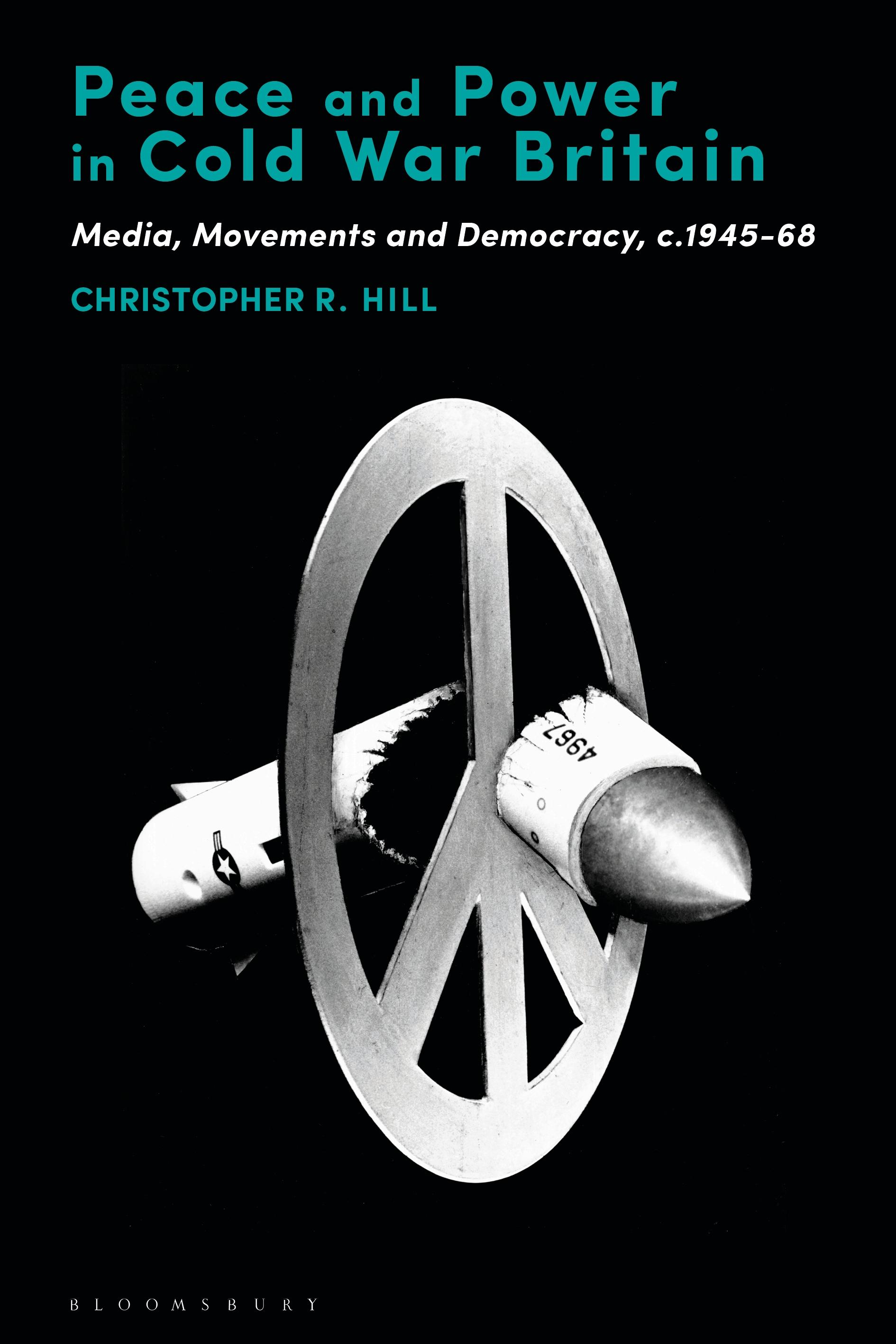
Peace and Power in Cold War Britain explores the ban the bomb and anti-Vietnam War movements from the perspective of media history, focusing in particular on the relationship between radicalism and the rise of television. In doing so, it addresses two questions, both of which seem to recur with each major breakthrough in communications technology: what do advances in communications media mean for democratic participation in politics and how do distinctive types of media condition the very nature of that participation itself?
In answering these, the book views the ban the bomb and anti-Vietnam War movements in relation to communication power and media discourse. It highlights how these movements intersected with parts of public life that were being transformed by television themselves, shaping struggles for social change among activists and public intellectuals on the streets, in the Labour Party and in the law courts.
The significance of this relationship between media and movements was complex and wide-ranging. Christopher R. Hill demonstrates that it contributed to the enrichment of democracy in Cold War Britain, with radicals serving to innovate and pioneer creative forms of political expression from both in and outside of media organisations. However, the movements increasingly succumbed to news coverage and values that revolved around human interest and violence, feeding into the revolutionary spectacle of 1968 and the turn towards identity politics.
In answering these, the book views the ban the bomb and anti-Vietnam War movements in relation to communication power and media discourse. It highlights how these movements intersected with parts of public life that were being transformed by television themselves, shaping struggles for social change among activists and public intellectuals on the streets, in the Labour Party and in the law courts.
The significance of this relationship between media and movements was complex and wide-ranging. Christopher R. Hill demonstrates that it contributed to the enrichment of democracy in Cold War Britain, with radicals serving to innovate and pioneer creative forms of political expression from both in and outside of media organisations. However, the movements increasingly succumbed to news coverage and values that revolved around human interest and violence, feeding into the revolutionary spectacle of 1968 and the turn towards identity politics.
Zahle einfach mit Karte, Klarna, Apple Pay oder Google Pay. Nicht zufrieden? Du hast immer ein 14-tägiges Widerrufsrecht. Lies mehr in unseren AGB. Hast du Fragen, schreib uns eine E-Mail an hello@memmo.org.
Memmo macht das Lernen einfacher – wo auch immer du bist. Bei uns findest du deine Kursbücher und smarte Lerntools an einem Ort: Zusammenfassungen, Quizzes, Podcasts und Lernkarten. Und Ted, dein Lernbuddy, beantwortet alles, was du wissen möchtest. Über 50.000 Studierende lernen bereits hier – gemacht, damit du schneller lernst und weniger Stress hast.