
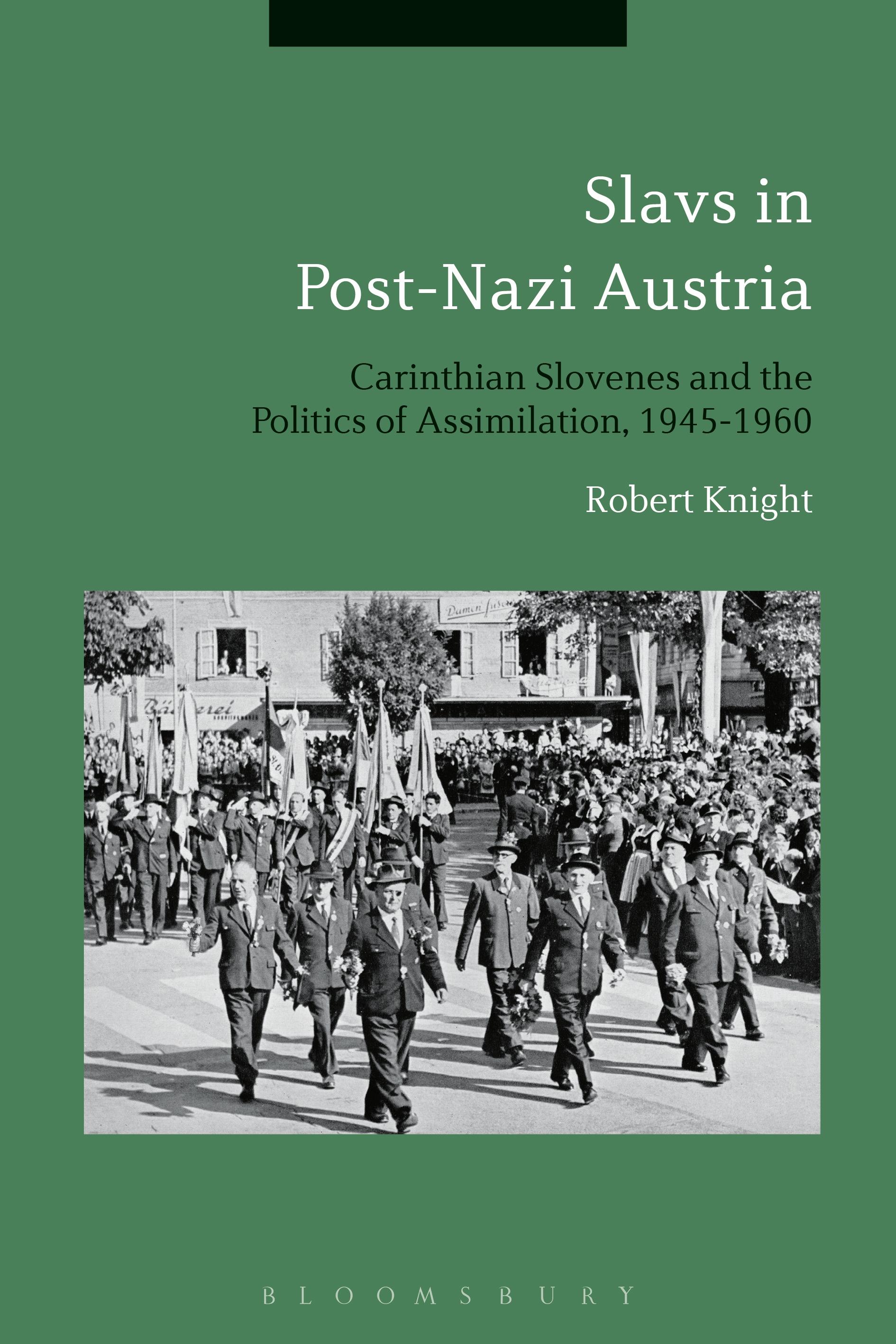
Robert Knight's book examines how the 60,000 strong Slovene community in the Austrian borderland province of Carinthia continued to suffer in the wake of Nazism's fall. It explores how and why Nazi values continued to be influential in a post-Nazi era in postwar Central Europe and provides valuable insights into the Cold War as a point of interaction of local, national and international politics.
Though Austria was re-established in 1945 as Hitler's 'first victim', many Austrians continued to share principles which had underpinned the Third Reich. Long treated as both inferior and threatening prior to the rise of Hitler and then persecuted during his time in power, the Slovenes of Carinthia were prevented from equality of schooling by local Nazis in the years that followed World War Two, behavior that was tolerated in Vienna and largely ignored by the rest of the world. Slavs in Post-Nazi Austria uses this vital case study to discuss wider issues relating to the stubborn legacy of Nazism in postwar Europe and to instill a deeper understanding of the interplay between collective and individual (liberal) rights in Central Europe.
This is a fascinating study for anyone interested in knowing more about the disturbing imprint that Nazism left in some parts of Europe in the postwar years.
Though Austria was re-established in 1945 as Hitler's 'first victim', many Austrians continued to share principles which had underpinned the Third Reich. Long treated as both inferior and threatening prior to the rise of Hitler and then persecuted during his time in power, the Slovenes of Carinthia were prevented from equality of schooling by local Nazis in the years that followed World War Two, behavior that was tolerated in Vienna and largely ignored by the rest of the world. Slavs in Post-Nazi Austria uses this vital case study to discuss wider issues relating to the stubborn legacy of Nazism in postwar Europe and to instill a deeper understanding of the interplay between collective and individual (liberal) rights in Central Europe.
This is a fascinating study for anyone interested in knowing more about the disturbing imprint that Nazism left in some parts of Europe in the postwar years.
Zahle einfach mit Karte, Klarna, Apple Pay oder Google Pay. Nicht zufrieden? Du hast immer ein 14-tägiges Widerrufsrecht. Lies mehr in unseren AGB. Hast du Fragen, schreib uns eine E-Mail an hello@memmo.org.
Memmo macht das Lernen einfacher – wo auch immer du bist. Bei uns findest du deine Kursbücher und smarte Lerntools an einem Ort: Zusammenfassungen, Quizzes, Podcasts und Lernkarten. Und Ted, dein Lernbuddy, beantwortet alles, was du wissen möchtest. Über 50.000 Studierende lernen bereits hier – gemacht, damit du schneller lernst und weniger Stress hast.