
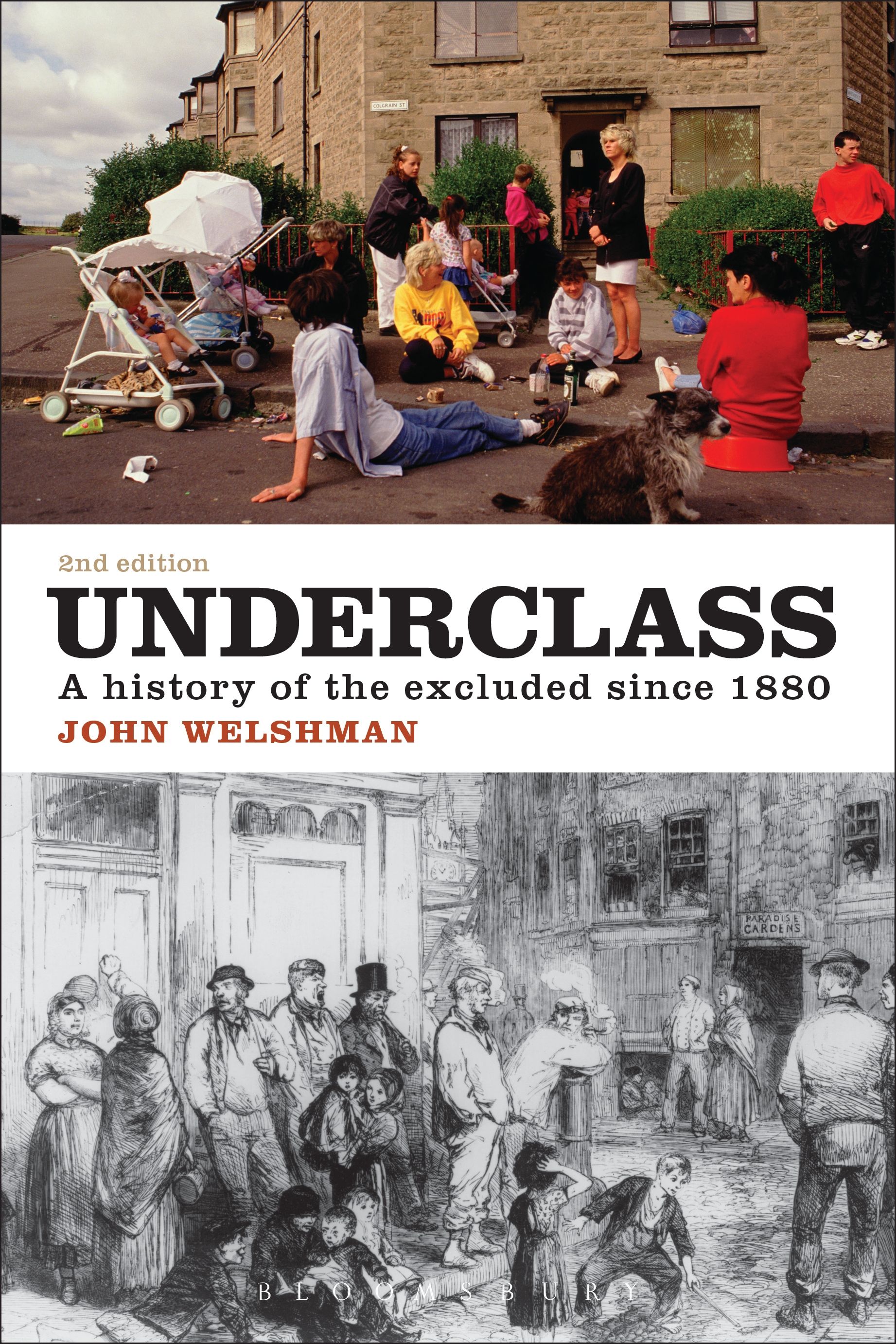
Who are those at the bottom of society? There has been much discussion in recent years, on both Left and Right, about the existence of an alleged 'underclass' in both Britain and the USA. It has been claimed this group lives outside the mainstream of society, is characterised by crime, suffers from long-term unemployment and single parenthood, and is alienated from its core values.
John Welshman shows that there have always been concerns about an 'underclass', whether constructed as the 'social residuum' of the 1880s, the 'problem family' of the 1950s or the 'cycle of deprivation' of the 1970s. There are marked differences between these concepts, but also striking continuities. Indeed a concern with an 'underclass' has in many ways existed as long as an interest in poverty itself. This book is the first to look systematically at the question, providing new insights into contemporary debates about behaviour, poverty and welfare reform.
This new edition of the pioneering text has been updated throughout and includes brand new chapters on 'Problem Families' and New Labour as well as 'Troubled Families' and the Coalition Government. It is a seminal work for anyone interested in the social history of Britain and the Welfare State.
John Welshman shows that there have always been concerns about an 'underclass', whether constructed as the 'social residuum' of the 1880s, the 'problem family' of the 1950s or the 'cycle of deprivation' of the 1970s. There are marked differences between these concepts, but also striking continuities. Indeed a concern with an 'underclass' has in many ways existed as long as an interest in poverty itself. This book is the first to look systematically at the question, providing new insights into contemporary debates about behaviour, poverty and welfare reform.
This new edition of the pioneering text has been updated throughout and includes brand new chapters on 'Problem Families' and New Labour as well as 'Troubled Families' and the Coalition Government. It is a seminal work for anyone interested in the social history of Britain and the Welfare State.
Zahle einfach mit Karte, Klarna, Apple Pay oder Google Pay. Nicht zufrieden? Du hast immer ein 14-tägiges Widerrufsrecht. Lies mehr in unseren AGB. Hast du Fragen, schreib uns eine E-Mail an hello@memmo.org.
Memmo macht das Lernen einfacher – wo auch immer du bist. Bei uns findest du deine Kursbücher und smarte Lerntools an einem Ort: Zusammenfassungen, Quizzes, Podcasts und Lernkarten. Und Ted, dein Lernbuddy, beantwortet alles, was du wissen möchtest. Über 50.000 Studierende lernen bereits hier – gemacht, damit du schneller lernst und weniger Stress hast.