
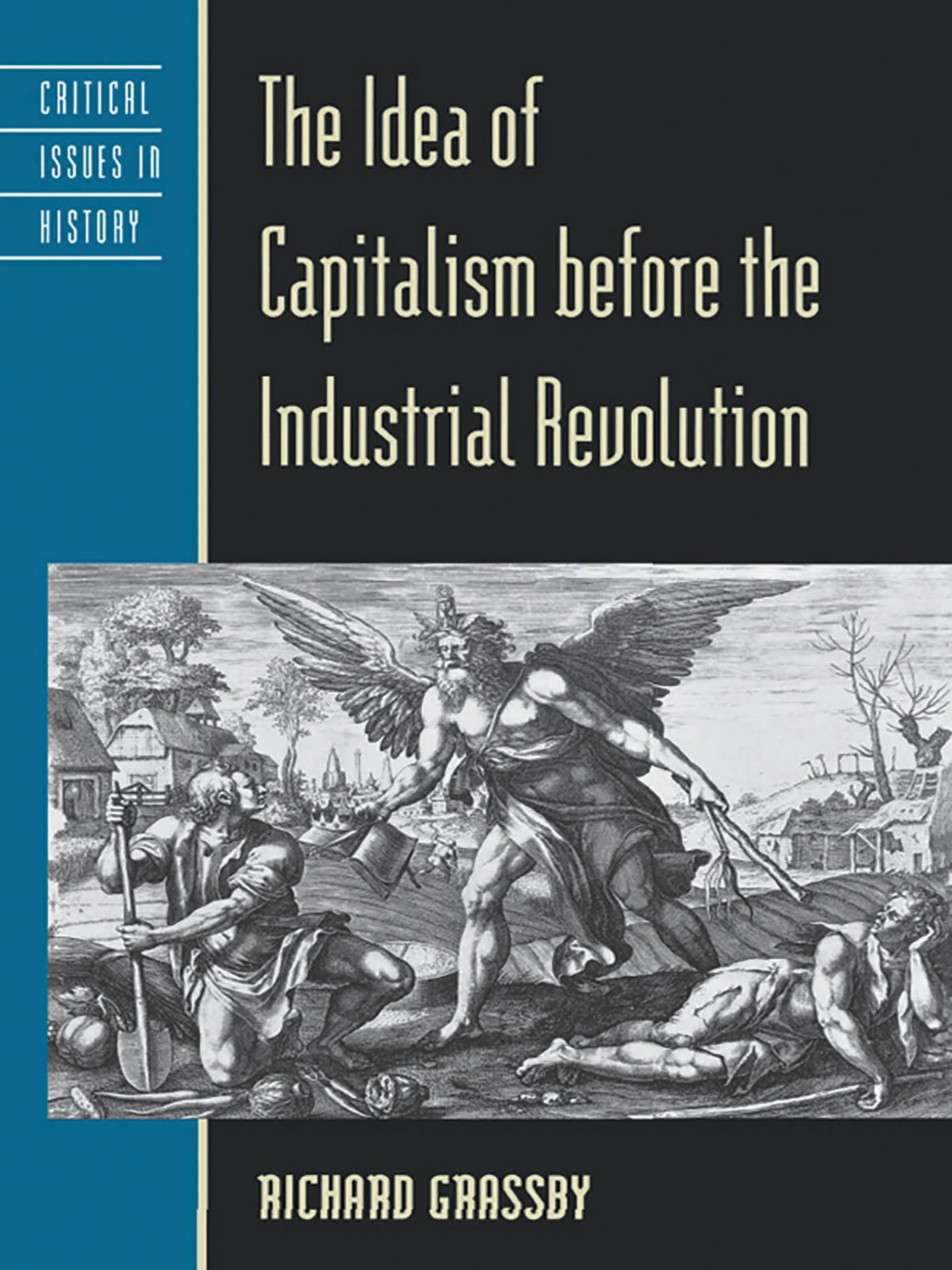
Invented in post-industrial 19th century Europe, the idea of capitalism originally sought to describe and explain the distinctive characteristics of an emerging modern world. Since then, capitalism has served to identify an economic system, a particular social structure, and a set of cultural values and mental attitudes. The subject of continuous debate among scholars for more than a century, capitalism has been accorded so many definitions, it is now virtually meaningless. Depending upon the interpreter, capitalism is synonymous with the market economy, the division of labor, credit creation, economic concentration, social polarization, class formation, the decline of kinship and community, patriarchy, property rights, contracts, acquisitiveness, the work ethic, conspicuous consumption, individualism and entrepreneurship.
Noted economic historian Richard Grassby investigates the origins and evolution of the idea of capitalism to illustrate for readers the true nature, merits, and the future of capitalism. Grassby examines its numerous and often conflicting definitions, and he tests alternative models of capitalism against the historical record to establish when, where, how, and why modern economies and societies emerged. Although Grassby argues that capitalism is a concept with diminished explanatory power, he shows the influence of this powerful idea on the formation of the world we live in. This is required reading for classes on World history, modern European history, and economic history.
Noted economic historian Richard Grassby investigates the origins and evolution of the idea of capitalism to illustrate for readers the true nature, merits, and the future of capitalism. Grassby examines its numerous and often conflicting definitions, and he tests alternative models of capitalism against the historical record to establish when, where, how, and why modern economies and societies emerged. Although Grassby argues that capitalism is a concept with diminished explanatory power, he shows the influence of this powerful idea on the formation of the world we live in. This is required reading for classes on World history, modern European history, and economic history.
Zahle einfach mit Karte, Klarna, Apple Pay oder Google Pay. Nicht zufrieden? Du hast immer ein 14-tägiges Widerrufsrecht. Lies mehr in unseren AGB. Hast du Fragen, schreib uns eine E-Mail an hello@memmo.org.
Memmo macht das Lernen einfacher – wo auch immer du bist. Bei uns findest du deine Kursbücher und smarte Lerntools an einem Ort: Zusammenfassungen, Quizzes, Podcasts und Lernkarten. Und Ted, dein Lernbuddy, beantwortet alles, was du wissen möchtest. Über 50.000 Studierende lernen bereits hier – gemacht, damit du schneller lernst und weniger Stress hast.