
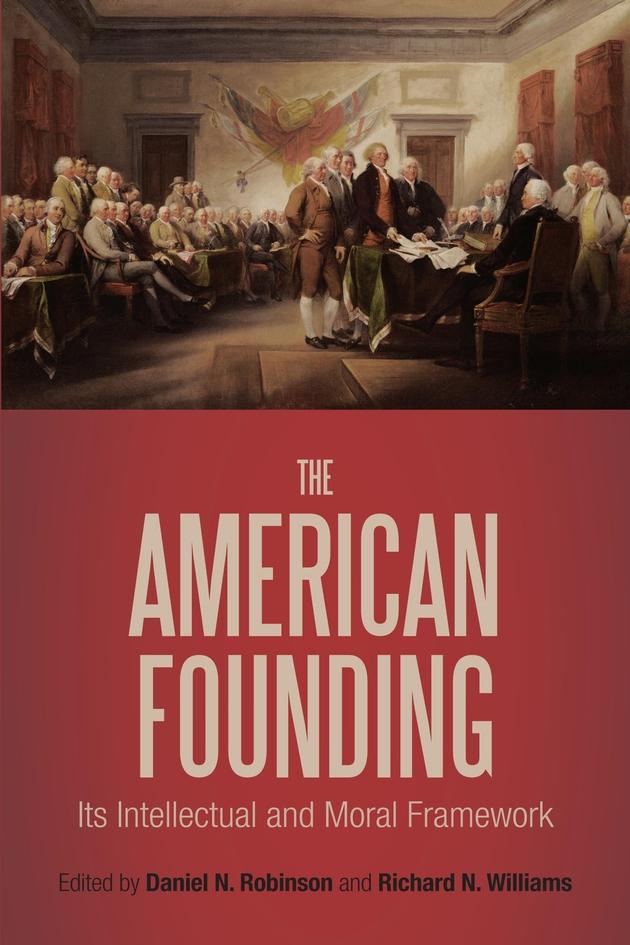
America's Founding Fathers shared similar beliefs on the nature of civic life and the character of those supposed to be able to self-govern. Although they studied the failed republics of the ancient world, they believed that classical ideals were still applicable to politics.
This unique contribution to the literature on American Founding gathers leading thinkers who set out not to relate its history, but its intellectual underpinnings. They explore the Founding Fathers' assumptions about civic life, human nature, political institutions, private morality, aesthetics, education, and history. Chapters on natural law, the Judeo-Christian conception of human nature, the influence of Aristotle and Cicero, the symbolic role of architecture, and the importance of education help understand the foundations that led to the Declaration of Independence and a constitutional charter that aimed to be universal in its human aspirations.
This authoritative work provides a conservative response to more liberal interpretations of America. It will enrich the debate on civic life and be a key resource to anyone interested in America's "experiment in ordered liberty."
This unique contribution to the literature on American Founding gathers leading thinkers who set out not to relate its history, but its intellectual underpinnings. They explore the Founding Fathers' assumptions about civic life, human nature, political institutions, private morality, aesthetics, education, and history. Chapters on natural law, the Judeo-Christian conception of human nature, the influence of Aristotle and Cicero, the symbolic role of architecture, and the importance of education help understand the foundations that led to the Declaration of Independence and a constitutional charter that aimed to be universal in its human aspirations.
This authoritative work provides a conservative response to more liberal interpretations of America. It will enrich the debate on civic life and be a key resource to anyone interested in America's "experiment in ordered liberty."
Zahle einfach mit Karte, Klarna, Apple Pay oder Google Pay. Nicht zufrieden? Du hast immer ein 14-tägiges Widerrufsrecht. Lies mehr in unseren AGB. Hast du Fragen, schreib uns eine E-Mail an hello@memmo.org.
Memmo macht das Lernen einfacher – wo auch immer du bist. Bei uns findest du deine Kursbücher und smarte Lerntools an einem Ort: Zusammenfassungen, Quizzes, Podcasts und Lernkarten. Und Ted, dein Lernbuddy, beantwortet alles, was du wissen möchtest. Über 50.000 Studierende lernen bereits hier – gemacht, damit du schneller lernst und weniger Stress hast.