
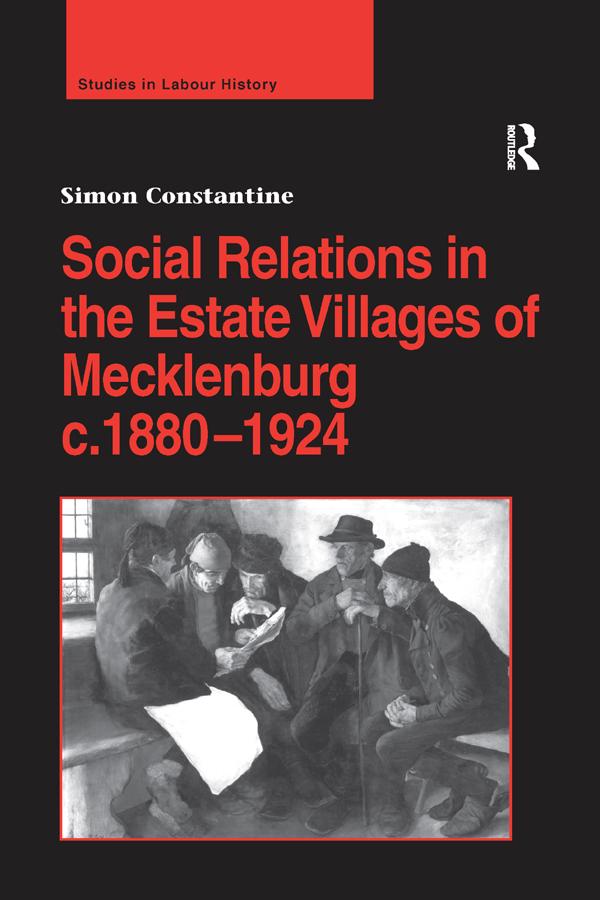
Research on late nineteenth and early twentieth century German society has concentrated overwhelmingly on life in the cities. By contrast, and despite the fact that almost one third of Germans were still working in agriculture as late as 1914, Germany's rural society remains relatively unexplored. Although historians have begun to correct this imbalance, very few full-length studies of social relations east of the Elba in this period have been published. This book concentrates on social relations in the 1,500 estate villages (Gutsdörfer) of Mecklenburg-Schwerin and Mecklenburg-Strelitz. 'Social relations' include the chains of command and obedience, the relative legal positions of owner and workers, contractual-relations, economic relations; the mutual economic dependency of estate owners and workforce, as well as the value systems of owners and labourers which informed these relationships. With its focus on both rural elites and workers, this study differs from much other work on rural Germany. For while a number of historians have examined the rural elites, few have chosen to investigate the lower strata of rural society. This book makes use of overlooked autobiographical accounts, statements given by workers at labour exchanges and before military authorities, as well as confiscated letters, jokes and anecdotes to provide greater insight into the perspective of rural workers.
Zahle einfach mit Karte, Klarna, Apple Pay oder Google Pay. Nicht zufrieden? Du hast immer ein 14-tägiges Widerrufsrecht. Lies mehr in unseren AGB. Hast du Fragen, schreib uns eine E-Mail an hello@memmo.org.
Memmo macht das Lernen einfacher – wo auch immer du bist. Bei uns findest du deine Kursbücher und smarte Lerntools an einem Ort: Zusammenfassungen, Quizzes, Podcasts und Lernkarten. Und Ted, dein Lernbuddy, beantwortet alles, was du wissen möchtest. Über 50.000 Studierende lernen bereits hier – gemacht, damit du schneller lernst und weniger Stress hast.
Das könnte dir auch gefallen
Buch kaufen0