
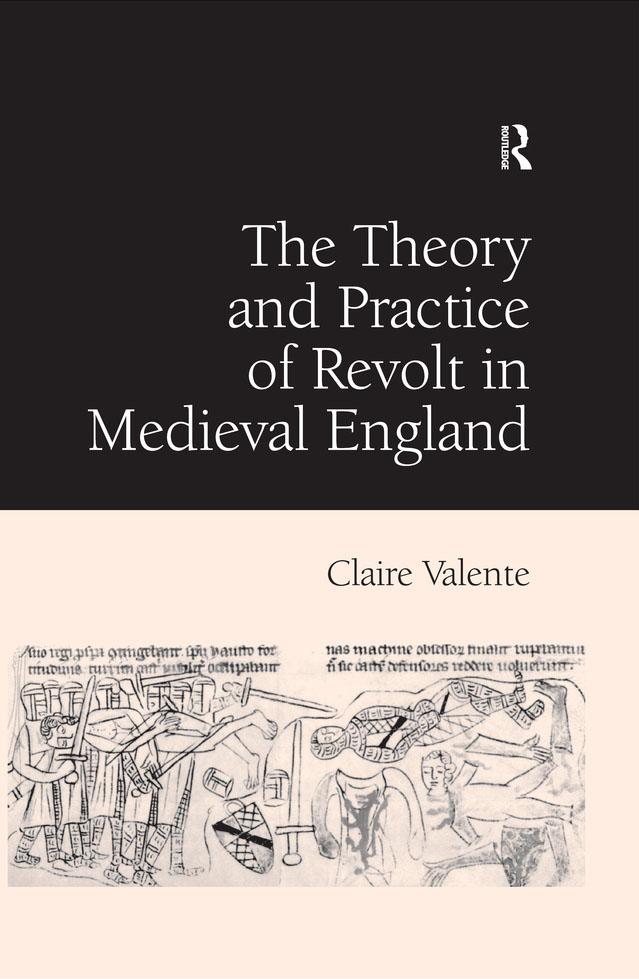
Medieval Englishmen were treacherous, rebellious and killed their kings, as their French contemporaries repeatedly noted. In the thirteenth through fifteenth centuries, ten kings faced serious rebellion, in which eight were captured, deposed, and/or murdered. One other king escaped open revolt but encountered vigorous resistance. In this book, Professor Valente argues that the crises of the thirteenth and fourteenth centuries were crucibles for change; and their examination helps us to understand medieval political culture in general and key developments in later medieval England in particular. The Theory and Practice of Revolt takes a comparative look at these crises, seeking to understand medieval ideas of proper kingship and government, the role of political violence and the changing nature of reform initiatives and the rebellions to which they led. It argues that rebellion was an accepted and to a certain extent legitimate means to restore good kingship throughout the period, but that over time it became increasingly divorced from reform aims, which were satisfied by other means, and transformed by growing lordly dominance, arrogance, and selfishness. Eventually the tradition of legitimate revolt disappeared, to be replaced by both parliament and dynastic civil war. Thus, on the one hand, development of parliament, itself an outgrowth of political crises, reduced the need for and legitimacy of crisis reform. On the other hand, when crises did arise, the idea and practice of the community of the realm, so vibrant in the thirteenth century, broke down under the pressures of new political and socio-economic realities. By exploring violence and ideas of government over a longer period than is normally the case, this work attempts to understand medieval conceptions on their own terms rather than with regard to modern assumptions and to use comparison as a means of explaining events, ideas, and developments.
Zahle einfach mit Karte, Klarna, Apple Pay oder Google Pay. Nicht zufrieden? Du hast immer ein 14-tägiges Widerrufsrecht. Lies mehr in unseren AGB. Hast du Fragen, schreib uns eine E-Mail an hello@memmo.org.
Memmo macht das Lernen einfacher – wo auch immer du bist. Bei uns findest du deine Kursbücher und smarte Lerntools an einem Ort: Zusammenfassungen, Quizzes, Podcasts und Lernkarten. Und Ted, dein Lernbuddy, beantwortet alles, was du wissen möchtest. Über 50.000 Studierende lernen bereits hier – gemacht, damit du schneller lernst und weniger Stress hast.
Das könnte dir auch gefallen
Buch kaufen0