
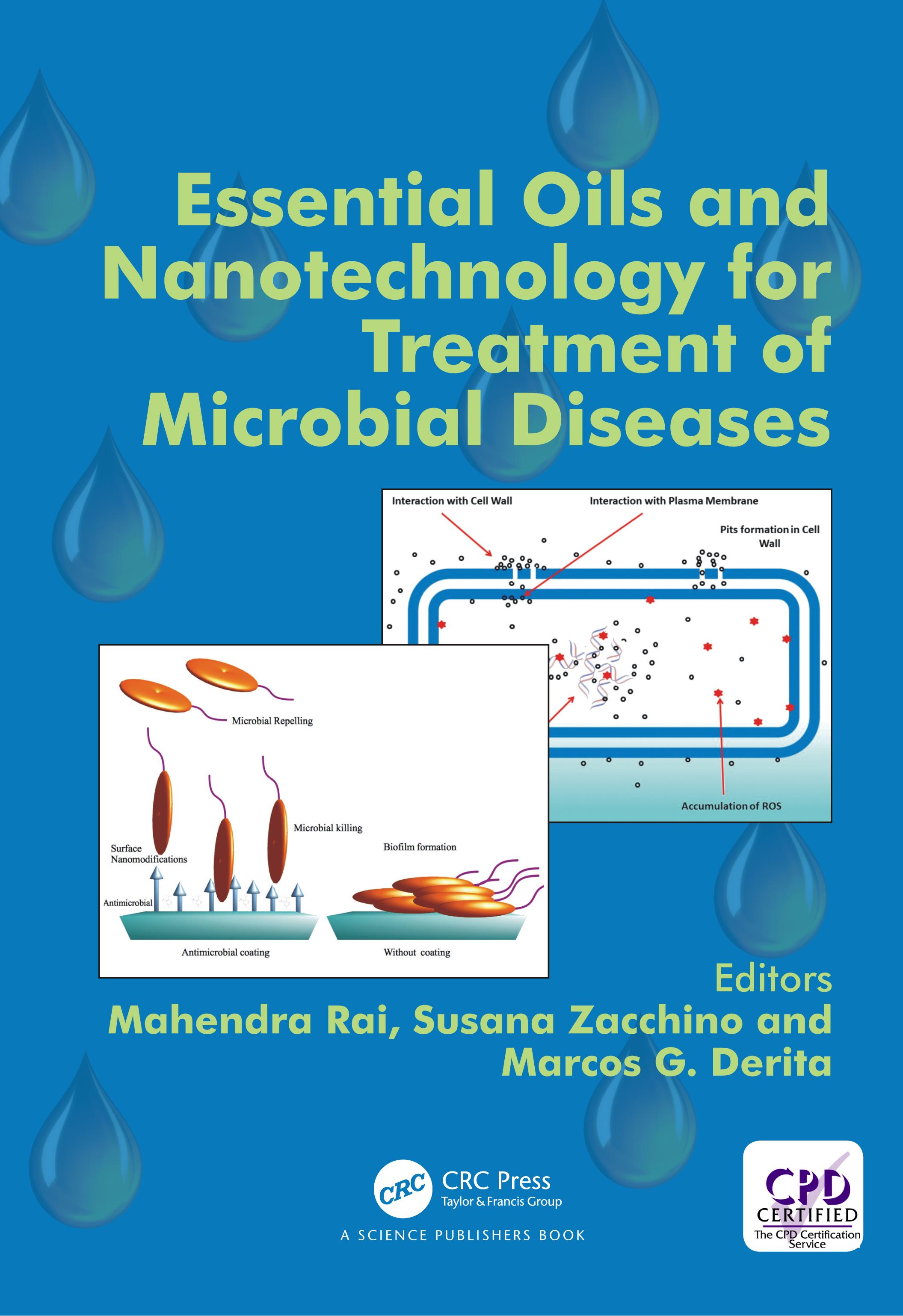
There has been emergence of multidrug resistance problem all over the world due to overuse or underuse of antibiotics. Most microbes including bacteria, fungi, protozoans and others have developed resistance to antibiotics, and therefore, this problem is now recognized to be of global concern. Ubiquitous occurrence of multidrug-resistant bacteria decreases effectiveness of current treatment, which results in thousands of deaths all over the world. Hence, investigations for new alternatives and novel strategies are urgently needed to address the problem of multidrug resistance. The antimicrobial potential of essential oils and metallic nanoparticles represent an effective solution for microbial resistance. Moreover, the use of essential oils in combination with metallic nanoparticles may exert synergistic antimicrobial effects and would be a novel approach.
Essential oils (EOs) are volatile, natural, aromatic oily liquids that can be obtained from several parts of plants especially the aerial ones such as leaves and flowers. They are derived from complex metabolic pathways in order to protect plants from diverse pathogenic microorganisms. In fact, the bioactivity of EOs have been confirmed by several studies which have demonstrated their antibacterial, antiviral, anti-inflammatory, antifungal, antimutagenic, anticarcinogenic, and antioxidant properties.
Nanotechnology is one of the most important and emerging technologies, which has brought about a technological revolution in the world. It has enormous applications in the field of medicine. Nanoparticles are very important tools in curing different diseases in general and microbial diseases in particular due to their significantly novel and improved chemical, physical and biological properties and high surface area-to-volume ratio. Among these, metal nanoparticles are known to play pivotal role in various biomedical applications. In this context, nanoparticles such as silver have shown their potential and could emerge as the new generation of antimicrobials. Silver nanoparticles have broad-spectrum biological activities and hence are used in many biomedical applications. The various biomedical applications of silver nanoparticles include treatment of wounds, burns, in water-disinfecting systems, in nanobased bone implantations, in dentistry for the development of dental materials and as antibacterial, antivirals, anti-protozoals, anti-arthropods and anticancerous agents. Apart from silver, noble metal nanoparticles like gold and platinum and other nanoparticles copper, oxides of different metals, etc. have been also the materials of choice for many scientists for their biological applications.
The book will be of interest to chemists, microbiologists, biotechnologist, food technologists, nanotechnologists, pharmacologists, clinicians and those interested in nature cure. Students will find this book useful and reader friendly.
Zahle einfach mit Karte, Klarna, Apple Pay oder Google Pay. Nicht zufrieden? Du hast immer ein 14-tägiges Widerrufsrecht. Lies mehr in unseren AGB. Hast du Fragen, schreib uns eine E-Mail an hello@memmo.org.
Memmo macht das Lernen einfacher – wo auch immer du bist. Bei uns findest du deine Kursbücher und smarte Lerntools an einem Ort: Zusammenfassungen, Quizzes, Podcasts und Lernkarten. Und Ted, dein Lernbuddy, beantwortet alles, was du wissen möchtest. Über 50.000 Studierende lernen bereits hier – gemacht, damit du schneller lernst und weniger Stress hast.