
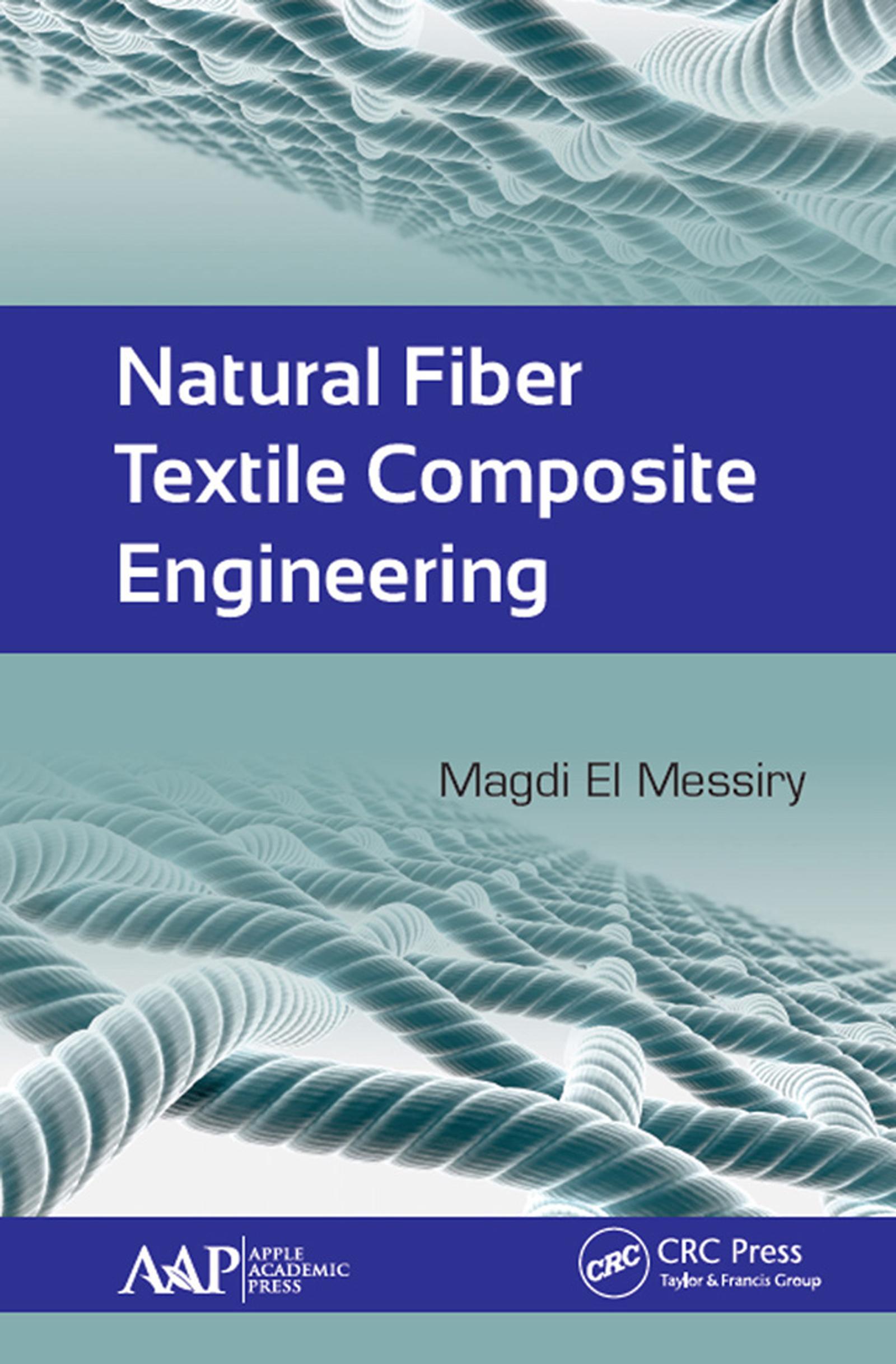
Natural Fiber Textile Composite Engineering sheds light on the area of the natural fiber textile composites with new research on their applications, the material used, the methods of preparation, the different types of polymers, the selection of raw materials, the elements of design the natural fiber textile polymer composites for a particular end use, their manufacturing techniques, and finally their life cycle assessments (LCA). The volume also addresses the important issue in the materials science of how to utilize natural fibers as an enhancement to composite materials. Natural fiber-reinforced polymer composites have been proven to provide a combination of superior mechanical property, dielectric property, and environmental advantages such as renewability and biodegradability. Natural fibers, some from agricultural waste products, can replace existing metallic and plastic parts and help to alleviate the environmental problem of increasing amounts of agriculture residual.
The book is divided into four sections, covering:
- applications of natural fiber polymer composites
- design of natural fiber polymer composites
- composite manufacturing techniques and agriculture waste manufacturing
- composite material testing methods
The first section of the book deals with the application of textile composites in the industry and the properties of the natural fibers, providing an understanding of the history of natural fiber composites as well as an analysis of the different properties of different natural fibers. The second section goes on to explain the textile composites, their classification, different composite manufacturing techniques, and the different pretreatment methods for the natural fibers to be used in composite formation. It also analyzes the composite material design under different types of loading and the mechanism of failure of the natural fiber composite. The effect of the fiber volume fraction of different textile structures is explained.
The third section of the book, on composite manufacturing techniques and agriculture waste manufacturing, concerns the natural fiber composite manufacturing techniques, agricultural waste, and the methods of their preparation to be used successfully in the composite, either in the form of fibers particles or nanoparticles. The book then considers the testing methods of the different composite components as well as the final composite materials, giving the principle of the testing standards, either distractive or nondestructive.
This book attempts to fill the gap between the role of the textile engineer and the role of the designer of composites from natural fibers. It provides important information on the application of textile composites for textile engineers, materials engineers, and researchers in the area of composite materials.
Zahle einfach mit Karte, Klarna, Apple Pay oder Google Pay. Nicht zufrieden? Du hast immer ein 14-tägiges Widerrufsrecht. Lies mehr in unseren AGB. Hast du Fragen, schreib uns eine E-Mail an hello@memmo.org.
Memmo macht das Lernen einfacher – wo auch immer du bist. Bei uns findest du deine Kursbücher und smarte Lerntools an einem Ort: Zusammenfassungen, Quizzes, Podcasts und Lernkarten. Und Ted, dein Lernbuddy, beantwortet alles, was du wissen möchtest. Über 50.000 Studierende lernen bereits hier – gemacht, damit du schneller lernst und weniger Stress hast.