
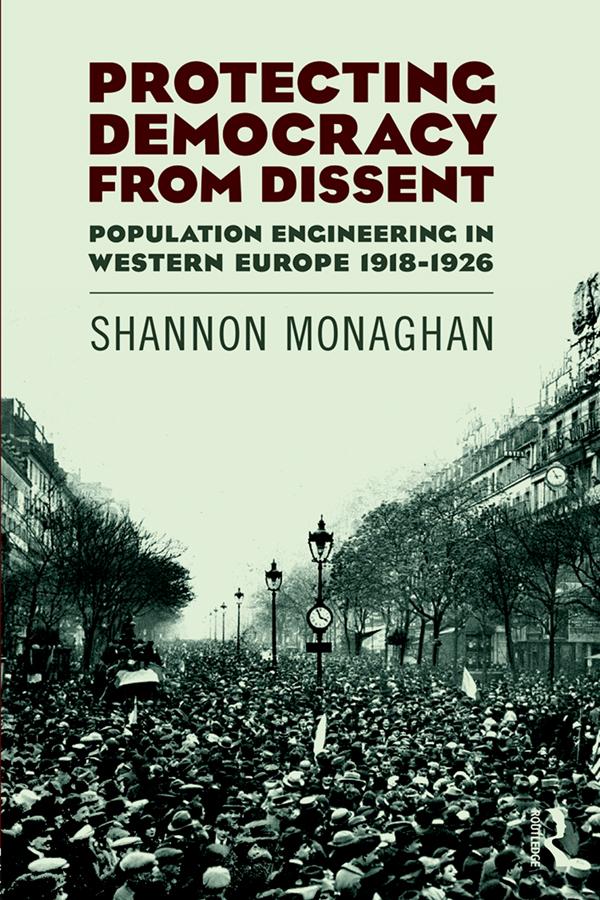
In the aftermath of the First World War, the victorious powers – more or less liberal democracies – argued that democracy would bring peace to Europe because this was the only effective way for legitimate states, with governments based on the consent of the governed, to be organized. What the victorious statesmen failed to foresee was how much conflict this postwar settlement would provoke, since it was far from clear exactly which people should qualify for the privilege of self-governance.
It is well known that these conflicts played out dramatically and violently in eastern and southeastern Europe in the immediate postwar years. What is less well known is that the contest extended into the western European heartland of the victorious powers as well. There, the quest for a new conception of democracy – based on both liberalism and nationalism – led the victors to pursue liberal policies of population engineering with, paradoxically, the best of intentions: the preservation and stability of democracy itself. In an era in which people were becoming more involved in choosing their governments, governments were becoming more involved in choosing their people. While the victors sought to craft a more ethical – or at least more legalistic – form of population engineering than the often violent and ad hoc versions employed further east, the result nevertheless remained at odds with the ethical foundations of liberal democracy.
Zahle einfach mit Karte, Klarna, Apple Pay oder Google Pay. Nicht zufrieden? Du hast immer ein 14-tägiges Widerrufsrecht. Lies mehr in unseren AGB. Hast du Fragen, schreib uns eine E-Mail an hello@memmo.org.
Memmo macht das Lernen einfacher – wo auch immer du bist. Bei uns findest du deine Kursbücher und smarte Lerntools an einem Ort: Zusammenfassungen, Quizzes, Podcasts und Lernkarten. Und Ted, dein Lernbuddy, beantwortet alles, was du wissen möchtest. Über 50.000 Studierende lernen bereits hier – gemacht, damit du schneller lernst und weniger Stress hast.