
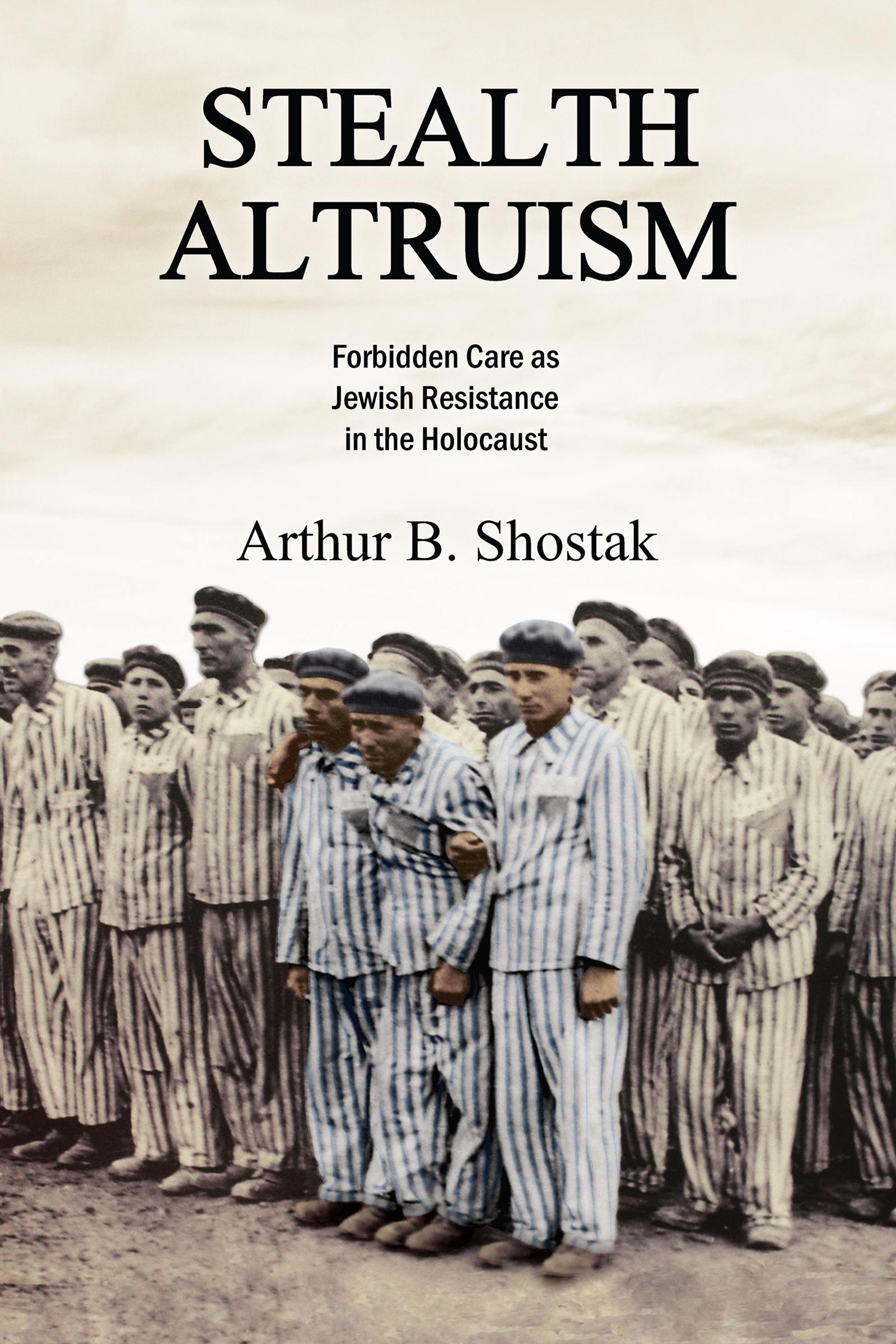
Though it has been nearly seventy years since the Holocaust, the human capacity for evil displayed by its perpetrators is still shocking and haunting. But the story of the Nazi attempt to annihilate European Jewry is not all we should remember. Stealth Altruism tells of secret, non-militant, high-risk efforts by “Carers,” those victims who tried to reduce suffering and improve everyone’s chances of survival. Their empowering acts of altruism remind us of our inherent longing to do good even in situations of extraordinary brutality.
Arthur B. Shostak explores forbidden acts of kindness, such as sharing scarce clothing and food rations, holding up weakened fellow prisoners during roll call, secretly replacing an ailing friend in an exhausting work detail, and much more. He explores the motivation behind this dangerous behavior, how it differed when in or out of sight, who provided or undermined forbidden care, the differing experiences of men and women, how and why gentiles provided aid, and, most importantly, how might the costly obscurity of stealth altruism soon be corrected.
To date, memorialization has emphasized what was done to victims and sidelined what victims tried to do for one another. “Carers” provide an inspiring model and their perilous efforts should be recognized and taught alongside the horrors of the Holocaust. Humanity needs such inspiration.
Zahle einfach mit Karte, Klarna, Apple Pay oder Google Pay. Nicht zufrieden? Du hast immer ein 14-tägiges Widerrufsrecht. Lies mehr in unseren AGB. Hast du Fragen, schreib uns eine E-Mail an hello@memmo.org.
Memmo macht das Lernen einfacher – wo auch immer du bist. Bei uns findest du deine Kursbücher und smarte Lerntools an einem Ort: Zusammenfassungen, Quizzes, Podcasts und Lernkarten. Und Ted, dein Lernbuddy, beantwortet alles, was du wissen möchtest. Über 50.000 Studierende lernen bereits hier – gemacht, damit du schneller lernst und weniger Stress hast.