
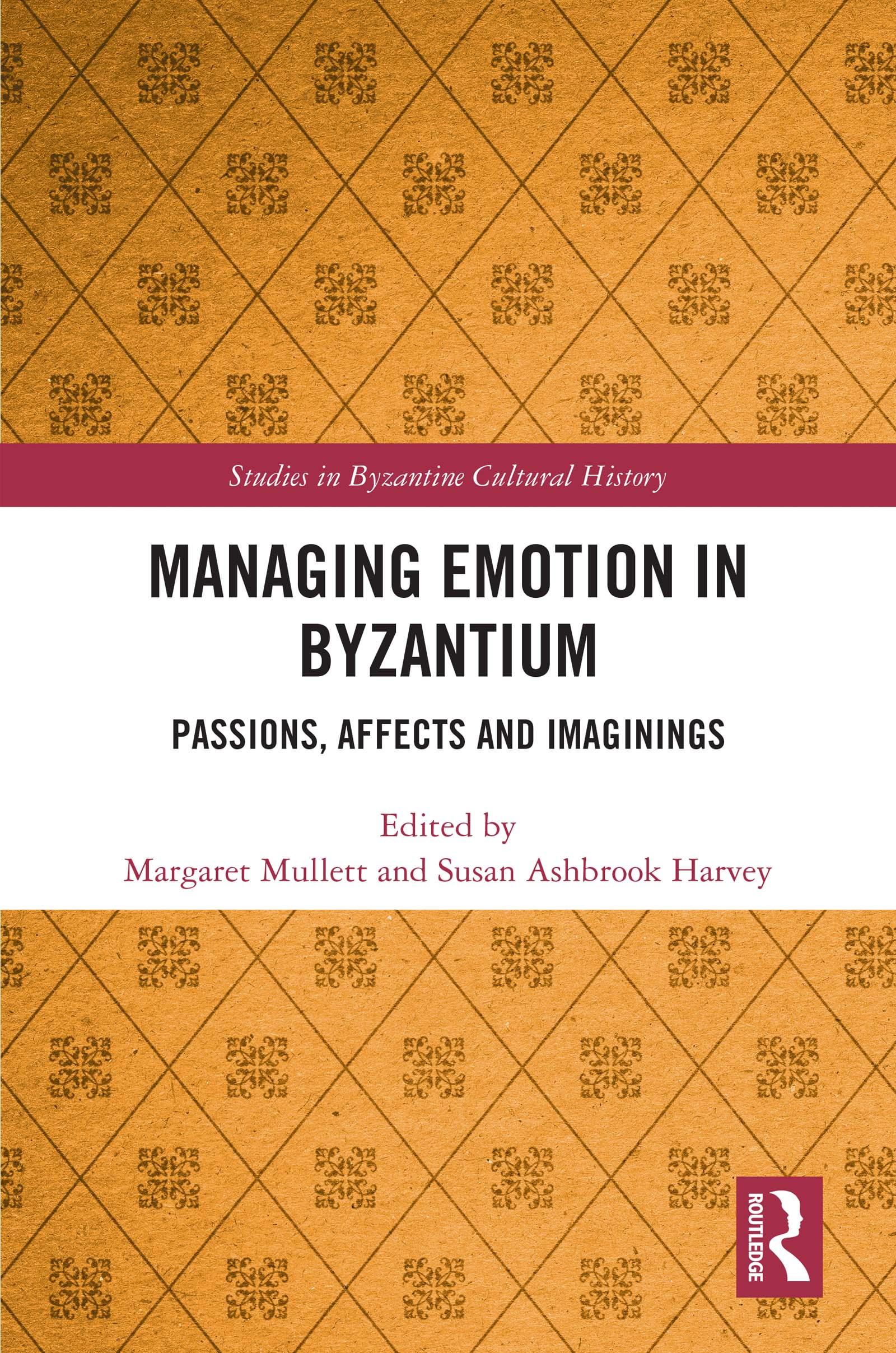
Byzantinists entered the study of emotion with Henry Maguire’s ground-breaking article on sorrow, published in 1977. Since then, classicists and western medievalists have developed new ways of understanding how emotional communities work and where the ancients’ concepts of emotion differ from our own, and Byzantinists have begun to consider emotions other than sorrow. It is time to look at what is distinctive about Byzantine emotion.
This volume is the first to look at the constellation of Byzantine emotions. Originating at an international colloquium at Dumbarton Oaks, these papers address issues such as power, gender, rhetoric, or asceticism in Byzantine society through the lens of a single emotion or cluster of emotions. Contributors focus not only on the construction of emotions with respect to perception and cognition but also explore how emotions were communicated and exchanged across broad (multi)linguistic, political and social boundaries. Priorities are twofold: to arrive at an understanding of what the Byzantines thought of as emotions and to comprehend how theory shaped their appraisal of reality.
Managing Emotion in Byzantium will appeal to researchers and students alike interested in Byzantine perceptions of emotion, Byzantine Culture, and medieval perceptions of emotion.
Zahle einfach mit Karte, Klarna, Apple Pay oder Google Pay. Nicht zufrieden? Du hast immer ein 14-tägiges Widerrufsrecht. Lies mehr in unseren AGB. Hast du Fragen, schreib uns eine E-Mail an hello@memmo.org.
Memmo macht das Lernen einfacher – wo auch immer du bist. Bei uns findest du deine Kursbücher und smarte Lerntools an einem Ort: Zusammenfassungen, Quizzes, Podcasts und Lernkarten. Und Ted, dein Lernbuddy, beantwortet alles, was du wissen möchtest. Über 50.000 Studierende lernen bereits hier – gemacht, damit du schneller lernst und weniger Stress hast.