
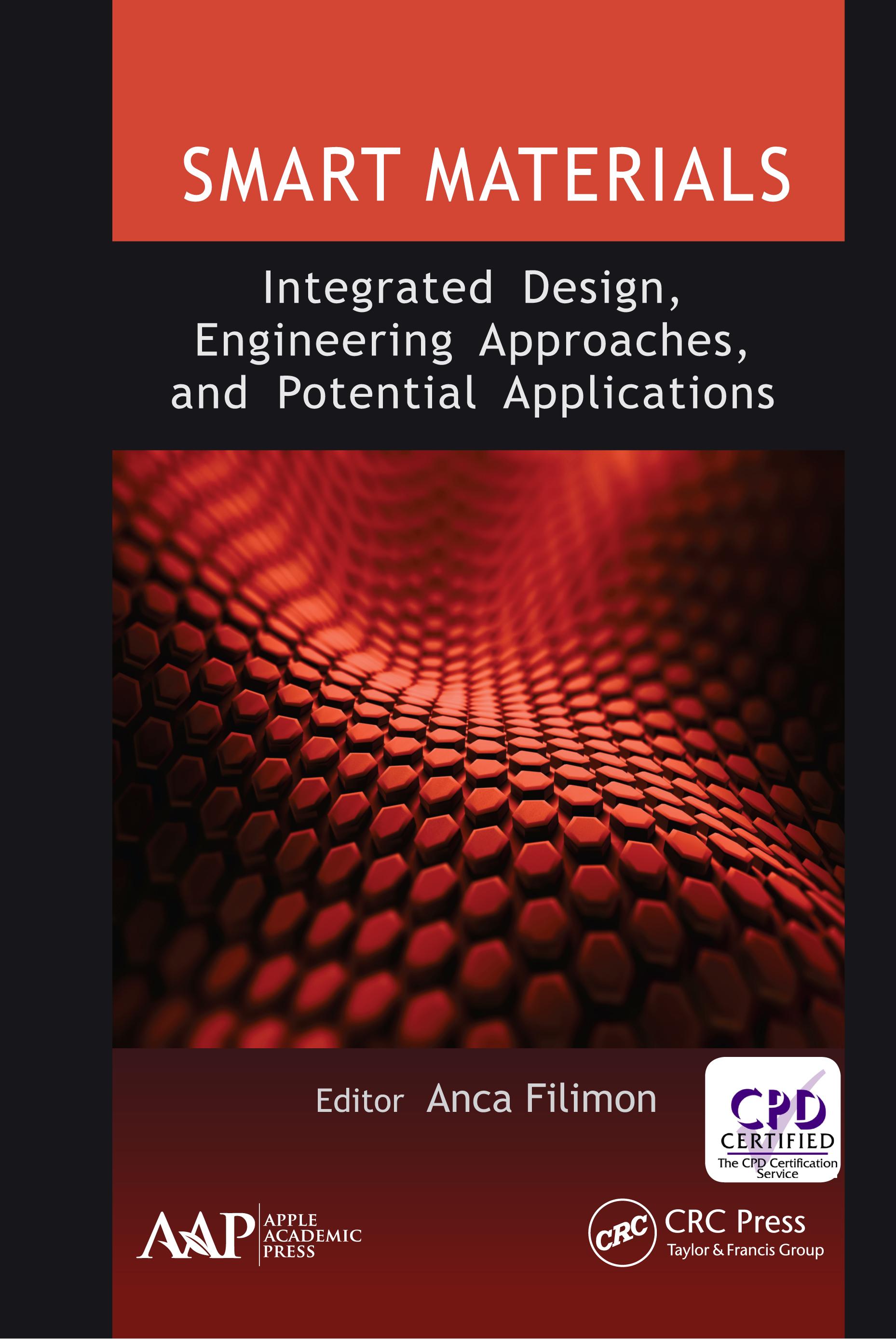
Polymer-based smart materials have become attractive in recent years due to the fact that polymers are flexible and provide many advantages compared to inorganic smart materials: they are low cost, they are easy to process, and they exhibit good performance at nano- and microscale levels.
This volume focuses on a different class of polymers that are used as smart materials in the areas of biotechnology, medicine, and engineering. The volume aims to answer these questions: How do we distinguish ‘smart materials’? and How do they work? The chapters lay the groundwork for assimilation and exploitation of this technological advancement. Four of the key aspects of the approach that the authors have developed throughout this book are highlighted, namely the multidisciplinary exchange of knowledge, exploration of the relationships between multiple scales and their different behaviors, understanding that material properties are dictated at the smallest scale, and, therefore, the recognition that macroscale behavior can be controlled by nanoscale design.
Zahle einfach mit Karte, Klarna, Apple Pay oder Google Pay. Nicht zufrieden? Du hast immer ein 14-tägiges Widerrufsrecht. Lies mehr in unseren AGB. Hast du Fragen, schreib uns eine E-Mail an hello@memmo.org.
Memmo macht das Lernen einfacher – wo auch immer du bist. Bei uns findest du deine Kursbücher und smarte Lerntools an einem Ort: Zusammenfassungen, Quizzes, Podcasts und Lernkarten. Und Ted, dein Lernbuddy, beantwortet alles, was du wissen möchtest. Über 50.000 Studierende lernen bereits hier – gemacht, damit du schneller lernst und weniger Stress hast.