
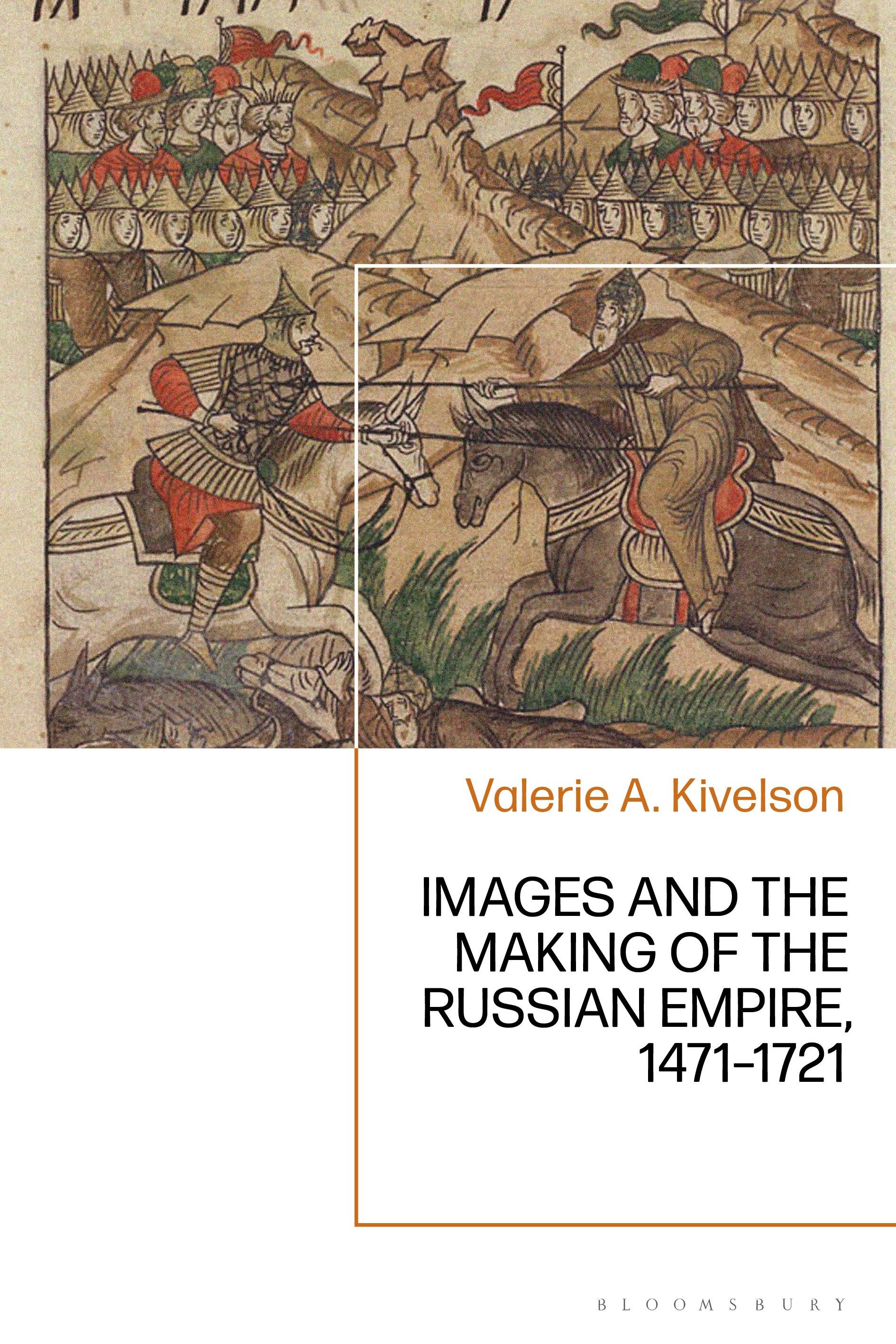
Exploring the visual record of the Muscovite tsardom, this book demonstrates that, in imperial settings, images actually do things.
Richly illustrated with 120 arresting, little-known images, it considers how those images functioned as active agents for and against empire. Images and the Making of the Russian Empire moves out from the throne room of the Kremlin to engravers' workshops of Chernihiv and Kyiv, to the Amur River basin, to the icy peaks of Kamchatka, wherever imagery and empire intersected – which was everywhere.
The book presents an unexpected array of pictorial material, including Muscovite illuminated histories, Ukrainian political-theological prints, and Siberian reindeer herders' pictographic signature marks. Valerie A. Kivelson demonstrates how pictures created by conquerors and conquered, by elites and subjects, by the powerful and the disempowered, advanced and shaped the tsardom as it grew into an ethnically and religiously diverse empire, in ways that have remained unnoticed until now. Through its novel visual methodology, it offers original perspectives on both Moscow's ambitions and the ways in which populations coming under tsarist control pushed back and reshaped the regime's own understanding of what it meant to be an imperial state.
Richly illustrated with 120 arresting, little-known images, it considers how those images functioned as active agents for and against empire. Images and the Making of the Russian Empire moves out from the throne room of the Kremlin to engravers' workshops of Chernihiv and Kyiv, to the Amur River basin, to the icy peaks of Kamchatka, wherever imagery and empire intersected – which was everywhere.
The book presents an unexpected array of pictorial material, including Muscovite illuminated histories, Ukrainian political-theological prints, and Siberian reindeer herders' pictographic signature marks. Valerie A. Kivelson demonstrates how pictures created by conquerors and conquered, by elites and subjects, by the powerful and the disempowered, advanced and shaped the tsardom as it grew into an ethnically and religiously diverse empire, in ways that have remained unnoticed until now. Through its novel visual methodology, it offers original perspectives on both Moscow's ambitions and the ways in which populations coming under tsarist control pushed back and reshaped the regime's own understanding of what it meant to be an imperial state.
Zahle einfach mit Karte, Klarna, Apple Pay oder Google Pay. Nicht zufrieden? Du hast immer ein 14-tägiges Widerrufsrecht. Lies mehr in unseren AGB. Hast du Fragen, schreib uns eine E-Mail an hello@memmo.org.
Memmo macht das Lernen einfacher – wo auch immer du bist. Bei uns findest du deine Kursbücher und smarte Lerntools an einem Ort: Zusammenfassungen, Quizzes, Podcasts und Lernkarten. Und Ted, dein Lernbuddy, beantwortet alles, was du wissen möchtest. Über 50.000 Studierende lernen bereits hier – gemacht, damit du schneller lernst und weniger Stress hast.