
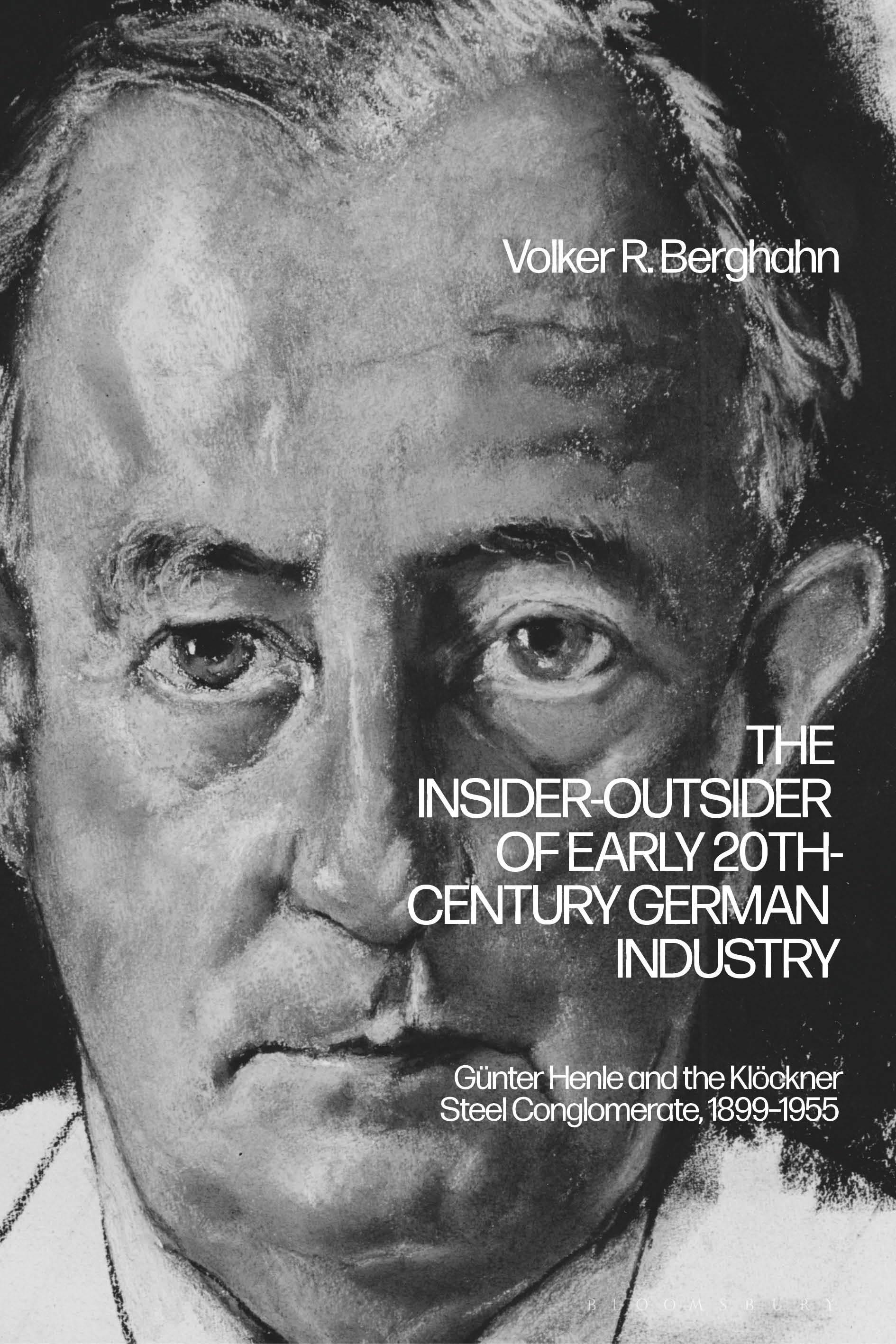
Using the life and work of Günter Henle, Volker R. Berghahn examines the postwar West German approach to labour relations and European integration. The study of Henle simultaneously allows Berghahn to reflect on the unique insights into German Jewish life before and during the Nazi dictatorship that his story provides.
The book looks at how Henle suffered from Nazi persecution, but was ultimately protected by the Establishment he had married into. It then charts how, reinstated after 1945, he involved himself not only in the reconstruction of his Klockner industrial enterprise, but also in the rebuilding of the West German economy and society, and the development of the European Coal and Steel Community (ECSC) - the embryo of what was ultimately to become the European Union.
The Insider-Outsider of Early 20th-Century German Industry discusses West European and American strategies to complement NATO as the political and military counter to the perceived threat of the Soviet Bloc with the creation of institutions for economic cooperation. It is a timely analysis which stresses the importance of cooperation between employers, trade unions and government in securing compromise, social peace and economic stability in trans-Atlantic perspective at a time when the neo-liberal axioms of Thatcherite and Reaganite shareholder societies are again being held against the strengths of the managed stakeholder societies of the early post-war decades.
The book looks at how Henle suffered from Nazi persecution, but was ultimately protected by the Establishment he had married into. It then charts how, reinstated after 1945, he involved himself not only in the reconstruction of his Klockner industrial enterprise, but also in the rebuilding of the West German economy and society, and the development of the European Coal and Steel Community (ECSC) - the embryo of what was ultimately to become the European Union.
The Insider-Outsider of Early 20th-Century German Industry discusses West European and American strategies to complement NATO as the political and military counter to the perceived threat of the Soviet Bloc with the creation of institutions for economic cooperation. It is a timely analysis which stresses the importance of cooperation between employers, trade unions and government in securing compromise, social peace and economic stability in trans-Atlantic perspective at a time when the neo-liberal axioms of Thatcherite and Reaganite shareholder societies are again being held against the strengths of the managed stakeholder societies of the early post-war decades.
Zahle einfach mit Karte, Klarna, Apple Pay oder Google Pay. Nicht zufrieden? Du hast immer ein 14-tägiges Widerrufsrecht. Lies mehr in unseren AGB. Hast du Fragen, schreib uns eine E-Mail an hello@memmo.org.
Memmo macht das Lernen einfacher – wo auch immer du bist. Bei uns findest du deine Kursbücher und smarte Lerntools an einem Ort: Zusammenfassungen, Quizzes, Podcasts und Lernkarten. Und Ted, dein Lernbuddy, beantwortet alles, was du wissen möchtest. Über 50.000 Studierende lernen bereits hier – gemacht, damit du schneller lernst und weniger Stress hast.