
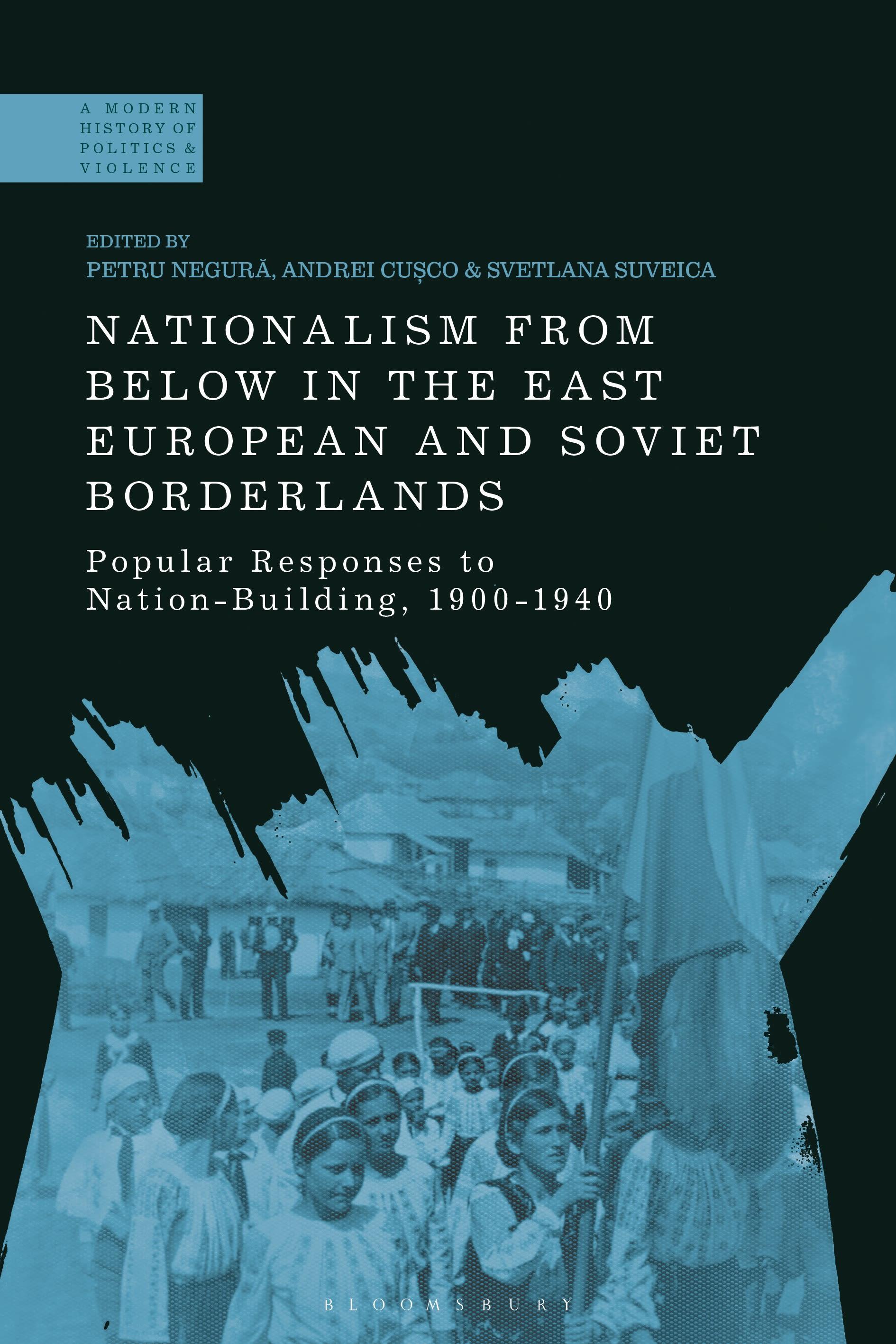
This book features contributions that examine the responses of local populations to nationalizing and state-building projects in the first half of the twentieth century. Focusing on bottom-up, peripheral, and marginal reactions to top-down nation-building efforts, the volume covers border regions of Romania, Austria-Hungary (before 1918), Poland, Finland, the Russian Empire, and the USSR between 1900 and 1940.
Historiography continues to privilege top-down approaches, focused on elites, institutions, and official policies. Despite previous notable works on this topic, in-depth studies of bottom-up perspectives on these regions remain rare. This volume seeks to redress the imbalance by emphasizing the perceptions, discourses, and everyday practices of ordinary people confronted with (often repressive) nation- and state-building agendas. It also addresses multiple levels of social interaction (combining perspectives from above, from below, and from the middle), involving several categories of actors and navigating through different scales of analysis. Individual and comparative case studies explore the social and political peculiarities of various local communities, particularly their evolving forms of national identification across neighboring regions.
This volume contributes to both nationalism studies, by critically engaging with the concepts of everyday ethnicity and “national indifference,” and borderland studies, through a trans-sectional approach focusing on the agency of various marginalized communities.
Historiography continues to privilege top-down approaches, focused on elites, institutions, and official policies. Despite previous notable works on this topic, in-depth studies of bottom-up perspectives on these regions remain rare. This volume seeks to redress the imbalance by emphasizing the perceptions, discourses, and everyday practices of ordinary people confronted with (often repressive) nation- and state-building agendas. It also addresses multiple levels of social interaction (combining perspectives from above, from below, and from the middle), involving several categories of actors and navigating through different scales of analysis. Individual and comparative case studies explore the social and political peculiarities of various local communities, particularly their evolving forms of national identification across neighboring regions.
This volume contributes to both nationalism studies, by critically engaging with the concepts of everyday ethnicity and “national indifference,” and borderland studies, through a trans-sectional approach focusing on the agency of various marginalized communities.
Zahle einfach mit Karte, Klarna, Apple Pay oder Google Pay. Nicht zufrieden? Du hast immer ein 14-tägiges Widerrufsrecht. Lies mehr in unseren AGB. Hast du Fragen, schreib uns eine E-Mail an hello@memmo.org.
Memmo macht das Lernen einfacher – wo auch immer du bist. Bei uns findest du deine Kursbücher und smarte Lerntools an einem Ort: Zusammenfassungen, Quizzes, Podcasts und Lernkarten. Und Ted, dein Lernbuddy, beantwortet alles, was du wissen möchtest. Über 50.000 Studierende lernen bereits hier – gemacht, damit du schneller lernst und weniger Stress hast.