
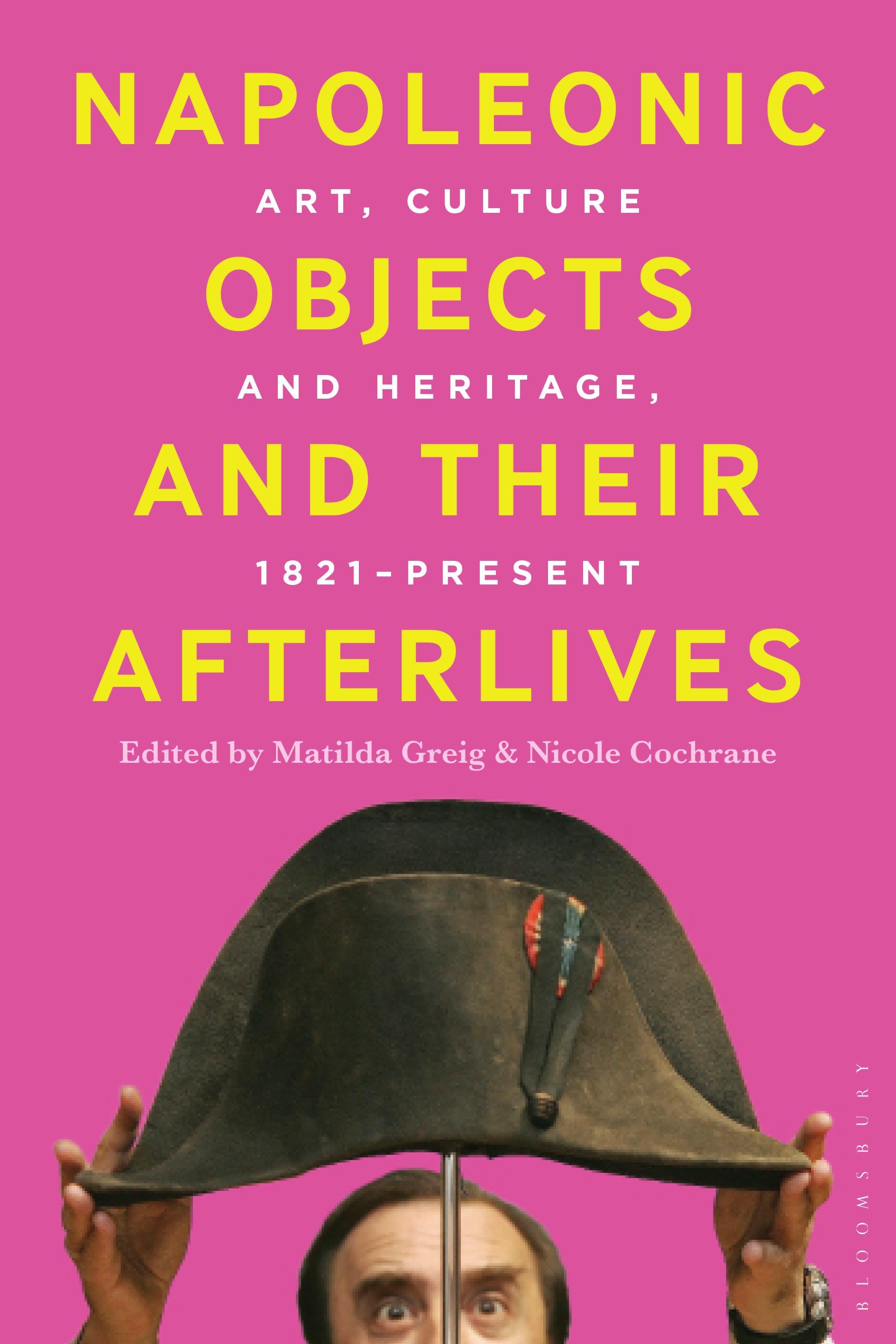
Two centuries after Napoleon Bonaparte's death, this edited volume brings together a diverse group of historians, art historians, and museum professionals to critically examine the enduring power of visual and material culture in the making of Napoleonic memory. While most discussions surrounding the legendary figure explore his impact on legislative, political, or military reform, this innovative volume explores the global dimensions of the trade in Napoleonic collectibles, art, and relics over time.
Representing new avenues of research and scholarship, Napoleonic Objects and their Afterlives investigates the material objects and cultural forms that Napoleon inspired through a range of themes. These include art collecting, the circulation and display of objects, political and imperial symbolism, and the flexibility and ambiguity of Napoleon's enduring legacy. The essays examine how and why, despite his contentious role in contemporary memory, Napoleon continues to escape much historical and popular censure. They explore the ways people have connected with the idea of him: on stage and screen; in museums and galleries; and most intimately of all, by gathering items said to have belonged to him, right down to his toothbrush and locks of his hair.
Napoleonic items can be official or personal, serious or comical, luxury or disposable, yet little work has been done to bring together these diverse cultural histories into conversation with one another. With its broad, multi-disciplinary approach, including perspectives from art history, film studies, cultural history, and museum curation, the book provides a deep critical insight into the cult of personality surrounding Napoleon and its effect on our understanding of celebrity culture today and in the future.
Includes an additional foreword by Napoleon's biographer, Ruth Scurr, author of In Gardens and Shadows (2021).
Representing new avenues of research and scholarship, Napoleonic Objects and their Afterlives investigates the material objects and cultural forms that Napoleon inspired through a range of themes. These include art collecting, the circulation and display of objects, political and imperial symbolism, and the flexibility and ambiguity of Napoleon's enduring legacy. The essays examine how and why, despite his contentious role in contemporary memory, Napoleon continues to escape much historical and popular censure. They explore the ways people have connected with the idea of him: on stage and screen; in museums and galleries; and most intimately of all, by gathering items said to have belonged to him, right down to his toothbrush and locks of his hair.
Napoleonic items can be official or personal, serious or comical, luxury or disposable, yet little work has been done to bring together these diverse cultural histories into conversation with one another. With its broad, multi-disciplinary approach, including perspectives from art history, film studies, cultural history, and museum curation, the book provides a deep critical insight into the cult of personality surrounding Napoleon and its effect on our understanding of celebrity culture today and in the future.
Includes an additional foreword by Napoleon's biographer, Ruth Scurr, author of In Gardens and Shadows (2021).
Zahle einfach mit Karte, Klarna, Apple Pay oder Google Pay. Nicht zufrieden? Du hast immer ein 14-tägiges Widerrufsrecht. Lies mehr in unseren AGB. Hast du Fragen, schreib uns eine E-Mail an hello@memmo.org.
Memmo macht das Lernen einfacher – wo auch immer du bist. Bei uns findest du deine Kursbücher und smarte Lerntools an einem Ort: Zusammenfassungen, Quizzes, Podcasts und Lernkarten. Und Ted, dein Lernbuddy, beantwortet alles, was du wissen möchtest. Über 50.000 Studierende lernen bereits hier – gemacht, damit du schneller lernst und weniger Stress hast.