
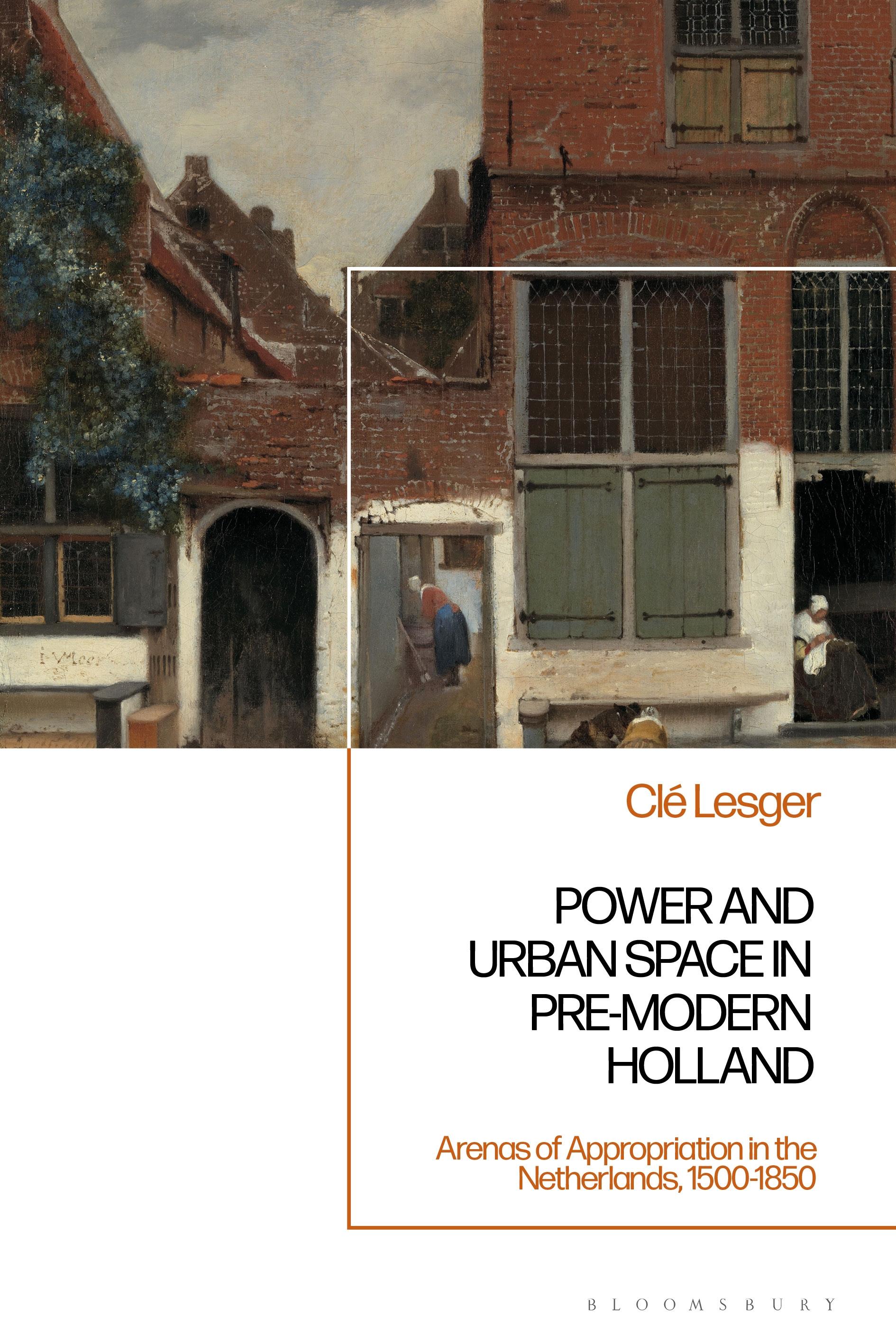
Cities and urban societies have many faces. In this study, the pre-modern cities of Holland are presented as arenas where power relations between social classes are expressed in a more or less permanent appropriation of physical space and through discursive strategies. The continuity of the power relations in the cities of Holland, spanning centuries, makes it urgent to look not only at the assumption of urban space as an expression of power relations within society, but also at the contribution of this appropriation to the acceptance and continuity of the existing power relations in pre-modern Holland.
Within this broad area, extensive attention is paid to: the very prominent and enduring appropriation of urban space in the field of housing; the less permanent, but violent appropriation of urban space during the public execution of scaffold punishments; the maintenance of public order by civic militias; and appropriation during riots and revolts. In addition, city descriptions, maps and pictures of the pre-modern cities of Holland are scrutinised for what they can reveal about the appropriation of urban spaces. These themes each have an extensive historiography, but they have never been brought together in an interpretative framework that fits in with Pierre Bourdieu's model of society and the work – of especially John Allen – on power until now.
Within this broad area, extensive attention is paid to: the very prominent and enduring appropriation of urban space in the field of housing; the less permanent, but violent appropriation of urban space during the public execution of scaffold punishments; the maintenance of public order by civic militias; and appropriation during riots and revolts. In addition, city descriptions, maps and pictures of the pre-modern cities of Holland are scrutinised for what they can reveal about the appropriation of urban spaces. These themes each have an extensive historiography, but they have never been brought together in an interpretative framework that fits in with Pierre Bourdieu's model of society and the work – of especially John Allen – on power until now.
Zahle einfach mit Karte, Klarna, Apple Pay oder Google Pay. Nicht zufrieden? Du hast immer ein 14-tägiges Widerrufsrecht. Lies mehr in unseren AGB. Hast du Fragen, schreib uns eine E-Mail an hello@memmo.org.
Memmo macht das Lernen einfacher – wo auch immer du bist. Bei uns findest du deine Kursbücher und smarte Lerntools an einem Ort: Zusammenfassungen, Quizzes, Podcasts und Lernkarten. Und Ted, dein Lernbuddy, beantwortet alles, was du wissen möchtest. Über 50.000 Studierende lernen bereits hier – gemacht, damit du schneller lernst und weniger Stress hast.