
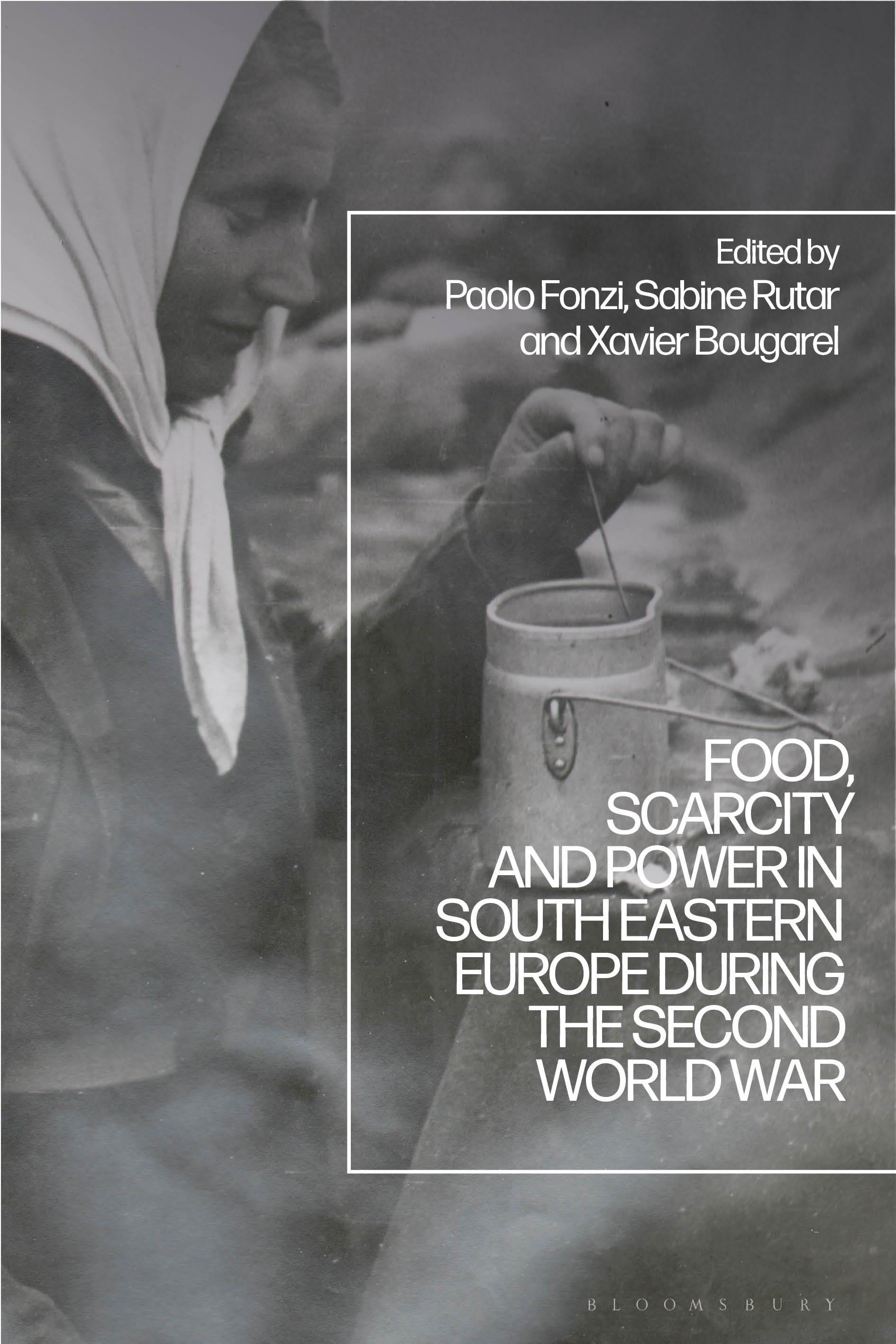
The experience of all occupied countries during the Second World War was characterised by severe material shortages. Food, most noticeably, became a scarcity in everyday life; and that food grew into a major stake for all political groups at this time. This book shines a much-needed spotlight on the political role of food in Southeastern Europe from 1939 to 1945.
Controlling food was a key strategy adopted by all actors – be they occupiers, state institutions, resistance organizations, international humanitarian organizations or private interest groups – in substantiating their bid for power. As a predominantly agrarian area with a substantial peasant population, investigating this topic is particularly poignant for Southeastern Europe. From discussions of searching for and fighting for food to offering relief and instrumentalising of food politically, the chapters in this volume add nuance to discussions on the complex intertwined political and social dynamics of war and occupation. In so doing, this sophisticated study fills an important gap in our understanding of the Second World War, food policy, and the social history of Europe more broadly.
Controlling food was a key strategy adopted by all actors – be they occupiers, state institutions, resistance organizations, international humanitarian organizations or private interest groups – in substantiating their bid for power. As a predominantly agrarian area with a substantial peasant population, investigating this topic is particularly poignant for Southeastern Europe. From discussions of searching for and fighting for food to offering relief and instrumentalising of food politically, the chapters in this volume add nuance to discussions on the complex intertwined political and social dynamics of war and occupation. In so doing, this sophisticated study fills an important gap in our understanding of the Second World War, food policy, and the social history of Europe more broadly.
Zahle einfach mit Karte, Klarna, Apple Pay oder Google Pay. Nicht zufrieden? Du hast immer ein 14-tägiges Widerrufsrecht. Lies mehr in unseren AGB. Hast du Fragen, schreib uns eine E-Mail an hello@memmo.org.
Memmo macht das Lernen einfacher – wo auch immer du bist. Bei uns findest du deine Kursbücher und smarte Lerntools an einem Ort: Zusammenfassungen, Quizzes, Podcasts und Lernkarten. Und Ted, dein Lernbuddy, beantwortet alles, was du wissen möchtest. Über 50.000 Studierende lernen bereits hier – gemacht, damit du schneller lernst und weniger Stress hast.