
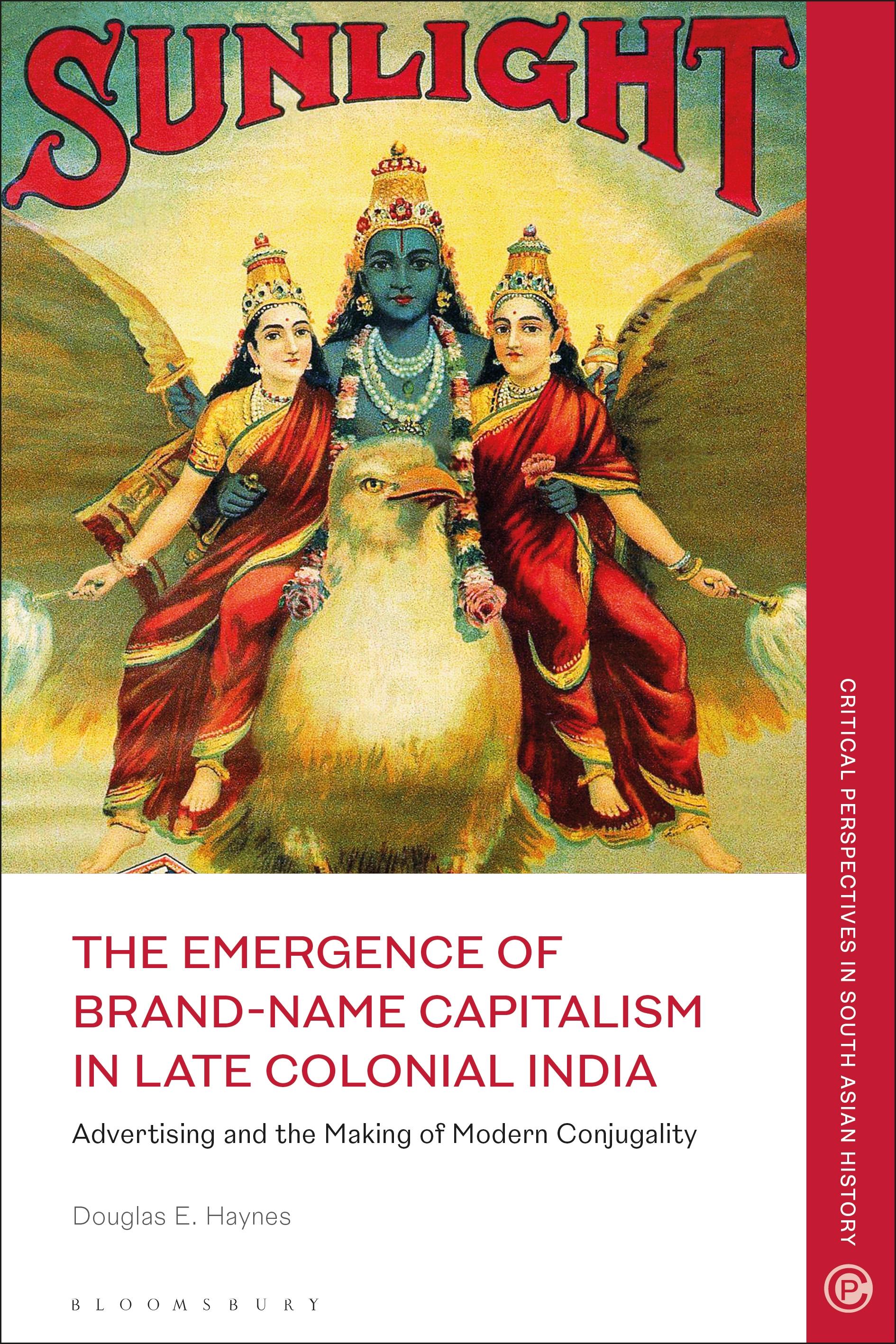
This book examines the emergence of professional advertising in western India during the interwar period. It explores the ways in which global manufacturers advanced a 'brand-name capitalism' among the Indian middle class by promoting the sale of global commodities during the 1920s and 1930s, a time when advertising was first introduced in India as a profession and underwent critical transformations.
Analysing the cultural strategies, both verbal and visual, used by foreign businesses in their advertisements to capture urban consumers, Haynes argues that the promoters of various commodities crystalized their campaigns around principles of modern conjugality. He also highlights the limitations of brand-name capitalism during this period, examining both its inability to cultivate markets in the countryside or among the urban poor, and its failure to secure middle-class customers. With numerous examples of illustrated advertisements taken from Indian newspapers, the book discusses campaigns for male sex tonics and women's medicines, hot drinks such as Ovaltine and Horlicks, soaps such as Lifebuoy, Lux and Sunlight, cooking mediums such as Dalda and electrical household technologies. By examining the formation of 'brand-name capitalism' and two key structures that accompanied it- the advertising agency and the field of professional advertising- this book sheds new light on the global consumer economy in interwar India, and places developments in South Asia into a larger global history of consumer capitalism.
Analysing the cultural strategies, both verbal and visual, used by foreign businesses in their advertisements to capture urban consumers, Haynes argues that the promoters of various commodities crystalized their campaigns around principles of modern conjugality. He also highlights the limitations of brand-name capitalism during this period, examining both its inability to cultivate markets in the countryside or among the urban poor, and its failure to secure middle-class customers. With numerous examples of illustrated advertisements taken from Indian newspapers, the book discusses campaigns for male sex tonics and women's medicines, hot drinks such as Ovaltine and Horlicks, soaps such as Lifebuoy, Lux and Sunlight, cooking mediums such as Dalda and electrical household technologies. By examining the formation of 'brand-name capitalism' and two key structures that accompanied it- the advertising agency and the field of professional advertising- this book sheds new light on the global consumer economy in interwar India, and places developments in South Asia into a larger global history of consumer capitalism.
Zahle einfach mit Karte, Klarna, Apple Pay oder Google Pay. Nicht zufrieden? Du hast immer ein 14-tägiges Widerrufsrecht. Lies mehr in unseren AGB. Hast du Fragen, schreib uns eine E-Mail an hello@memmo.org.
Memmo macht das Lernen einfacher – wo auch immer du bist. Bei uns findest du deine Kursbücher und smarte Lerntools an einem Ort: Zusammenfassungen, Quizzes, Podcasts und Lernkarten. Und Ted, dein Lernbuddy, beantwortet alles, was du wissen möchtest. Über 50.000 Studierende lernen bereits hier – gemacht, damit du schneller lernst und weniger Stress hast.