
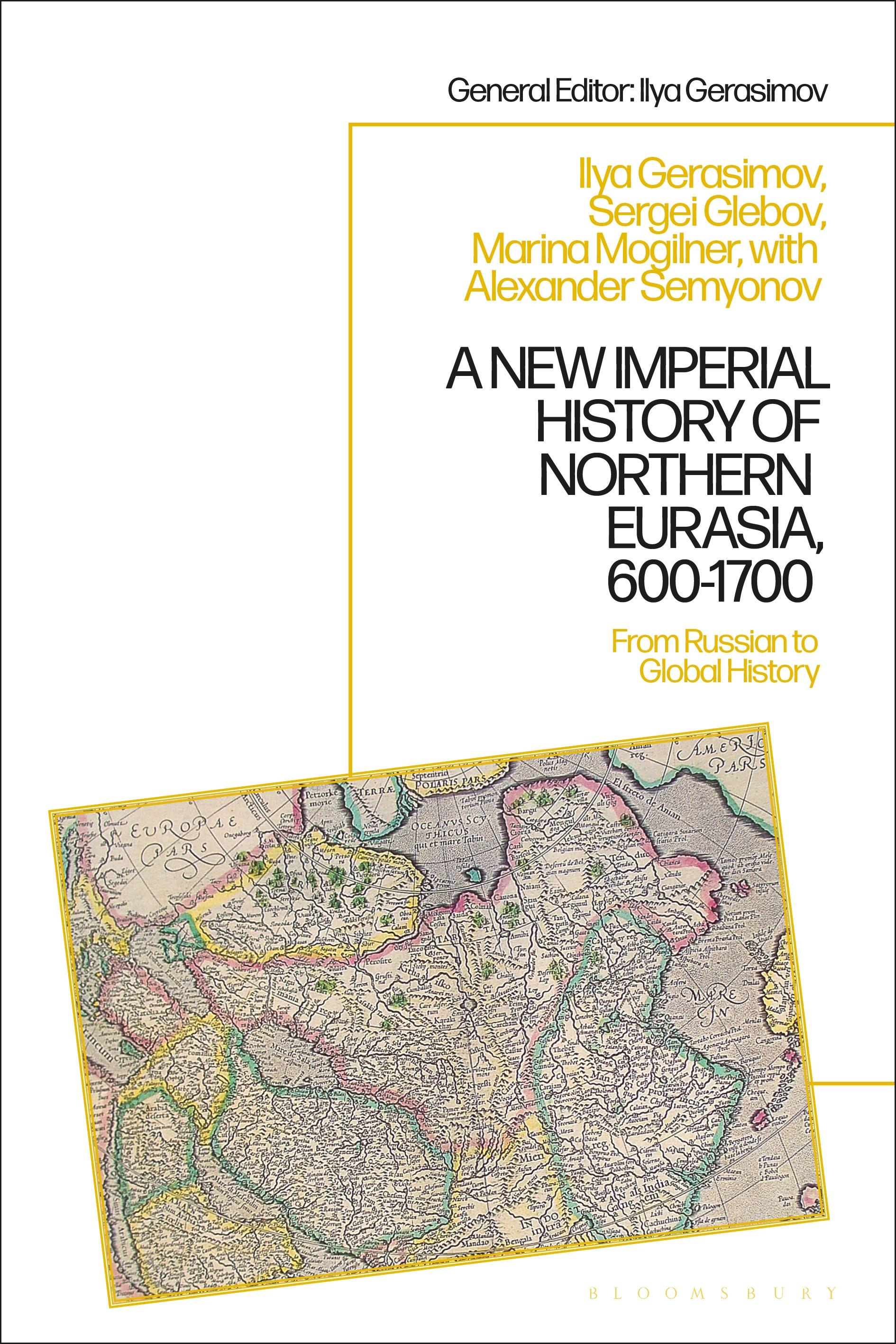
A New Imperial History of Northern Eurasia, 600-1700 proposes a new language for studying and conceptualizing the spaces, societies, and institutions that existed on the territory of today's Northern Eurasia. This is not the story of a certain present-day state or people evolving through consecutive historical stages. Rather, the book is a modern analytical approach to the problem of human diversity as a fundamental social condition. Through cooperation and confrontation, various attempts to manage diversity fostered processes of societal self-organization, as new ideas, practices, and institutions were developed virtually from scratch or radically altered. Essentially, this is the story of individuals and societies creatively responding to their natural and social environments in unique historical circumstances.
This volume explores how the mutual interactions of several local socio-political arrangements, and attempts to integrate with one of the universal cultures of the time, caused a string of unintended consequences. As a result, the enormous landmass from the Carpathian Mountains in the west to the Pacific Ocean in the east, from the Polar Circle in the north to the steppe belt in the south was divided among several regional powers. Ultimately unable to overtake each other by military force, they were locked in a zero-sum game until the uneven development of modern state institutions tilted the balance in favor of one of them – Russia.
This volume explores how the mutual interactions of several local socio-political arrangements, and attempts to integrate with one of the universal cultures of the time, caused a string of unintended consequences. As a result, the enormous landmass from the Carpathian Mountains in the west to the Pacific Ocean in the east, from the Polar Circle in the north to the steppe belt in the south was divided among several regional powers. Ultimately unable to overtake each other by military force, they were locked in a zero-sum game until the uneven development of modern state institutions tilted the balance in favor of one of them – Russia.
Zahle einfach mit Karte, Klarna, Apple Pay oder Google Pay. Nicht zufrieden? Du hast immer ein 14-tägiges Widerrufsrecht. Lies mehr in unseren AGB. Hast du Fragen, schreib uns eine E-Mail an hello@memmo.org.
Memmo macht das Lernen einfacher – wo auch immer du bist. Bei uns findest du deine Kursbücher und smarte Lerntools an einem Ort: Zusammenfassungen, Quizzes, Podcasts und Lernkarten. Und Ted, dein Lernbuddy, beantwortet alles, was du wissen möchtest. Über 50.000 Studierende lernen bereits hier – gemacht, damit du schneller lernst und weniger Stress hast.