
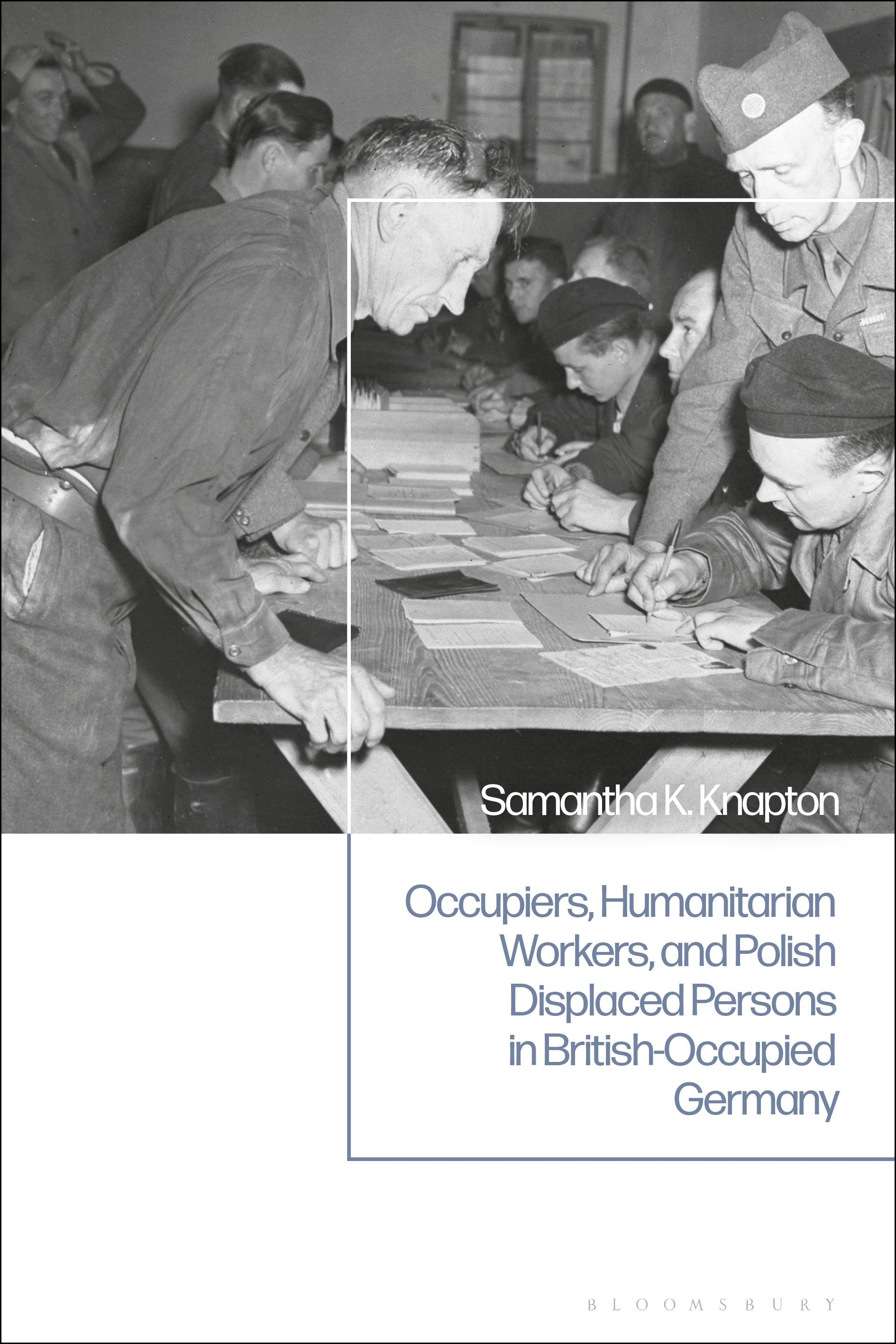
Concepts of migration and displacement are all too often separated from ideas of international humanitarianism and occupations; and yet, between 1945 and 1951, victims of war became the joint responsibility of humanitarian workers and military officials in occupied Germany. In this innovative study, Samantha K. Knapton focuses on the lives of Polish displaced persons (DPs) – one of the largest groups in occupied Germany – to shine a spotlight on this interaction for the first time.
From the everyday experience of clothing, feeding and sheltering to governmental policies and military actions, Occupiers, Humanitarian Workers and the Polish Displaced Persons in British-Occupied Germany investigates the impact of occupation on post-war refugees and explores how the birth of state-driven international humanitarianism played a vital role in both the identity of the Polish people and the reconstruction of Germany. To do so, Knapton fuses together archival material and personal collections such as memoirs, letters and diaries to present an account which considers both the macro and micro issues of displacement, occupation and humanitarianism. The result is a sophisticated analysis of Anglo-Polish-German relations in post-war Europe which will be of immense value to all scholars of modern Europe, Polish history, and displacement studies more generally.
From the everyday experience of clothing, feeding and sheltering to governmental policies and military actions, Occupiers, Humanitarian Workers and the Polish Displaced Persons in British-Occupied Germany investigates the impact of occupation on post-war refugees and explores how the birth of state-driven international humanitarianism played a vital role in both the identity of the Polish people and the reconstruction of Germany. To do so, Knapton fuses together archival material and personal collections such as memoirs, letters and diaries to present an account which considers both the macro and micro issues of displacement, occupation and humanitarianism. The result is a sophisticated analysis of Anglo-Polish-German relations in post-war Europe which will be of immense value to all scholars of modern Europe, Polish history, and displacement studies more generally.
Zahle einfach mit Karte, Klarna, Apple Pay oder Google Pay. Nicht zufrieden? Du hast immer ein 14-tägiges Widerrufsrecht. Lies mehr in unseren AGB. Hast du Fragen, schreib uns eine E-Mail an hello@memmo.org.
Memmo macht das Lernen einfacher – wo auch immer du bist. Bei uns findest du deine Kursbücher und smarte Lerntools an einem Ort: Zusammenfassungen, Quizzes, Podcasts und Lernkarten. Und Ted, dein Lernbuddy, beantwortet alles, was du wissen möchtest. Über 50.000 Studierende lernen bereits hier – gemacht, damit du schneller lernst und weniger Stress hast.