
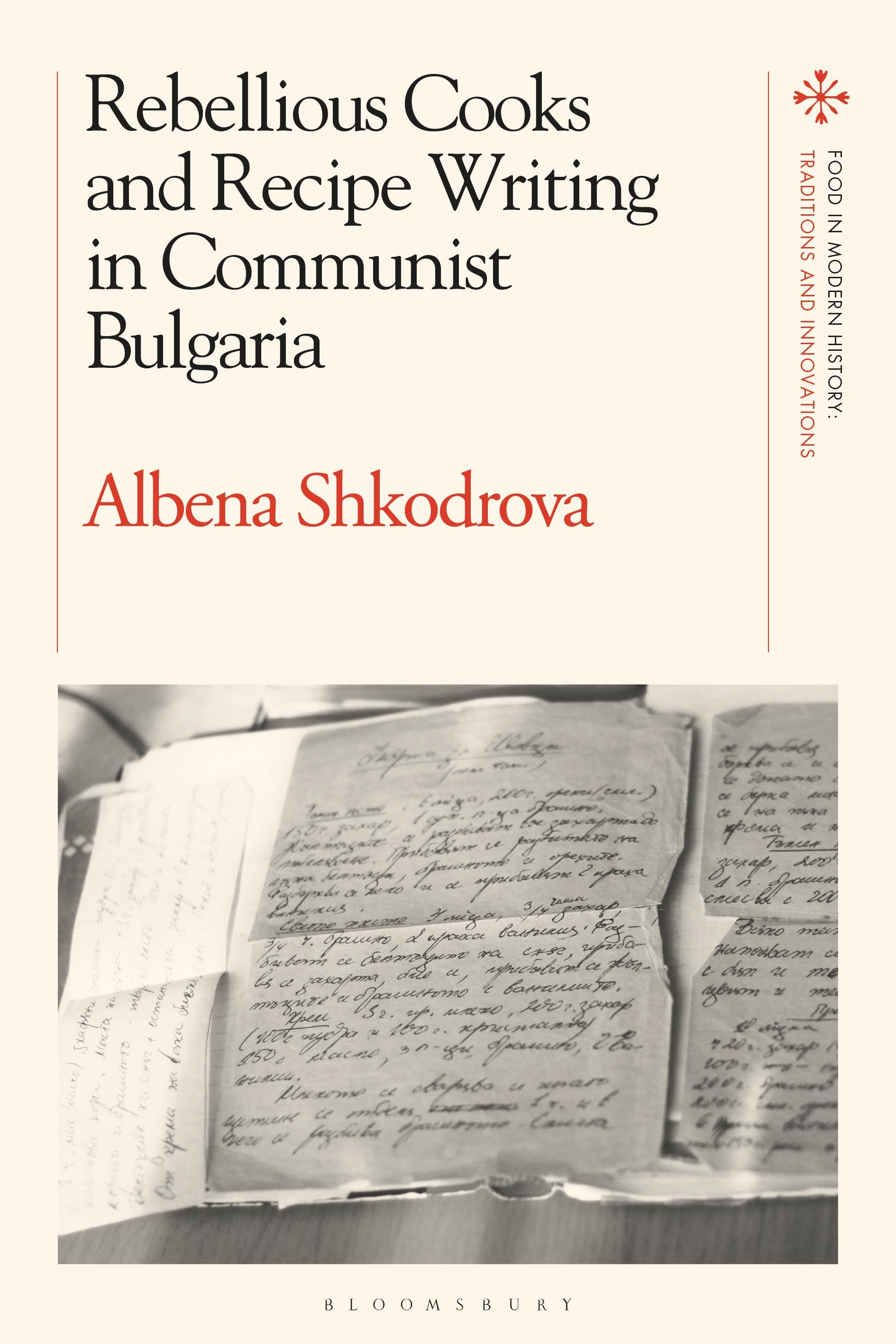
How did people exist and resist in their daily lives under Soviet control in the Cold War period? Shkodrova's monograph shows how in communist Bulgaria many women passionately exchanged recipes with friends and strangers, to build substantial and impressive private collections of recipes. This activity was borderline contraband in going against the general disapproval of home cooking that formed part of the ideology of communism, in which home cooking was considered household slavery and an agent of patriarchalism.
Private recipe collections were by far the preferred written source of culinary information, more popular than the state-approved commercial cookbooks. Shkodrova shows how these recipe collections held many different meanings for the women who collected them, from helping to navigate the communist economy, to enabling new friendships to be developed while engaging safely in power relations, and cultivating a sense of individual identity in a society where collective existence was prioritised and exalted. Drawing on primary sources including scrapbook cookbooks and working from the establishment of cookery classes before communism and their obliteration thereafter, Shkodrova presents a structured outline of the meanings of recipes exchange and home cooking for Bulgarian women under communism.
Private recipe collections were by far the preferred written source of culinary information, more popular than the state-approved commercial cookbooks. Shkodrova shows how these recipe collections held many different meanings for the women who collected them, from helping to navigate the communist economy, to enabling new friendships to be developed while engaging safely in power relations, and cultivating a sense of individual identity in a society where collective existence was prioritised and exalted. Drawing on primary sources including scrapbook cookbooks and working from the establishment of cookery classes before communism and their obliteration thereafter, Shkodrova presents a structured outline of the meanings of recipes exchange and home cooking for Bulgarian women under communism.
Zahle einfach mit Karte, Klarna, Apple Pay oder Google Pay. Nicht zufrieden? Du hast immer ein 14-tägiges Widerrufsrecht. Lies mehr in unseren AGB. Hast du Fragen, schreib uns eine E-Mail an hello@memmo.org.
Memmo macht das Lernen einfacher – wo auch immer du bist. Bei uns findest du deine Kursbücher und smarte Lerntools an einem Ort: Zusammenfassungen, Quizzes, Podcasts und Lernkarten. Und Ted, dein Lernbuddy, beantwortet alles, was du wissen möchtest. Über 50.000 Studierende lernen bereits hier – gemacht, damit du schneller lernst und weniger Stress hast.