
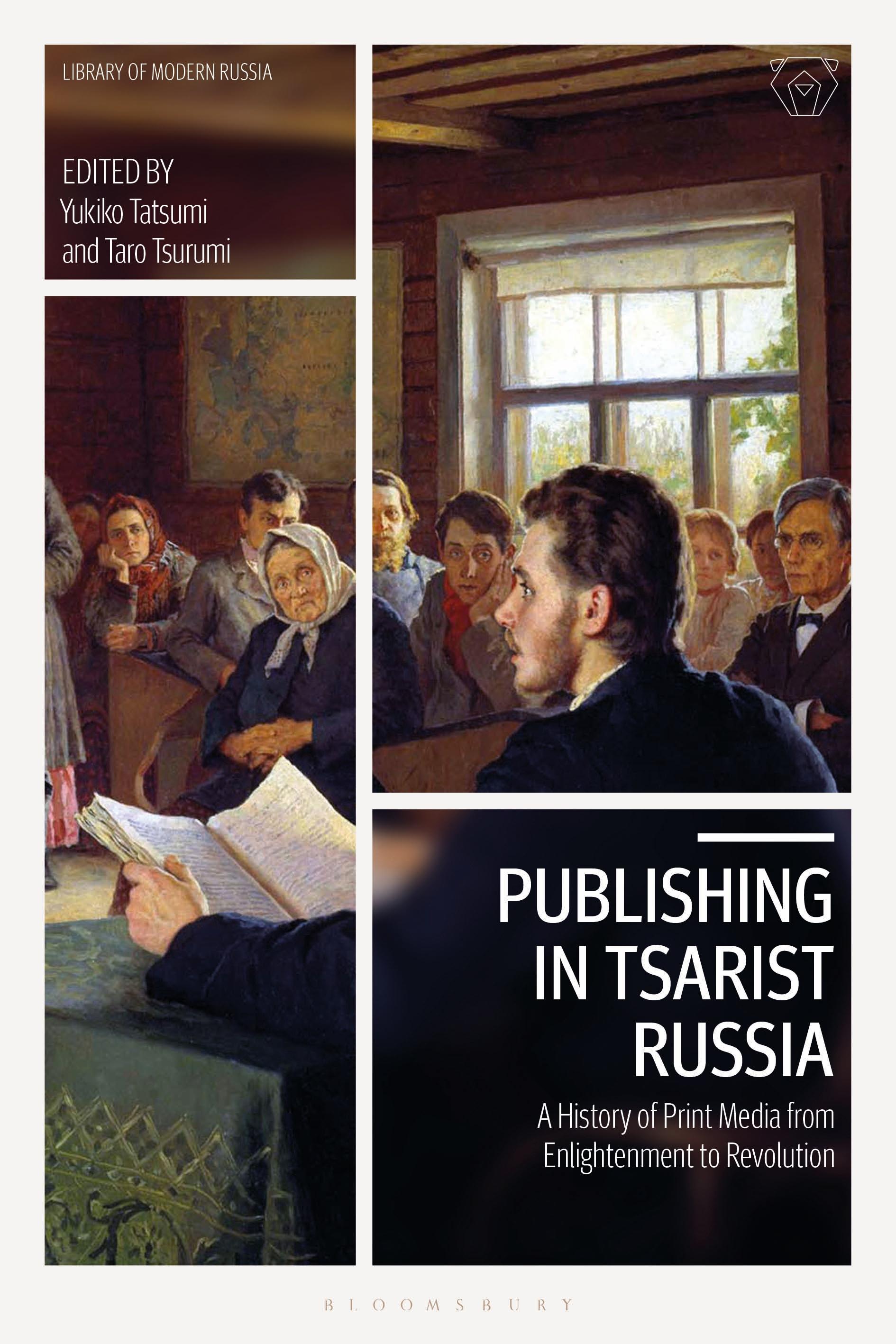
According to Benedict Anderson, the rapid expansion of print media during the late-1700s popularised national history and standardised national languages, thus helping create nation-states and national identities at the expense of the old empires. Publishing in Tsarist Russia challenges this theory and, by examining the history of Russian publishing through a transnational lens, reveals how the popular press played an important and complex Imperial role, while providing a “soft infrastructure” which the subjects could access to change Imperial order.
As this volume convincingly argues, this is because the Russian language at this time was a lingua franca; it crossed borders and boundaries, reaching speakers of varying nationalities. Russian publications, then, were able to effectively operate within the structure of Imperialism but as a public space, they went beyond the control of the Tsar and ethnic Russians.
This exciting international team of scholars provide a much-needed, fresh take on the history of Russian publishing and contribute significantly to our understanding of print media, language and empire from the 18th to 20th centuries. Publishing in Tsarist Russia is therefore a vital resource for scholars of Russian history, comparative nationalism, and publishing studies.
As this volume convincingly argues, this is because the Russian language at this time was a lingua franca; it crossed borders and boundaries, reaching speakers of varying nationalities. Russian publications, then, were able to effectively operate within the structure of Imperialism but as a public space, they went beyond the control of the Tsar and ethnic Russians.
This exciting international team of scholars provide a much-needed, fresh take on the history of Russian publishing and contribute significantly to our understanding of print media, language and empire from the 18th to 20th centuries. Publishing in Tsarist Russia is therefore a vital resource for scholars of Russian history, comparative nationalism, and publishing studies.
Zahle einfach mit Karte, Klarna, Apple Pay oder Google Pay. Nicht zufrieden? Du hast immer ein 14-tägiges Widerrufsrecht. Lies mehr in unseren AGB. Hast du Fragen, schreib uns eine E-Mail an hello@memmo.org.
Memmo macht das Lernen einfacher – wo auch immer du bist. Bei uns findest du deine Kursbücher und smarte Lerntools an einem Ort: Zusammenfassungen, Quizzes, Podcasts und Lernkarten. Und Ted, dein Lernbuddy, beantwortet alles, was du wissen möchtest. Über 50.000 Studierende lernen bereits hier – gemacht, damit du schneller lernst und weniger Stress hast.