
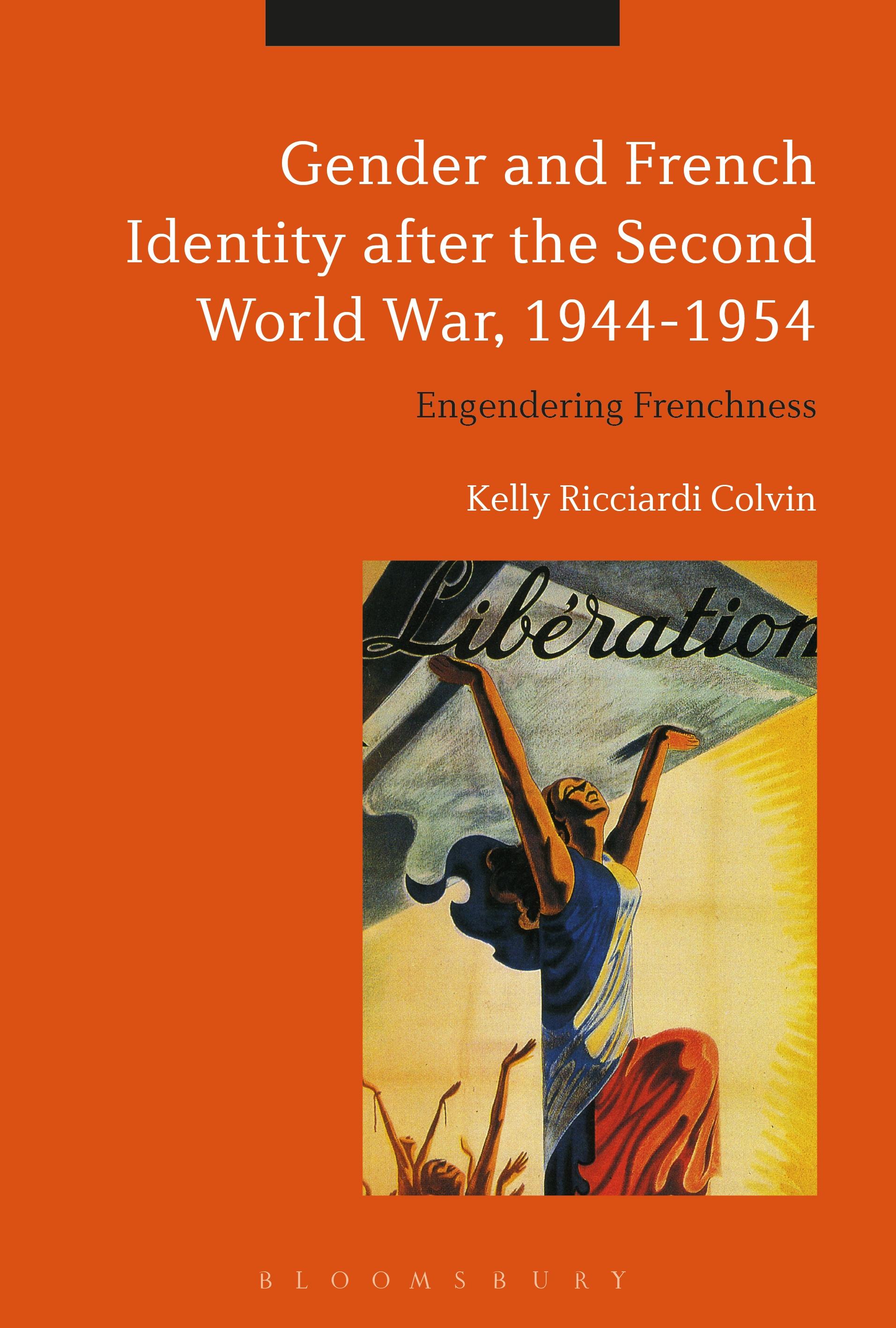
The enfranchisement of women in Charles de Gaulle's France in 1944 is considered a potent element in the nation's self-crafted, triumphant World War Two narrative: the French, conquered by the Germans, valiantly resisted until they rescued themselves and built a new democracy, honoring France's longstanding liberal traditions. Kelly Ricciardi Colvin's Gender and French Identity after the Second World War, 1944-1954 calls that potent element into question.
By analyzing a range of sources, including women's magazines, trials, memoirs, and spy novels, this book explores the ways in which culture was used to limit the power of the female vote. It exposes a wide network of constructed behavioral norms that supported a conservative vision of French identity. Taken together, they depicted men as virile Resistors for French democracy and history, and women as solely domestic support. Indeed Colvin shows that women's access to the vote emerged alongside an explosion of cultural messages that encouraged them to retreat into the home, to find mates, to have 'millions of beautiful babies', in the words of de Gaulle, and not to challenge patriarchy in any way.
This is a vital study for understanding the nature of postwar France and women's history in 20th-century Europe.
By analyzing a range of sources, including women's magazines, trials, memoirs, and spy novels, this book explores the ways in which culture was used to limit the power of the female vote. It exposes a wide network of constructed behavioral norms that supported a conservative vision of French identity. Taken together, they depicted men as virile Resistors for French democracy and history, and women as solely domestic support. Indeed Colvin shows that women's access to the vote emerged alongside an explosion of cultural messages that encouraged them to retreat into the home, to find mates, to have 'millions of beautiful babies', in the words of de Gaulle, and not to challenge patriarchy in any way.
This is a vital study for understanding the nature of postwar France and women's history in 20th-century Europe.
Zahle einfach mit Karte, Klarna, Apple Pay oder Google Pay. Nicht zufrieden? Du hast immer ein 14-tägiges Widerrufsrecht. Lies mehr in unseren AGB. Hast du Fragen, schreib uns eine E-Mail an hello@memmo.org.
Memmo macht das Lernen einfacher – wo auch immer du bist. Bei uns findest du deine Kursbücher und smarte Lerntools an einem Ort: Zusammenfassungen, Quizzes, Podcasts und Lernkarten. Und Ted, dein Lernbuddy, beantwortet alles, was du wissen möchtest. Über 50.000 Studierende lernen bereits hier – gemacht, damit du schneller lernst und weniger Stress hast.