
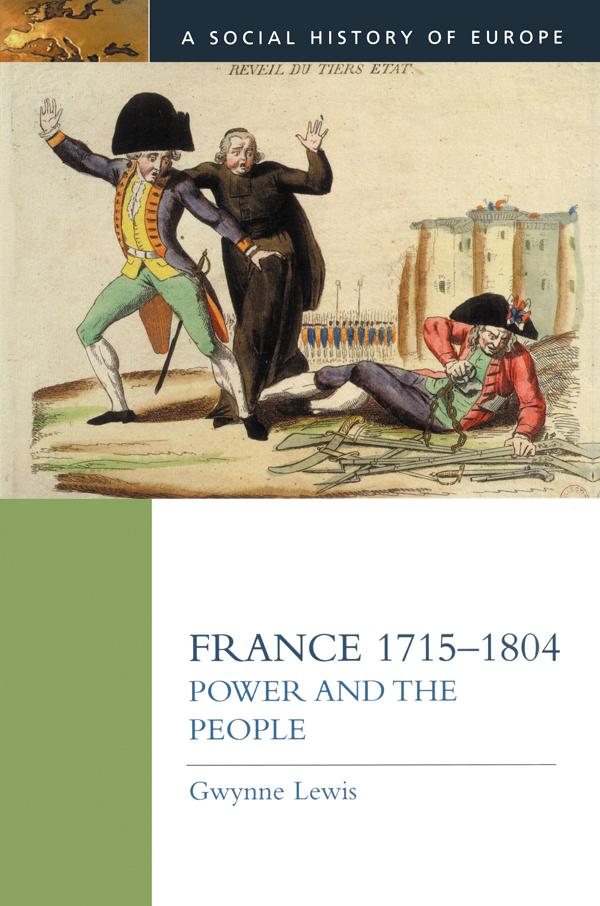
Gwynne Lewis’ history opens with a full analysis of all the components of traditional France, including political and religious structures, the seigneurial system, the bourgeoisie and the poor. Part two examines the meaning and challenge of the Enlightenment, with particular reference to women and the mass of the poor. Part three concentrates upon the relationship between the shift to laissez-faire economics, popular revolts and government repression, providing the essential background to the Revolutionary decade of the 1790s. The Revolution witnessed the rise of a politicised ‘Popular Movement’ that achieved, briefly, a measure of popular democracy. War and counter-revolution blocked the move towards real democracy, strengthened the authority of the centralised state, and enhanced the credibility of bourgeois political and economic power.
One of the main contentions of this work is that the failure of both monarchical and Revolutionary regimes to deal with the massive social problem of poverty played a far larger part in explaining the collapse of the Bourbons in 1789, and the failure of democracy during the 1790s, than most historians have allowed. Likewise, the importance of religion in directing the momentous events of this period has also been under-estimated.
Zahle einfach mit Karte, Klarna, Apple Pay oder Google Pay. Nicht zufrieden? Du hast immer ein 14-tägiges Widerrufsrecht. Lies mehr in unseren AGB. Hast du Fragen, schreib uns eine E-Mail an hello@memmo.org.
Memmo macht das Lernen einfacher – wo auch immer du bist. Bei uns findest du deine Kursbücher und smarte Lerntools an einem Ort: Zusammenfassungen, Quizzes, Podcasts und Lernkarten. Und Ted, dein Lernbuddy, beantwortet alles, was du wissen möchtest. Über 50.000 Studierende lernen bereits hier – gemacht, damit du schneller lernst und weniger Stress hast.