
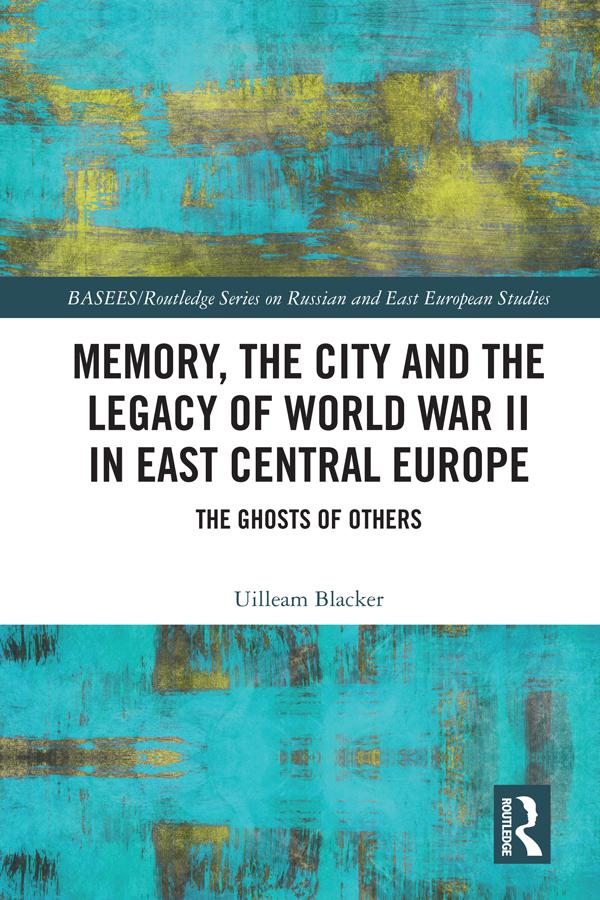
After the Second World War, millions of people across Eastern Europe, displaced as a result of wartime destruction, deportations and redrawing of state boundaries, found themselves living in cities that were filled with the traces of the foreign cultures of the former inhabitants. In the immediate post-war period these traces were not acknowledged, the new inhabitants going along with official policies of oblivion, the national narratives of new post-war regimes, and the memorializing of the victors. In time, however, and increasingly over recent decades, the former "other pasts" have been embraced and taken on board as part of local cultural memory. This book explores this interesting and increasingly important phenomenon. It examines official ideologies, popular memory, literature, film, memorialization and tourism to show how other pasts are being incorporated into local cultural memory. It relates these developments to cultural theory and argues that the relationship between urban space, cultural memory and identity in Eastern Europe is increasingly becoming a question not only of cultural politics, but also of consumption and choice, alongside a tendency towards the cosmopolitanization of memory.
Zahle einfach mit Karte, Klarna, Apple Pay oder Google Pay. Nicht zufrieden? Du hast immer ein 14-tägiges Widerrufsrecht. Lies mehr in unseren AGB. Hast du Fragen, schreib uns eine E-Mail an hello@memmo.org.
Memmo macht das Lernen einfacher – wo auch immer du bist. Bei uns findest du deine Kursbücher und smarte Lerntools an einem Ort: Zusammenfassungen, Quizzes, Podcasts und Lernkarten. Und Ted, dein Lernbuddy, beantwortet alles, was du wissen möchtest. Über 50.000 Studierende lernen bereits hier – gemacht, damit du schneller lernst und weniger Stress hast.