
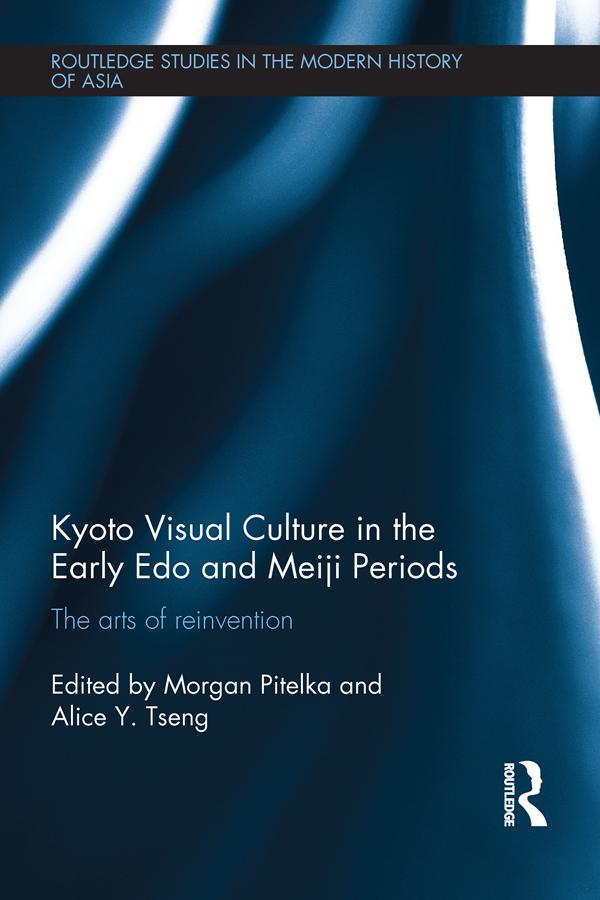
The city of Kyoto has undergone radical shifts in its significance as a political and cultural center, as a hub of the national bureaucracy, as a symbolic and religious center, and as a site for the production and display of art. However, the field of Japanese history and culture lacks a book that considers Kyoto on its own terms as a historic city with a changing identity.
Examining cultural production in the city of Kyoto in two periods of political transition, this book promises to be a major step forward in advancing our knowledge of Kyoto’s history and culture. Its chapters focus on two periods in Kyoto’s history in which the old capital was politically marginalized: the early Edo period, when the center of power shifted from the old imperial capital to the new warriors’ capital of Edo; and the Meiji period, when the imperial court itself was moved to the new modern center of Tokyo. The contributors argue that in both periods the response of Kyoto elites—emperors, courtiers, tea masters, municipal leaders, monks, and merchants—was artistic production and cultural revival.
As an artistic, cultural and historical study of Japan's most important historic city, this book will be invaluable to students and scholars of Japanese history, Asian history, the Edo and Meiji periods, art history, visual culture and cultural history.
Zahle einfach mit Karte, Klarna, Apple Pay oder Google Pay. Nicht zufrieden? Du hast immer ein 14-tägiges Widerrufsrecht. Lies mehr in unseren AGB. Hast du Fragen, schreib uns eine E-Mail an hello@memmo.org.
Memmo macht das Lernen einfacher – wo auch immer du bist. Bei uns findest du deine Kursbücher und smarte Lerntools an einem Ort: Zusammenfassungen, Quizzes, Podcasts und Lernkarten. Und Ted, dein Lernbuddy, beantwortet alles, was du wissen möchtest. Über 50.000 Studierende lernen bereits hier – gemacht, damit du schneller lernst und weniger Stress hast.